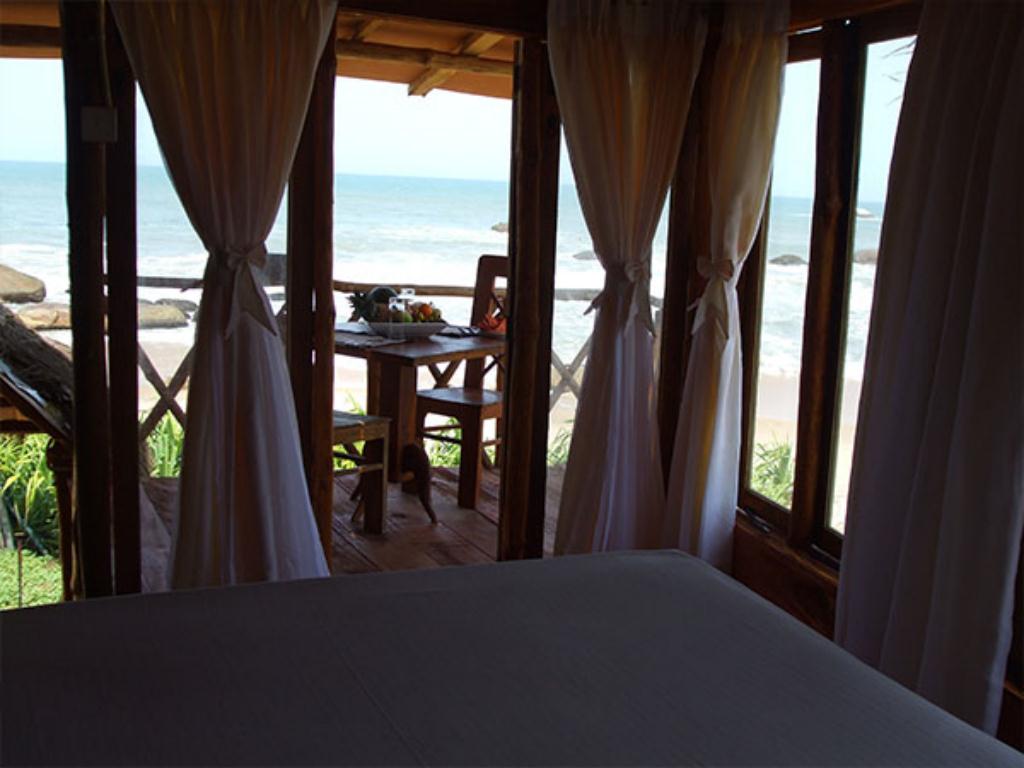
Polhena Beach sits on Sri Lanka's southern coast, roughly 3 km west of Matara town. Unlike the open surf beaches further along the south coast, Polhena is sheltered by a fringing coral reef that keeps the water calm and shallow — a quality that sets it apart for families, beginner snorkelers, and anyone who simply wants to swim without battling waves. The beach is low-key by design: no jet-ski touts, no beach-bar noise. What you get instead is a quiet stretch of sand, a working fishing community just behind it, and one of the more reliably accessible coral reef ecosystems on the island.
What makes Polhena Beach different from other south coast beaches?
Most of Sri Lanka's southern beaches face the open Indian Ocean, which means swells and stronger currents for much of the year. Polhena's reef acts as a natural breakwater, producing a lagoon-like swimming area that stays relatively gentle even when conditions are rougher elsewhere. The water is shallow enough in places to stand, yet deep enough over the reef to support a varied marine ecosystem. That combination — calm entry, active reef — is rare on the south coast and explains why the beach draws snorkelers rather than surfers.
The reef itself hosts green sea turtles year-round. Sightings are common rather than exceptional; the turtles feed on the reef vegetation and tend to rest on the sandy patches between coral heads. Local snorkeling operators, mostly small family-run outfits based near the beach entrance, rent basic equipment and can guide you to the best turtle-spotting zones. No prior snorkeling experience is required given the shallow, calm conditions.
What can you see while snorkeling at Polhena?
The reef is not pristine — some coral bleaching has occurred over recent decades — but it remains ecologically active. Expect to encounter hawksbill and green turtles, parrotfish, pufferfish, lionfish, and schools of smaller reef fish in a range of colours. The sandy channels between reef sections are good for spotting rays resting on the seabed. Visibility is typically best during the dry season (November to April), when run-off from inland is minimal and the sea surface is glassy.
- Green sea turtles — feeding and resting on the reef
- Hawksbill turtles — occasionally spotted in deeper reef sections
- Parrotfish, surgeonfish, butterflyfish
- Pufferfish and porcupinefish
- Stingrays on sandy patches
- Moray eels in coral crevices
If turtle conservation interests you beyond a snorkel encounter, the Kosgoda Sea Turtle Conservation Project operates a short distance up the coast and accepts visitors who want to learn about nesting, egg protection, and hatchling release programmes.
When is the best time to visit Polhena Beach?
The south coast's dry season runs from November through April, driven by the northeast monsoon that brings dry, sunny weather to this part of the island. Sea conditions are at their calmest during this window, making it the best period for snorkeling and swimming. Water visibility peaks between December and March.
| Month range | Weather | Sea conditions | Snorkeling |
|---|---|---|---|
| November – April | Dry, sunny | Calm, clear | Excellent |
| May – October | Southwest monsoon, rain likely | Choppy, reduced visibility | Not recommended |
Even during the dry season, mornings tend to offer the best light and calmest conditions. Arriving before 9 am also means the beach is quieter and the turtles less disturbed.
What else is there to do near Polhena Beach?
Polhena sits within easy reach of Matara, a historic coastal city with more character than its size might suggest. The Dutch-built Matara Fort, a compact star-shaped fortification from the 18th century, sits at the mouth of the Nilwala River a short tuk-tuk ride from the beach. The Star Fort — a smaller outpost a few hundred metres inland — houses a small museum and is often quieter than the main fort walls.
Matara's town market is worth an early-morning visit for local produce, dried fish, spices, and short-eats. Stilt fishing — the tradition of perching on wooden poles driven into the shallows to cast a line — can still be seen along certain stretches of the south coast, though it has become rarer as a working practice and is now sustained partly by tourism interest.
For those combining Polhena with a broader south coast itinerary, a Galle City Tour pairs naturally: the UNESCO-listed Dutch fort town is around 45 km west along the coastal road and makes a compelling half-day addition. Mirissa, known for whale-watching between November and April, is only around 15 km east.
How do I get to Polhena Beach from Colombo?
Polhena is approximately 155 km south of Colombo. By road via the Southern Expressway, the journey takes around two to two-and-a-half hours depending on traffic. The expressway terminates at Matara, and Polhena is a short tuk-tuk or three-wheeler ride from Matara town. Trains from Colombo Fort to Matara are a scenic alternative; the journey takes around three hours on the express and the coastal views in the final stretch are among the most picturesque on the island. From Matara station, tuk-tuks to Polhena take around ten minutes.
Where should I eat near Polhena Beach?
The immediate beach area has a handful of small guesthouses and beach-fronting cafes that serve fresh seafood. Grilled reef fish, crab curry, and prawn dishes are standard offerings, with the catch often sourced the same morning from boats working off Matara. For a wider choice of restaurants — including local rice-and-curry spots that are far cheaper and often more authentic — head into Matara town, where the competition keeps quality reasonably high.
Sri Lanka's southern coast is also known for its fresh coconut and king coconut vendors; roadside stalls between Matara and Polhena sell both. If you want to explore the role of the coconut palm more broadly in Sri Lankan life, the Cocos nucifera page gives useful context on a plant that shapes diet, architecture, and craft throughout the island.
Where should I stay near Polhena Beach?
Accommodation around Polhena ranges from family-run guesthouses with simple beach-view rooms to small boutique properties with pools. Many of the best-located rooms are booked early during peak season (December to March), so advance reservations are worthwhile. Those who want more resort infrastructure often base themselves at nearby Mirissa or Weligama and make Polhena a day trip — both towns are within 20 km and offer a wider range of hotels.
Nearby places
8 places within about 25 km, nearest first.
Related reading
11 pages on closely related subjects.