
Standing quietly within the old fortified quarter of Matara town, the Dutch Reformed Church is one of the most historically layered colonial structures remaining in southern Sri Lanka. Built during the period of Dutch East India Company (VOC) control of the island's coastal territories, the church predates both British rule and the modern town that has grown up around it. For travellers with an interest in colonial history, ecclesiastical architecture, or the layered cultural identity of Sri Lanka's south, it rewards a closer look.
What is the history of the Dutch Reformed Church in Matara?
The Dutch arrived in Ceylon in the mid-seventeenth century, displacing the Portuguese from their coastal strongholds and establishing a network of forts, trading posts, and administrative centres along the littoral. Matara was one of their principal southern garrisons, and the fort they constructed there — a star fort known as the Matara Star Fort — remains intact today. The Dutch Reformed Church was built as part of this colonial infrastructure, serving the VOC officials, soldiers, and the small community of Dutch-affiliated settlers who lived within and around the fort.
The Dutch Reformed Church (Nederduits Gereformeerde Kerk) was the dominant Protestant denomination of the Dutch colonial world. In Ceylon, the VOC actively promoted Reformed Christianity among converts, and congregations were established at Colombo, Galle, and Matara. After British annexation of the Maritime Provinces in 1796, the church buildings passed through a series of administrative and ecclesiastical changes. The Matara church, like its counterpart inside the Dutch Fort Negombo, reflects the austere architectural values of Reformed Protestantism — plain interiors, functional geometry, and a deliberate absence of the elaborate iconography associated with the Catholic churches the Portuguese had built before them.
What does the Dutch Reformed Church in Matara look like?
The building follows a compact rectangular plan typical of VOC-era church construction in the tropics. The exterior is whitewashed, and the proportions — thick walls, small windows set deep into the masonry — speak to both the climate and the defensive character of the surrounding fort. Inside, the space is spare and light, with exposed beams and a simple altar arrangement that reflects Reformed liturgical principles emphasising the word over ceremony.
Inscribed memorial tablets and tombstones embedded in the floor and walls are among the most historically valuable features of the interior. These record the names, ranks, and dates of Dutch officials and their families, providing a direct documentary link to the VOC era. Some inscriptions are in Dutch, others in Latin, and they constitute a small but significant archive of colonial social history.
Where exactly is the Dutch Reformed Church located in Matara?
The church sits within the precincts of the Matara Fort, the walled enclosure that the Dutch built on a promontory at the mouth of the Nilwala River. The fort and its surroundings form the oldest surviving urban fabric in Matara town. The area is compact and easily navigable on foot: the church, the ramparts, the nearby Star Fort, and the old gateway can all be visited in the course of a single morning.
How do I get to Matara from Colombo?
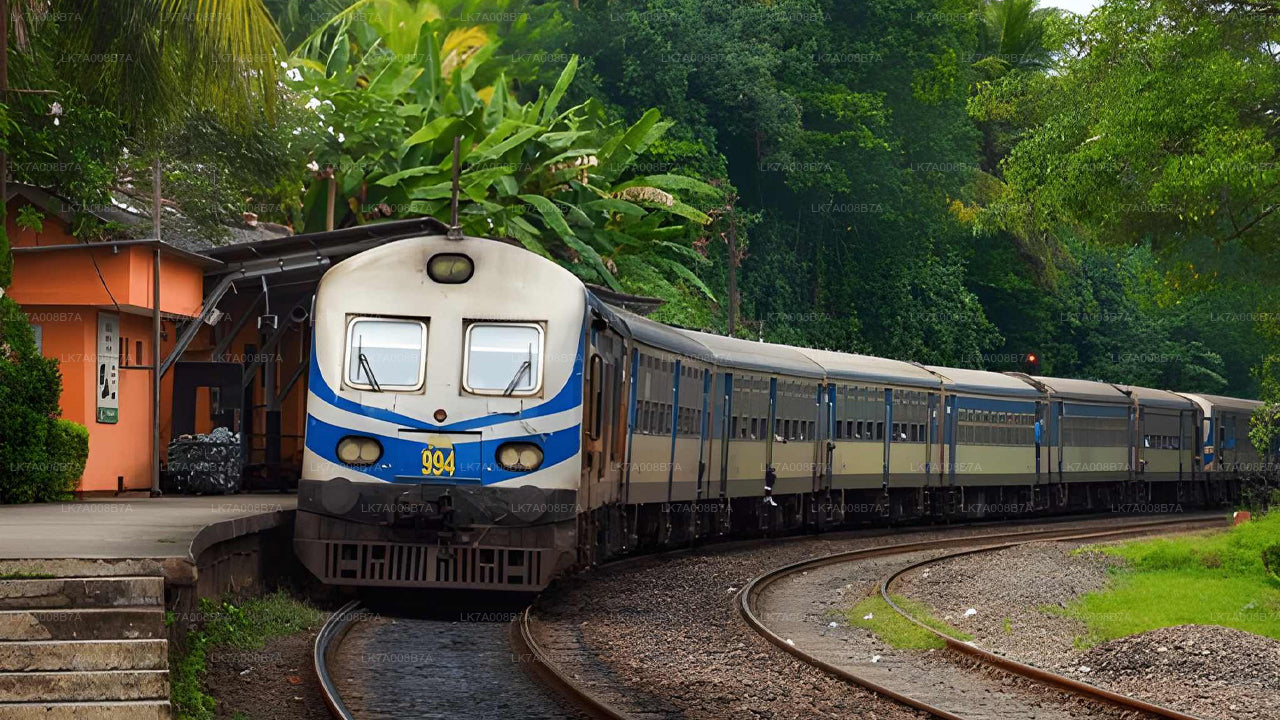
Matara is roughly 160 kilometres south of Colombo along the Southern Expressway, making it accessible by road in around two to two-and-a-half hours under good traffic conditions. The Southern Railway also connects Colombo Fort station to Matara, and the journey by train — running close to the coast for much of the route — is one of the more scenic rail rides in the country. Within Matara, the fort area is a short tuk-tuk or taxi ride from the main bus and train terminals.
Can the Dutch Reformed Church be visited as part of a broader southern Sri Lanka itinerary?
Yes, and it fits naturally into a coastal circuit of the south. The Dutch colonial legacy is traceable along a roughly linear route from Negombo through Colombo, Galle, and Matara. Galle Fort, a UNESCO World Heritage Site, contains the best-preserved ensemble of Dutch colonial architecture on the island, including its own Dutch Reformed Church. Travellers following this route can book a Galle City Tour to cover Galle's colonial quarter in depth before continuing south to Matara.
The wider southern coast also offers complementary natural and cultural attractions: the Sinharaja Forest Reserve lies within day-trip range inland, while the coastal stretch between Galle and Matara passes several turtle conservation sites and quiet beaches.
Is the Dutch Reformed Church in Matara open to visitors?
The church is generally accessible to visitors, though opening hours and any admission arrangements can vary. It is advisable to visit during daylight hours and, where possible, to check locally on the day. The surrounding fort walls and Star Fort are open-air and accessible at any time. Visitors should behave respectfully inside the church, as they would in any active or heritage religious space.
What other Dutch colonial heritage sites are there in Sri Lanka?
The Dutch colonial footprint in Sri Lanka is concentrated along the western and southern coasts and around Jaffna in the north. Key sites include Galle Fort (the most complete VOC urban ensemble remaining anywhere in Asia), the Dutch Fort at Negombo, the Dutch Hospital in Colombo's Pettah district, and the fortifications at Batticaloa and Jaffna. Each site illuminates a different aspect of VOC administration: commercial, military, ecclesiastical, and juridical. For those interested in the legal dimensions of this period, the Dutch Roman Law that the VOC introduced remains partially embedded in Sri Lankan property law to this day.
- Galle Fort — UNESCO World Heritage Site; most complete VOC urban ensemble in Asia
- Negombo Dutch Fort — smaller garrison fort on the western coast
- Dutch Hospital, Colombo — repurposed as a dining and retail complex in the Fort district
- Jaffna Fort — Dutch-era fortification in the Northern Province
- Matara Star Fort — adjacent to the Dutch Reformed Church; intact star-plan fortification
What should I know before visiting Matara's colonial sites?
Matara is a working town, not a preserved heritage zone, and the colonial sites sit within an active urban environment. The fort area can be busy during market days and public holidays. Morning visits tend to be more comfortable, both in terms of temperature and crowd levels. Comfortable walking shoes are recommended, as the fort ramparts involve uneven stone surfaces. If you are combining the church with the Star Fort and the fort walls, allow a minimum of two hours for the whole area.
Nearby places
11 places within about 25 km, nearest first.
- Matara Fortunder 1 km
- Matara Railway Stationunder 1 km
- Gandara Purana Viharayaunder 1 km
- Weherahena Railway Stationunder 1 km
- Weherahena Buddhist Templeunder 1 km
- Hiththetiya Rajamaha Viharaya1 km
- Polhena Beach2 km
- Kakanadura Railway Station2 km
- Walgama Railway Station2 km
- Madiha Beach2 km
- Snake Farm4 km
Related reading
5 pages on closely related subjects.