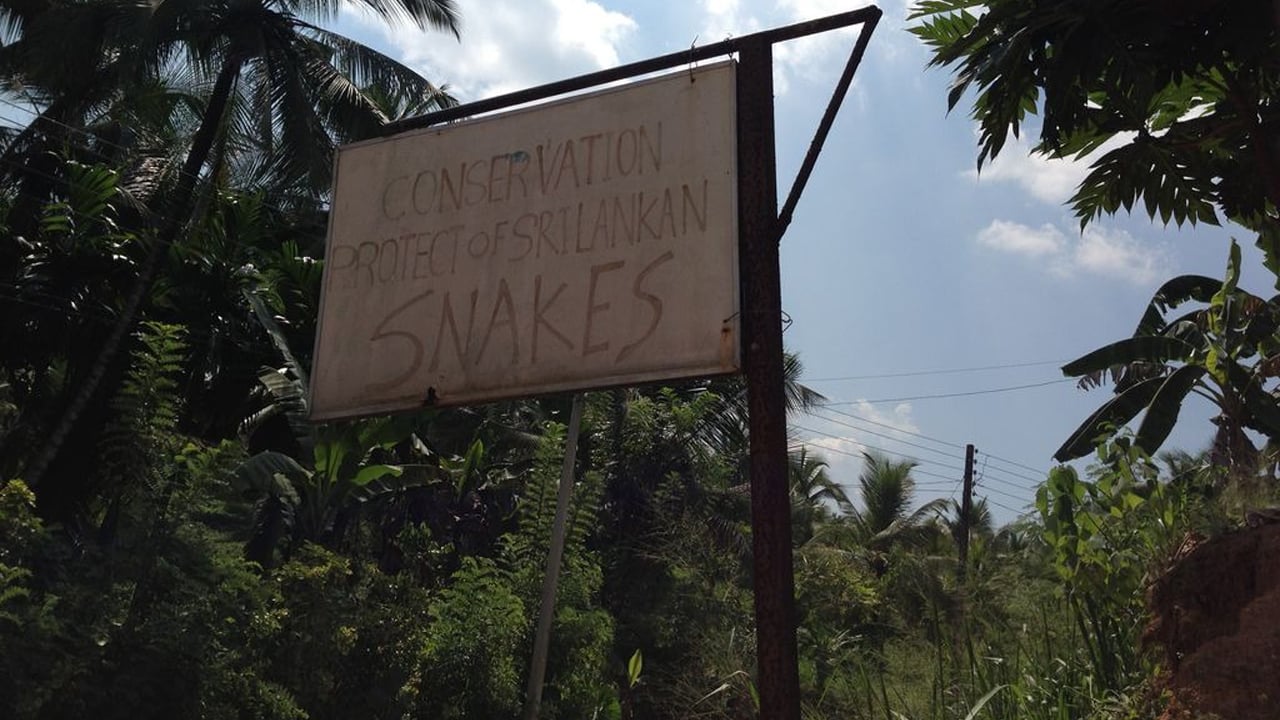

Tucked into the rural landscape of Telijjawila, roughly 10 kilometres from Matara in Sri Lanka's Southern Province, the Snake Farm is one of the more distinctive wildlife stops on the southern coast circuit. It is a privately operated facility that serves a dual purpose: conservation education for visitors and practical snake-rescue and research work for the surrounding community. Unlike a conventional zoo exhibit, the farm invites genuine engagement — you leave with a working understanding of why snakes matter to Sri Lanka's ecosystems, not just a photograph.
What species can you see at the Snake Farm in Telijjawila?
Sri Lanka is home to around 110 snake species, of which roughly a quarter are considered venomous. The farm houses a representative cross-section, with specimens drawn primarily from the forests, wetlands, and agricultural land of the southern coastal belt.
- Indian cobra (Naja naja) — one of the four medically significant venomous species in Sri Lanka, frequently rescued from coconut plantations and paddy fields.
- Russell's viper (Daboia russelii) — responsible for a significant share of serious snakebite cases in the country's agricultural regions.
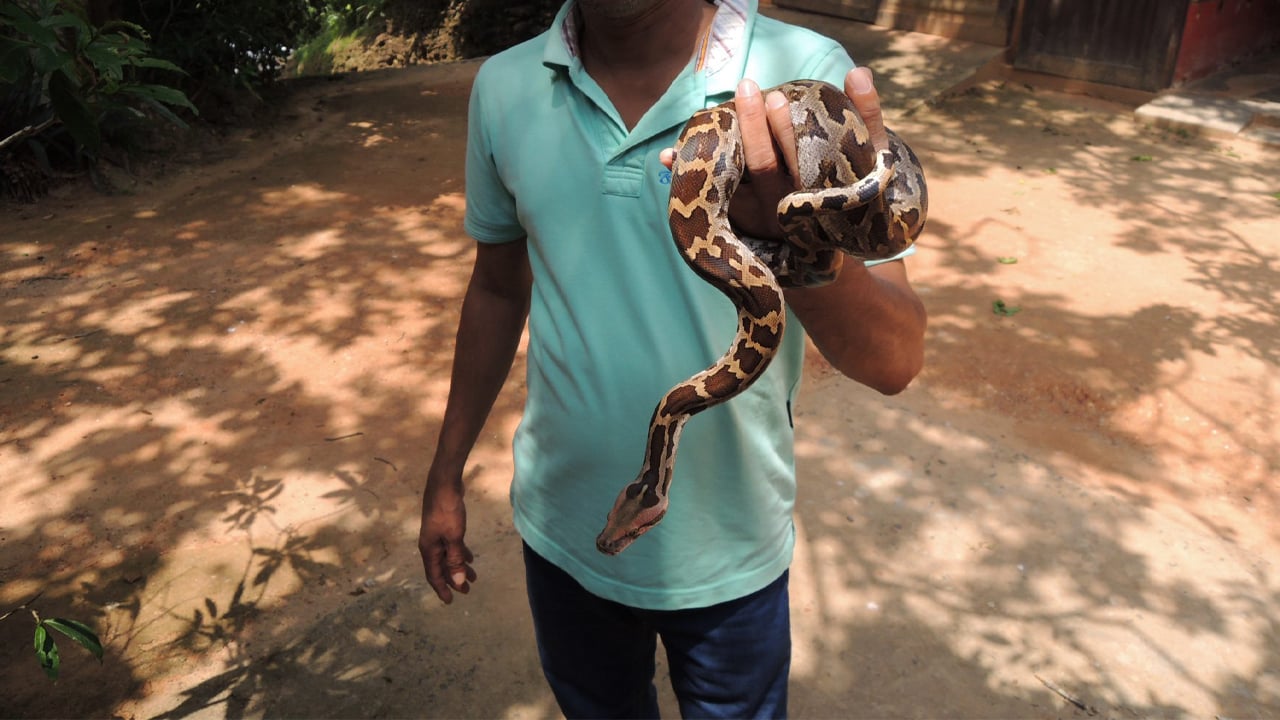
- Indian rock python (Python molurus) — a non-venomous constrictor and one of the largest snakes on the island.
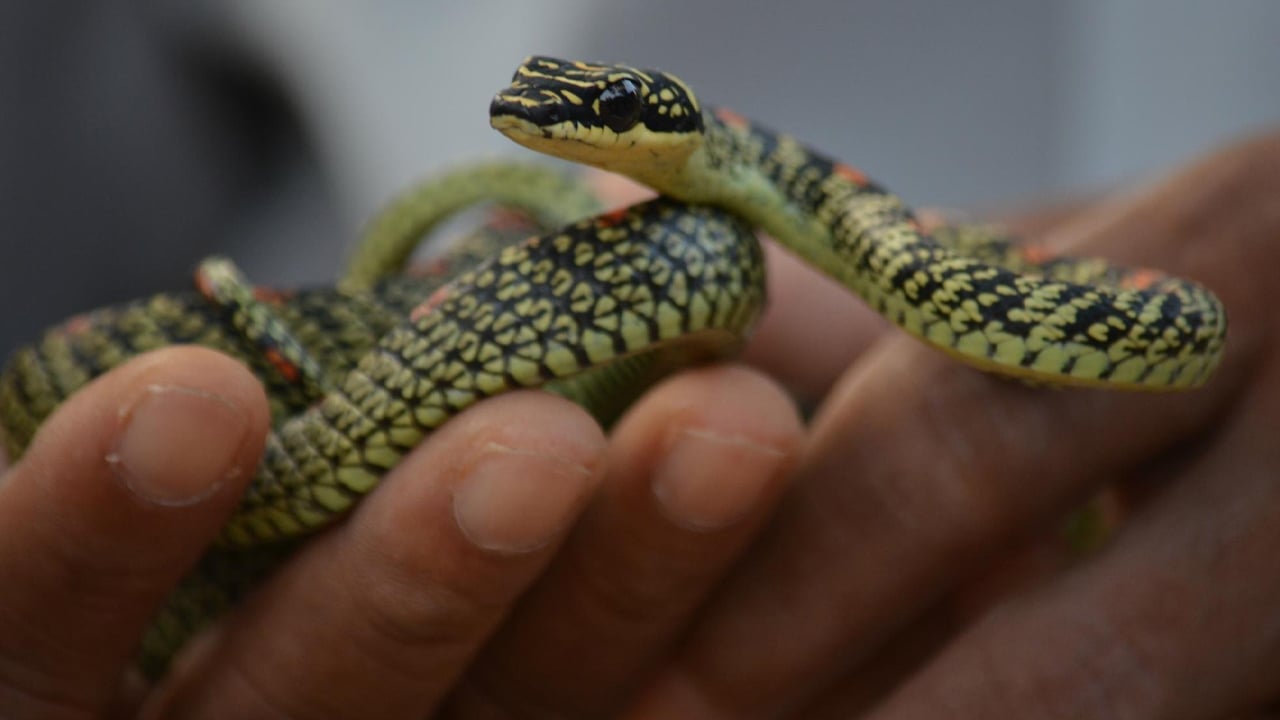
- Green pit viper (Trimeresurus trigonocephalus) — an endemic species that is arboreal and vividly coloured, found across the wet zone.
- Common krait (Bungarus caeruleus) — nocturnal and highly venomous; its bites are medically serious and often occur indoors.
Non-venomous species such as rat snakes, sand boas, and cat snakes are also present, giving context to the full spectrum of snake diversity visitors might encounter across the island.
What happens during a visit — demonstrations and education
Experienced handlers conduct live demonstrations that show how snakes are safely captured and handled — a skill that is also the basis for the farm's community rescue service. Sessions cover identification techniques that help local farmers and residents distinguish venomous from non-venomous species on sight, which has real practical value in a region where agricultural workers regularly encounter snakes.
Educational briefings address snake behaviour, feeding patterns, and the ecological role snakes play in controlling rodent populations in paddy fields and coconut estates. There is also information on traditional Ayurvedic approaches to snakebite management — an area where folk knowledge intersects with modern first-aid guidance.
The format is participatory rather than passive. Visitors who are comfortable can observe snakes at close range, and handlers answer questions from the group throughout. School groups and student field trips visit regularly, and the farm's educational materials are pitched to be accessible for a general audience rather than specialists.
What is the surrounding environment like?
Telijjawila sits within a landscape typical of Sri Lanka's southern lowland wet zone — a patchwork of smallholder plots, rubber and coconut cultivation, and secondary forest. Birdlife is varied in the surrounding area, and the farm's grounds themselves include tropical vegetation that supports the kinds of microhabitats snakes naturally seek out.
The broader southern coast is ecologically rich. Visitors interested in wildlife can combine a trip to the Snake Farm with a boat safari on the Madu River, where crocodiles, water monitors, and dozens of bird species can be observed in a mangrove setting. The Sinharaja Forest Reserve, a UNESCO World Heritage Site and one of Asia's last remaining lowland rainforests, is also accessible within a half-day's drive for those on a wildlife-focused itinerary.
When is the best time to visit the Snake Farm?
The Southern Province experiences its dry season broadly from November through April, when rainfall is lower and road conditions along the coastal belt are at their most reliable. This window aligns well with the peak tourist season in Mirissa, Galle, and Tangalle, making it easy to include Telijjawila as part of a wider southern coast itinerary.
That said, the farm operates year-round, and visits during the inter-monsoon months (typically May and October) are perfectly feasible — rainfall in the south tends to arrive in short afternoon bursts rather than all-day downpours. Snake activity itself is influenced more by temperature than rainfall; snakes are ectothermic and are generally more active during the warmer, drier months, which means the farm's residents may be more visible between November and March.
How do you get to the Snake Farm from Matara or the southern coast?
Telijjawila is located on or near the A2 coastal highway, making it straightforward to reach by private vehicle from most southern coast bases.
| Departure point | Approximate distance | Approximate drive time |
|---|---|---|
| Matara | Around 10 km | 20–30 minutes |
| Mirissa | Around 18 km | 30–40 minutes |
| Weligama | Around 22 km | 35–45 minutes |
| Galle | Around 40 km | 60–75 minutes |
Local buses connect Matara and Telijjawila, but a private car or tuk-tuk is more practical if you plan to combine the visit with other stops. Distances are approximate and travel times vary with traffic, particularly around Matara town.
What else can you visit nearby?
The Snake Farm pairs naturally with several other attractions in the Matara district and the wider southern coast:
- Weherahena Buddhist Temple — a visually elaborate temple complex on the outskirts of Matara with an underground tunnel lined with murals and statuary.
- Nilwala River — the river estuary near Matara supports crocodile populations and wading birds; boat trips are available.
- Midigama Fruit Farm — a working tropical fruit farm near Midigama offering guided tours of local cultivars, suitable for visitors interested in Sri Lanka's agricultural biodiversity.
- Beaches at Mirissa, Ahangama, and Polhena — all within 20–30 kilometres, providing easy options for a combined half-day natural history excursion followed by time at the coast.
- Kosgoda and Koggala turtle hatcheries — the Kosgoda Sea Turtle Conservation Project and the Koggala Sea Turtle Conservation Project both focus on marine turtle conservation and are popular stops on the coastal stretch between Galle and Matara.
Who should visit the Snake Farm?
The farm is most rewarding for wildlife enthusiasts, biology students, and travellers with children who want to move beyond beach itineraries and engage with Sri Lanka's natural history. It is not a large-scale theme park — the value is in the direct access to animals and the quality of the explanations from knowledgeable handlers, rather than in spectacle or infrastructure. Visitors who come expecting a zoo-style experience may find it modest; those who come curious will find it genuinely informative.
For travellers building a southern itinerary around conservation themes — turtle hatcheries, river safaris, forest reserves — the Snake Farm adds a complementary layer that is hard to replicate elsewhere in the country.