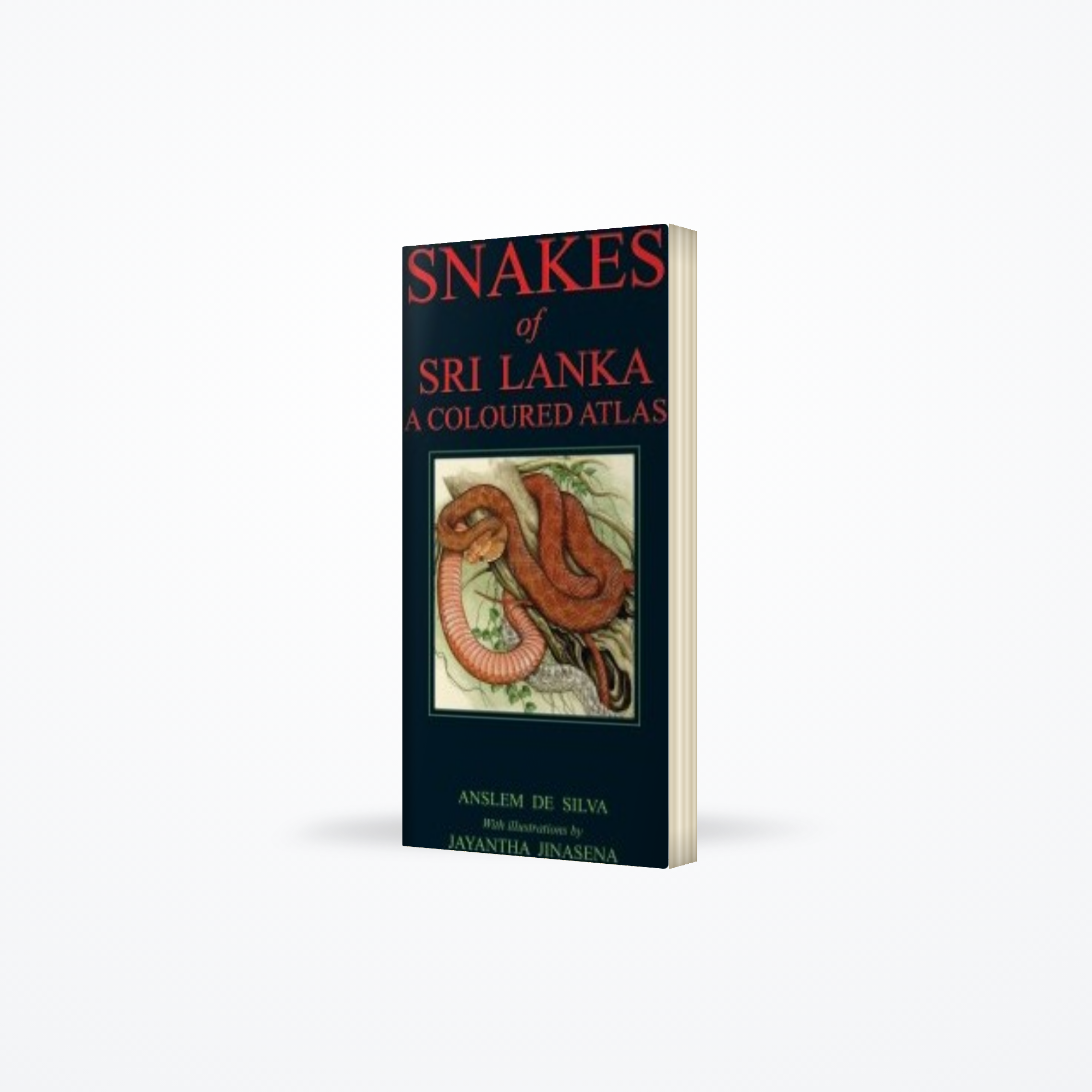
Sri Lanka is home to around 100 snake species, of which roughly a quarter are venomous to varying degrees. For most visitors exploring the island's forests, wetlands, and paddy landscapes, a snake encounter is unlikely — but understanding the risks, recognising the species involved, and knowing how to respond can make a critical difference in a genuine emergency.
Which venomous snakes are found in Sri Lanka?
Five species are considered medically significant in Sri Lanka and account for the large majority of serious bites recorded each year.
- Russell's Viper (Daboia russelii) — the most dangerous snake on the island, responsible for the highest number of fatal bites. It favours open farmland and paddy fields and is active at dusk and night.
- Indian Cobra (Naja naja) — widespread across the lowlands and mid-country. Delivers a powerful neurotoxic and cytotoxic venom. Recognisable by its iconic hood when threatened.
- Common Krait (Bungarus caeruleus) — nocturnal and notably cryptic. Its bite is strongly neurotoxic and may cause little initial pain, which delays treatment. Enters houses readily.
- Saw-scaled Viper (Echis carinatus) — found mainly in the dry northern and north-western zones. Small but aggressive, with highly haemotoxic venom.
- Green Pit Viper (Trimeresurus trigonocephalus) — an endemic species inhabiting forest undergrowth and tea-estate canopy. Bites are painful but rarely fatal when treated promptly.
Other species such as the Ceylon Krait (Bungarus ceylonicus) and the Hump-nosed Pit Viper (Hypnale hypnale) are also venomous and endemic. The hump-nosed pit viper in particular causes more bites than its reputation suggests, especially among plantation workers in the wet zone. The Sinharaja Forest Reserve and surrounding wet-zone forests are habitat for several arboreal and ground-dwelling venomous species.
Where in Sri Lanka is snake bite risk highest?
Risk is not uniform across the island. Agricultural lowlands — particularly irrigated paddy and sugarcane areas — carry the highest incidence of bites, as farmers work bare-footed in conditions where Russell's Vipers and Kraits are common. The dry zone north of the cultural triangle and around Wilpattu National Park has a high density of Russell's Vipers and saw-scaled vipers. Wet-zone forests and tea estates present a different risk profile, dominated by pit vipers and the Ceylon Krait. Coastal wetlands, river banks, and mangrove areas such as Madu Ganga host non-venomous water snakes as well as the occasional cobra.
Tourists staying in standard hotels and on well-maintained trails face negligible risk. The risk rises when walking through tall grass, collecting firewood after dark, or reaching into rocky crevices and dense vegetation without checking first.
How do you recognise a venomous snake bite?
Identifying the snake precisely is less important than acting quickly. However, certain signs point to envenomation rather than a dry bite (in which venom is not injected).
| Sign | Likely venom type |
|---|---|
| Rapid local swelling, bruising, blistering | Haemotoxic / cytotoxic (Russell's Viper, Hump-nosed Pit Viper) |
| Drooping eyelids (ptosis), difficulty swallowing or breathing | Neurotoxic (Cobra, Krait) |
| Bleeding from gums, blood in urine | Haemotoxic (Russell's Viper, Saw-scaled Viper) |
| Little or no pain initially, progressive weakness | Neurotoxic (Common Krait — especially dangerous for this reason) |
| Fang marks with minimal immediate swelling | Inconclusive — can be a dry bite or early neurotoxic envenomation |
Do not wait for symptoms to worsen before seeking care. Symptom onset can be delayed, particularly with krait bites, where the patient may feel almost normal for several hours before respiratory paralysis develops.
What should you do immediately after a snake bite?
The single most important action is to get the victim to a hospital with antivenom as quickly as possible. Sri Lanka's government hospitals — including district general hospitals and teaching hospitals — stock polyvalent snake antivenom at no cost to the patient. Follow these steps while arranging transport:
- Keep the victim calm and still. Movement accelerates venom absorption. Immobilise the bitten limb at or below heart level.
- Remove constrictive items. Take off rings, watches, and tight clothing near the bite site before swelling begins.
- Note the time of the bite. Record the time and, if safely possible, a description or photograph of the snake from a safe distance — never attempt to capture it.
- Do not cut, suck, or tourniquet the wound. These traditional first-aid measures are now firmly contraindicated by WHO guidelines and can cause additional harm.
- Do not apply ice or herbal remedies. Ice can worsen tissue damage; traditional plant-based poultices have no proven benefit and may mask symptoms.
- Go directly to the nearest hospital. Call 1990 (Suwa Seriya ambulance service) if available, or arrange private transport. Do not drive alone.
What treatment is available in Sri Lanka for snake bites?
Sri Lanka has a well-developed hospital network for managing envenomation. Polyvalent antivenom covering Russell's Viper, Cobra, Krait, and Saw-scaled Viper is manufactured in the region and distributed to government hospitals. Treatment also typically includes supportive care — intravenous fluids, blood-clotting factor replacements for haemotoxic bites, and mechanical ventilation for severe neurotoxic cases.
Private hospitals in Colombo, Kandy, Galle, and other cities also treat snake bites, though availability of antivenom may vary; government district hospitals are often better stocked. Informing the hospital triage team immediately that a snake bite is suspected — rather than waiting in general queue — is essential for prompt triage.
How can travellers reduce the risk of a snake bite in Sri Lanka?
Practical precautions eliminate most of the risk for visitors:
- Wear closed shoes and long trousers when walking in forest, scrub, or agricultural land — especially after dark.
- Use a torch at night, even on short walks around lodges. Kraits and Russell's Vipers are primarily nocturnal.
- Stay on marked trails in national parks. Rangers and guides are trained to spot snakes.
- Shake out shoes and clothing left on the floor before putting them on — a common precaution in bungalows and camps.
- Never handle a snake, even one that appears dead. Reflex bites from recently killed snakes are documented.
- In the unlikely event of spotting a snake in your room or vehicle, alert staff immediately and move away calmly. Most species will retreat given space.
Are there non-venomous reptiles that visitors often confuse with dangerous snakes?
Yes. Sri Lanka's commonest snake is the Sri Lankan rat snake (Ptyas mucosa), a large, fast-moving non-venomous species that many people instinctively fear. The iridescent sheen of the rainbow skink, the movement of monitor lizards in undergrowth, and the rapid darting of blind snakes are all regularly — and incorrectly — flagged as dangerous encounters. The best rule for any reptile encounter is simple: observe from a respectful distance and do not attempt to touch or provoke.
Sri Lanka's crocodile watching sites on rivers and lagoons present a different category of reptile encounter. Mugger and saltwater crocodiles inhabit many lowland waterways and, while attacks on humans are rare, maintaining distance and following guide instructions is non-negotiable.
Related reading
6 pages on closely related subjects.