Seenimodara Beach sits quietly on Sri Lanka's southern coastline, a short distance from Tangalle town. Unlike the more visited beaches along the south coast, Seenimodara has remained relatively low-key — its soft sand, shallow turquoise water, and palm-shaded estuary drawing visitors who prefer calm over crowds. If you are looking for a beach where you can spend a full day without jostling for space, this is a solid choice.
Where exactly is Seenimodara Beach?
The beach is located close to Tangalle in the Hambantota District of Sri Lanka's Southern Province. Tangalle itself is one of the larger towns on this stretch of coast, and Seenimodara lies just outside the main resort belt, which helps explain its quieter character. The nearest major city is Matara, roughly 35–40 km to the west along the coastal highway. Galle is around 90 km further, making Seenimodara a natural stopping point on a longer southern circuit.
Getting here from Colombo typically means taking the Southern Expressway (E01) to Matara or Hambantota and then continuing on the coastal road. The journey from Colombo takes around three to four hours depending on traffic and your final stopping point. A private car or taxi is the most practical option for first-time visitors, as public transport to the beach itself is limited.
What is the beach like at Seenimodara?
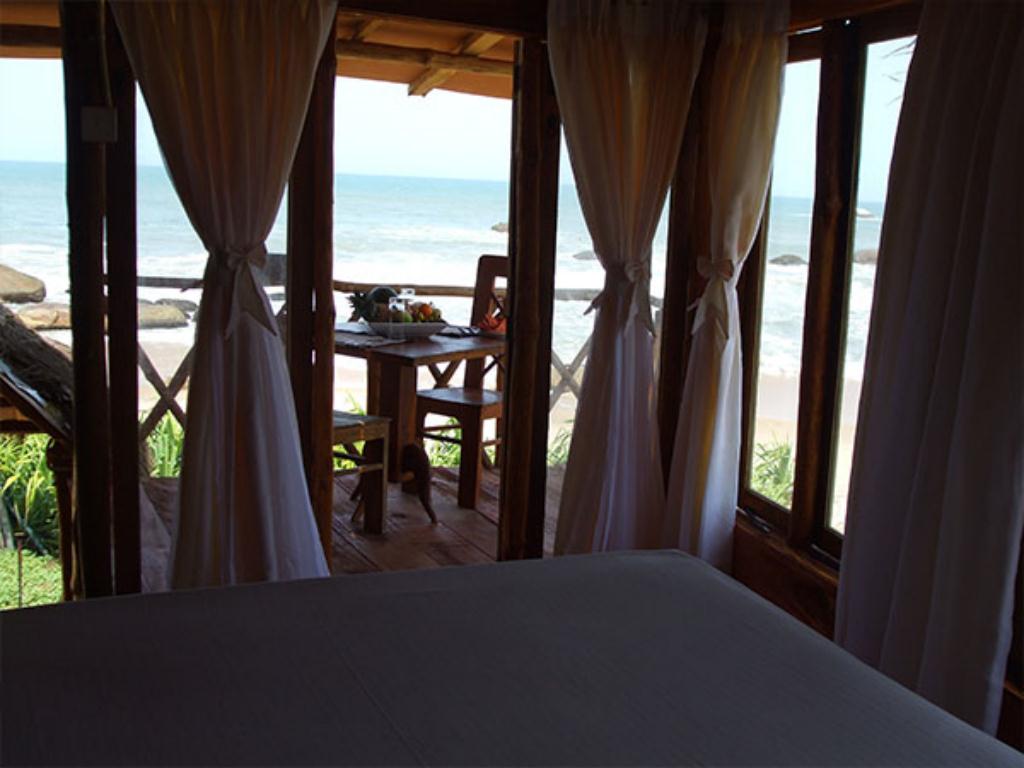
The beach is characterised by soft, pale sand that slopes gently into the sea. A calm estuary borders one end of the shore, where fresh water meets the ocean — a landscape detail that also adds a layer of biodiversity to the immediate area. Coconut palms line the landward edge of the beach, providing natural shade during the hotter parts of the day.
The water conditions are generally gentle, particularly during the northeast monsoon season (roughly October to January) when the southern coast is in its dry, calm phase. Swimming is comfortable for most of this period. During the southwest monsoon (May to September), swells can increase significantly along the south coast, so it is worth checking local conditions before entering the water at any time of year.
- Sand: Soft, pale golden, fine-grained
- Water: Calm and shallow near shore during fair weather
- Shade: Natural palm cover along the back of the beach
- Facilities: Limited — bring what you need; small local guesthouses and eco-lodges are nearby
- Crowds: Generally quiet; most visitors are independent travellers or guests at nearby accommodations
When is the best time to visit Seenimodara Beach?
The southern coast of Sri Lanka is at its best between November and April, when dry, sunny weather dominates and the sea remains calm. December through February is peak season across the south, so Tangalle and its surrounding beaches see more visitors during this window. Even so, Seenimodara tends to stay quieter than more developed beaches in the region.
April and early May, just before the monsoon arrives, can also be pleasant — the weather is warm, and accommodation is easier to find. From May onward, the southwest monsoon brings heavier rain and rougher seas; while the landscape remains green and atmospheric, swimming is not advisable during this period.
| Season | Weather | Sea Conditions | Visitor Numbers |
|---|---|---|---|
| Nov – Apr | Dry, sunny | Calm, swimmable | Moderate to high |
| May – Sep | Monsoonal rain | Rough, not recommended | Low |
| Oct | Transitional | Variable | Low |
What can you do near Seenimodara Beach?
The beach itself invites a slow pace — swimming during calm conditions, reading in the shade, watching fishing boats move along the horizon. But the surrounding area offers a handful of experiences worth planning around.
Rekawa Turtle Conservation Project
Around 8–10 km east of Tangalle, the Rekawa beach is one of Sri Lanka's most important sea turtle nesting sites. Five species of marine turtle — including the green, leatherback, and loggerhead — come ashore here to lay eggs, primarily between March and August. The Rekawa Turtle Conservation Project, managed with community involvement, allows guided night-time visits to observe nesting turtles. This is one of the more reliable places in Sri Lanka to witness this in the wild, rather than at a hatchery. Visitors who stay near Seenimodara can arrange a visit on the same evening.
For those interested in sea turtle conservation more broadly, the Kosgoda Sea Turtle Conservation Project further north along the west coast is another well-run programme worth visiting on a longer itinerary.
Tangalle Lagoon
Tangalle town sits beside a sheltered lagoon that is a productive fishing area and a calm, photogenic stretch of water. Early mornings, when the fishing fleet returns and local activity is at its peak, offer the best opportunity to experience the working character of the coast. The lagoon is also a reasonable spot for birdwatching, with wading birds common along its edges.
Fishing villages and local culture
The coastline between Tangalle and Hambantota retains a strong fishing culture. Small villages where outrigger canoes are repaired on the beach and nets are spread out to dry are still a common sight. Visiting on foot or by tuk-tuk is a low-key way to get a sense of the area's everyday coastal life without feeling intrusive. A tuk-tuk safari through the backroads can connect these villages efficiently.
Udawalawe National Park
Around 50–60 km north of Tangalle, Udawalawe National Park is one of Sri Lanka's best places to see wild elephants in open grassland habitat. Many travellers combine a night or two near Seenimodara Beach with a morning safari at Udawalawe, making the beach a sensible base for a southern Sri Lanka loop.
Where to stay near Seenimodara Beach?
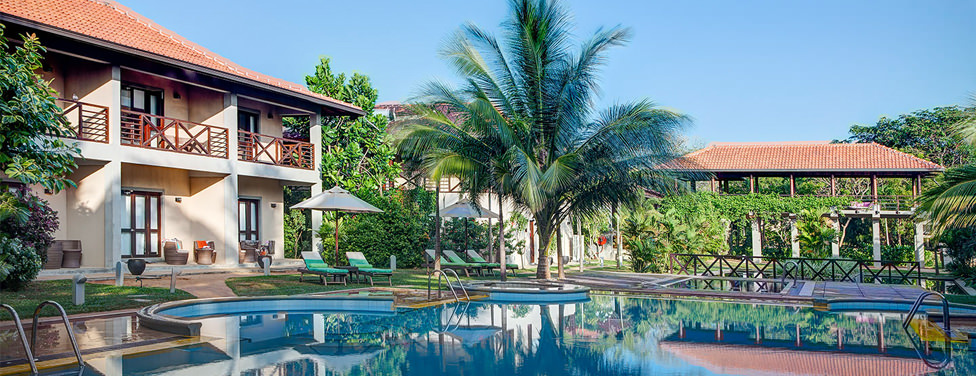
Accommodation options in the immediate Seenimodara area lean toward small guesthouses, eco-lodges, and boutique properties rather than large resorts. The broader Tangalle area has a wider range of hotels, and the Ranna district — slightly west of Tangalle — has seen growth in mid-range and upscale properties. Most visitors looking for a quieter southern beach holiday will find the accommodation landscape here better suited to longer, more relaxed stays than fast-paced group itineraries.
It is worth booking ahead during the November–February peak, as smaller properties in the area have limited room counts and fill quickly.
Practical tips for visiting Seenimodara Beach
- There are no large shops or pharmacies on the beach itself — stock up on water and supplies in Tangalle town before heading out.
- Sun protection is important year-round; the equatorial sun is strong even on overcast days.
- Respect the natural environment: do not disturb nesting birds or marine life, and carry out any waste you bring in.
- If you plan to visit Rekawa for turtle watching, book your guided visit in advance through a responsible local operator or your accommodation.
- Mobile signal and Wi-Fi can be patchy near the beach; plan offline maps or download directions before you arrive.
Nearby places
13 places within about 25 km, nearest first.
- Rekawa Townunder 1 km
- Kalametiya Bird Sanctuary1 km
- Rekawa City2 km
- Tangalle City2 km
- Goyambokka Beach4 km
- Rekawa Lagoon5 km
- Ranna Beach6 km
- Hiriketiya Beach7 km
- Rekawa Turtle Observation Camp8 km
- Ranna8 km
- Mawella Beach10 km
- Mulkirigala Raja Maha Vihara10 km
- Naigala Raja Maha Viharaya17 km
Related reading
6 pages on closely related subjects.