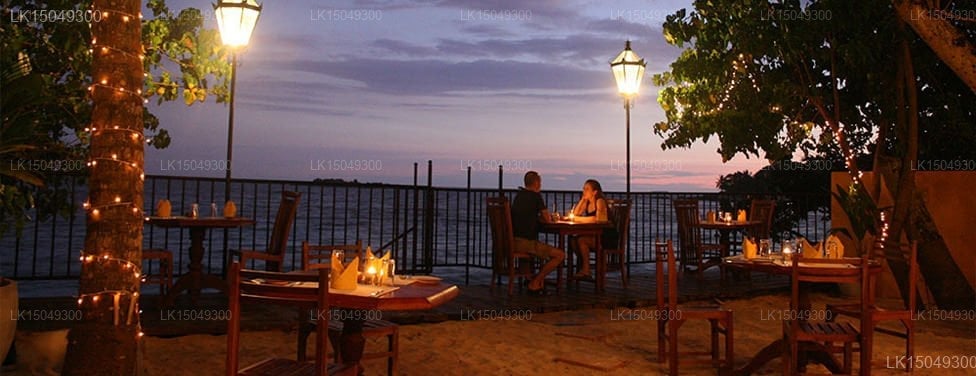
Just a short distance from the fishing town of Weligama on Sri Lanka's Southern Coast, a small island sits in the shallows of a sheltered bay. Taprobane Island — sometimes called Secret Beach for the seclusion it offers — measures barely half a hectare, yet it contains one of the most remarkable private estates in the Indian Ocean. For travellers seeking genuine solitude without sacrificing comfort, it represents something increasingly rare: a place that still feels undiscovered.
What is the history of Taprobane Island?
The island's modern story begins in the 1920s, when French aristocrat Count de Mauny-Talvande purchased the rock and commissioned a distinctive five-sided villa at its summit. Inspired by Moorish and South Asian architectural traditions, the Count cultivated tropical gardens that cascade down to the waterline — palms, frangipani, and dense coastal vegetation that remain largely intact today.
The estate later attracted Paul Bowles, the American novelist and composer, who wrote parts of his work here in the 1950s and described the island in glowing terms. That literary association added a quiet cultural layer to what was already a compelling natural setting. The property has changed hands several times since, but successive owners have preserved both the architecture and the gardens with care.
Where exactly is Taprobane Island, and how do you reach it?
The island lies within the bay at Weligama, roughly 100 metres from the beach — close enough to wade to at low tide, though most visitors arrive by a short boat transfer. Weligama itself sits on the Southern Expressway corridor, around two to two-and-a-half hours by road from Colombo and approximately 15 minutes from Galle. A Galle city tour pairs naturally with a visit, since both destinations share the same coastal stretch.
The nearest international airport is Bandaranaike International Airport in Colombo. Arranging a private transfer from the airport directly to Weligama is straightforward and recommended, particularly for guests booking an exclusive stay on the island itself.
What can you see and do at Taprobane Island?
The estate's terraced gardens reward a slow exploration. Mature tropical trees shade stone pathways, and the views across Weligama Bay from the upper terrace are broad and calm, framing traditional outrigger fishing boats in the middle distance.
- Swimming and snorkelling: The bay's waters are generally gentle, particularly between November and April, with reasonable visibility close to the island's rocks.
- Kayaking: Paddling around the island's perimeter takes under an hour and offers a different perspective on the estate's architecture and the surrounding bay.
- Beachside relaxation: The small sandy areas at the island's base are private by nature — during an exclusive stay, you will rarely share them with anyone.
- Wildlife: Birdwatchers will find the island's trees host several species common to Sri Lanka's southern coast, including kingfishers and sunbirds.
- Private events: The estate has hosted weddings and intimate celebrations; its seclusion and setting make it a distinctive venue for small gatherings.
What is the best time to visit Taprobane Island?
The Southern Coast follows the Southwest Monsoon calendar. The dry season runs from approximately November through April, when skies are largely clear, seas are calm, and outdoor activities are reliable. This period represents the optimal window for swimming, snorkelling, and any event held on the property.
Between May and October, the Southwest Monsoon brings stronger swells and heavier rainfall to this coastline. The island remains accessible and the estate retains its atmosphere in wet weather, but marine activities become less predictable. Travellers with flexibility should target the November-to-April window.
How is Taprobane Island used today?
The island operates primarily as an exclusive-use rental property. Guests typically book the entire estate rather than individual rooms, giving a small group complete privacy for the duration of their stay. The villa's staff provides catering using local ingredients, and the surrounding waters supply fresh seafood regularly featured in meals.
Day visits are occasionally possible through prior arrangement, though the island's appeal is most fully experienced over multiple nights, when the rhythm of the tides, the garden, and the bay becomes part of the stay rather than a backdrop to it.
What else is worth visiting near Weligama?
The coastline between Galle and Matara contains several points of interest within easy reach of Weligama. Mirissa, a short drive to the east, is one of Sri Lanka's most productive whale-watching departure points, particularly for blue whales between December and April. The mangrove waterways of Madu River Safari lie further north along the coast and offer a very different natural experience — slow-boat journeys through bird-rich channels.
Inland from Weligama, the foothills of the Southern Province contain spice gardens and small working farms that can be visited on half-day excursions. The Sinharaja Forest Reserve, a UNESCO World Heritage Site and one of Asia's last remaining tropical lowland rainforests, is accessible as a day trip for experienced hikers.
Practical information for visitors
| Detail | Information |
|---|---|
| Location | Weligama Bay, Southern Province, Sri Lanka |
| Access from island | Short boat transfer or wading at low tide (approx. 100 m) |
| Nearest town | Weligama (market, restaurants, surf hire) |
| Distance from Galle | Approx. 15 km east along the coastal road |
| Distance from Colombo | Approx. 150 km via Southern Expressway (around 2–2.5 hrs) |
| Best season | November to April |
| Booking model | Exclusive-use estate rental; day visits by prior arrangement |
Nearby places
10 places within about 25 km, nearest first.
- Polwatta Gangaramayaunder 1 km
- Gurubebilaunder 1 km
- Taprobane Islandunder 1 km
- Kumbalgama Railway Stationunder 1 km
- Weligama City1 km
- Weligama Beach1 km
- Weligama Railway Station1 km
- Polwathumodara Railway Station2 km
- Mirissa Samudragiri Viharaya3 km
- Coconut Tree Hill3 km
Related reading
6 pages on closely related subjects.