Tucked inside a coconut grove just a short walk from Mirissa's shore, Veragalla Samudragiri Viharaya — commonly known as Mirissa Viharaya — is one of southern Sri Lanka's most historically significant Buddhist temples. While it draws fewer crowds than the beach a few hundred metres away, it rewards curious visitors with a remarkably intact collection of 18th-century murals that art historians consider among the finest surviving examples of the low-country Matara artistic tradition.
What makes Samudragiri Viharaya historically significant?
The temple's origins are not fully documented, but archaeological and folkloric evidence places its founding no later than the 18th century. Local tradition holds that the site began as a modest shelter used by monks who travelled to Mirissa to perform daily rituals, gradually growing into a permanent place of worship.
Sri Lanka's Department of Archaeology has declared the image house a protected national heritage site, primarily because of its wall paintings. The declaration recognises the murals as an irreplaceable record of a regional artistic school that flourished — and largely disappeared — along Sri Lanka's southern coast. According to archaeologist Professor Senaka Bandara, the murals of the Veragalla Samudragiri Viharaya image house are compositionally unique even within the Matara tradition.
What is the Matara style of temple painting?
During the Kandyan period, the low country — then under European colonial administration — developed a distinct visual language that diverged from the strictly codified painting style observed in temples loyal to the Kandyan Kingdom. Kandyan-tradition murals use a tightly controlled palette anchored by red backgrounds, floral fill motifs, and figures dressed in idealised courtly garments.
The Matara style introduced several clear departures. Artists working in southern coastal temples favoured darker backgrounds, including deep black, alongside a broader and more varied range of pigments. Background spaces were filled with leaves and branches as well as flowers, giving compositions a more naturalistic quality. Most notably, the clothing and headdresses of the figures show visible European influence — a direct reflection of the colonial context in which these artists lived and worked.
Most 18th- and 19th-century coastal temples absorbed a further layer of European influence through Rococo decorative motifs. Samudragiri Viharaya is exceptional because it retains a significant body of murals that remain grounded in the Matara style with relatively little Rococo overlay, making it one of the few places where that regional tradition can still be studied in depth.
What murals and artwork can visitors see inside the temple?
The most important paintings are concentrated on the exterior walls of the inner chamber of the image house. The composition is organised in horizontal registers, a layout common in Sri Lankan narrative temple painting.
- Top register: Scenes from the life of Prince Siddhartha, tracing the journey from royal birth to enlightenment.
- Lower registers: A cycle of Jataka tales — stories of the Buddha's previous lives — rendered in sequential narrative panels. Jatakas depicted include Kanthiwadi, Sasa, Sama, Kurudamma, and Devadamma, with the Kurudamma Jathakaya given the greatest visual prominence.
All panels are set against the characteristic dark red background of the Matara school. Transitions between scenes are handled with foliate borders rather than the plain ruled lines typical of Kandyan examples.
Three separate entrances lead into the inner chamber. Each doorway is framed by a sculptural dragon arch — a makara torana — carved in relief. One of these arches incorporates a figurative panel, adding a sculptural dimension to what is principally a painted programme.
How does Samudragiri Viharaya compare with other painted temples in Sri Lanka?
Sri Lanka has several celebrated painted temples, but comparisons help clarify what makes this one distinctive. The Galle district and the broader southern coast hold a number of viharayas with 18th- and 19th-century murals, yet most have been partially repainted or show heavier Rococo influence. Samudragiri Viharaya's paintings survive in a condition that allows scholars to read the original Matara-school grammar clearly — the palette, the background treatment, and the figural style all remain legible without later overpainting obscuring the original intention.
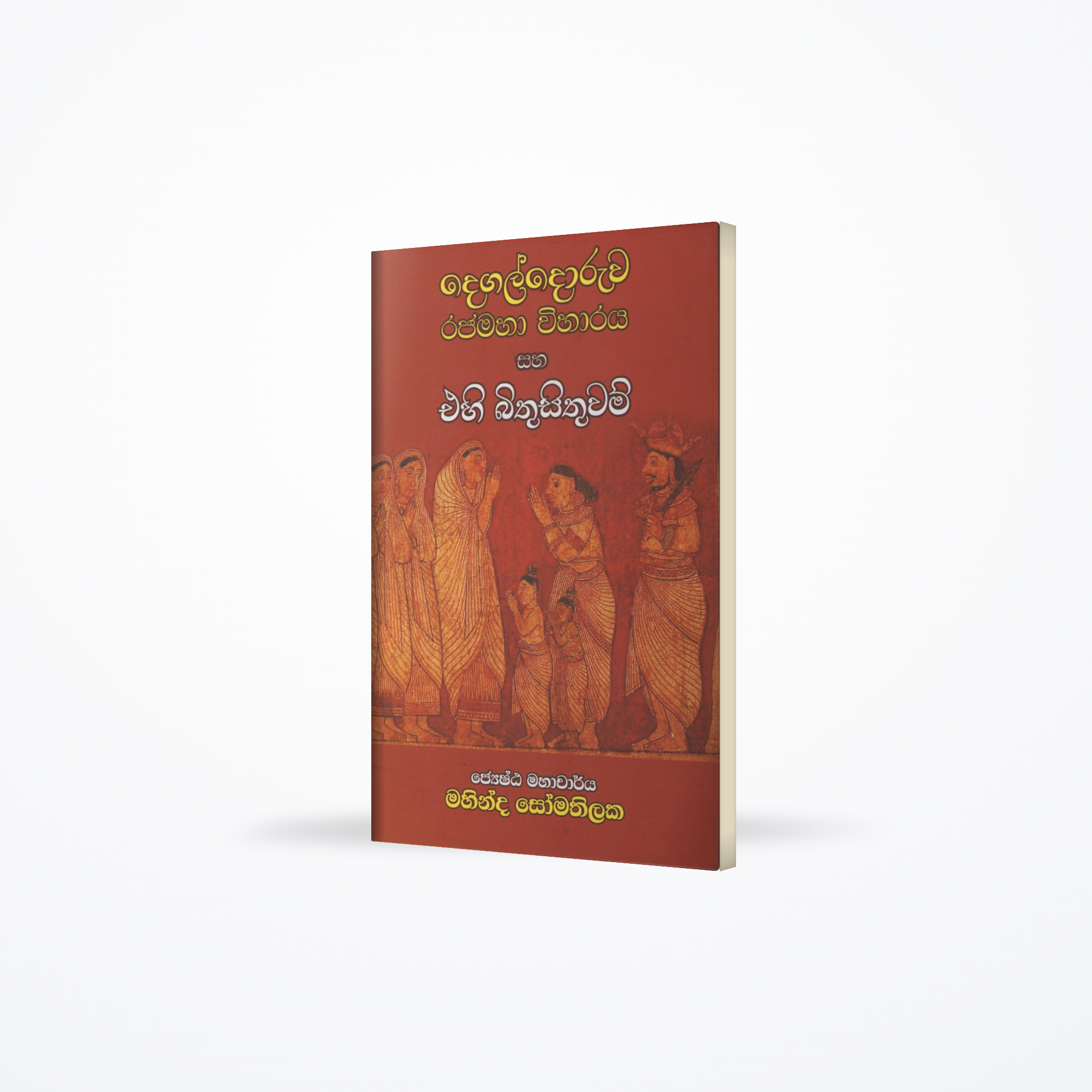
For travellers who have visited the famous Degaldoruwa or Dambulla cave temples and want to understand regional variation in Sri Lankan Buddhist art, Samudragiri Viharaya provides an instructive counterpoint to the Kandyan mainstream.
When is the best time to visit Mirissa Samudragiri Viharaya?
The temple is generally open to visitors year-round, though it is an active place of worship and quiet, respectful conduct is expected at all times. Morning visits — before the midday heat builds — allow the clearest light for examining the murals without the glare that can flatten the pigments' subtler tones in the afternoon.
The southern coast's dry season runs roughly from November to April, when roads around Mirissa are at their most accessible. That said, the temple itself is not affected by seasonal closures, and travelling in the green season (May to October) means far fewer fellow visitors, which can make the experience more contemplative.
How do I get to Mirissa Samudragiri Viharaya?
The temple is located in Mirissa, off the main Matara–Galle coastal road (A2). Matara town is the nearest major transport hub, roughly 10 km to the east. From Galle, the drive takes around 35–40 minutes along the coast road. Tuk-tuks and taxis from Mirissa beach can reach the temple in a few minutes. If you are combining the visit with a broader southern circuit — Galle, Koggala, or Weligama — a private driver gives you the flexibility to spend as long as the paintings demand without worrying about bus timetables.
There is no dedicated car park, but vehicles can stop along the lane leading to the temple compound. Modest dress covering shoulders and knees is required inside the image house, as at all active viharayas in Sri Lanka.
What else is worth visiting near Mirissa?
Mirissa itself offers more than its famous beach. The Koggala Sea Turtle Conservation Project lies a short drive to the west and is particularly worthwhile between November and April when nesting activity peaks. Whale-watching boats depart from Mirissa harbour between December and April, making the town one of the best places in the Indian Ocean region to observe blue whales at close range.
For travellers interested in continuing the art-historical thread, the Sinharaja Forest Reserve is accessible from the Deniyaya road inland from Matara, and the broader region holds several other heritage temples worth including in an itinerary centred on the south.
Nearby places
9 places within about 25 km, nearest first.
- Mirissa Railway Stationunder 1 km
- Coconut Tree Hillunder 1 km
- Mirissa Fisheries Harbourunder 1 km
- Mirissa Beach2 km
- Mirissa City2 km
- Polwathumodara Railway Station3 km
- Secret Beach3 km
- Gurubebila3 km
- Kamburugamuwa Railway Station3 km
Related reading
3 pages on closely related subjects.