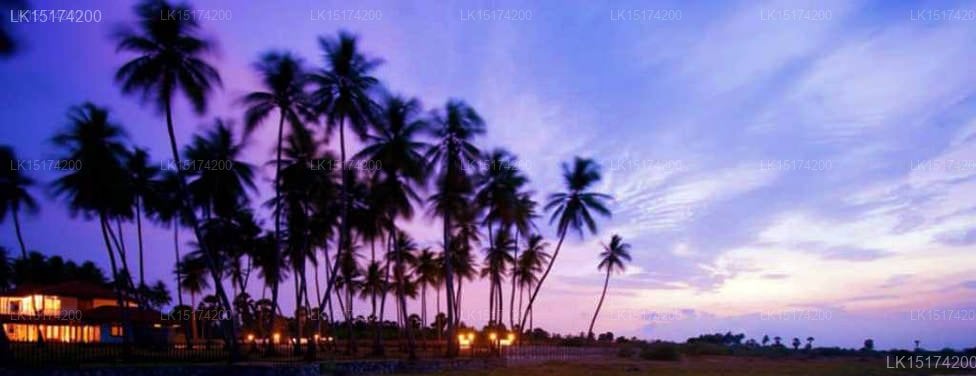
Arugam Bay sits on Sri Lanka's southeast coast in the Ampara District, roughly 320 km from Colombo. It is a slender crescent of sand backed by coconut palms, fishing boats, and a strip of low-key guesthouses and cafés. For most of the year it is a quiet place. Between April and October, however, consistent swells roll in from the Indian Ocean and the bay transforms into one of the most talked-about surf destinations in Asia.
Why do surfers rate Arugam Bay so highly?
The main break at the southern tip of the bay — simply called Main Point — produces long, right-hand waves that can hold their shape well into the barrel on a good swell. Conditions suit every level: beginners can take lessons on the gentler inside section, while experienced surfers can push further out when the swell rises above two metres. The consistency of the waves from May through September is the key draw; unlike surf destinations that depend on a narrow weather window, Arugam Bay offers reliable rideable surf across a long season.
Beyond Main Point, several satellite breaks extend the experience for those prepared to explore. Whiskey Point, a short tuk-tuk ride north, delivers a mellower right-hander favoured by longboarders. Elephant Rock, further along the same road, is a more powerful, less crowded option that rewards surfers willing to share the lineup with the occasional elephant emerging from the adjacent scrubland. Peanut Farm, Pottuvil Point, and Crocodile Rock each have their own character and are accessible by road or boat.
What can non-surfers do at Arugam Bay?
Arugam Bay is not solely a surf destination. The lagoon that borders the northern end of the bay is a productive birding habitat, home to painted storks, pelicans, and numerous wading species. Small boats run morning lagoon safaris that take visitors through narrow channels fringed with mangroves, often returning with sightings of estuarine crocodiles, water monitors, and migratory shorebirds.
- Yoga and wellness: Several studios and retreat centres operate in the bay area, offering daily classes suited to travellers looking to balance active days in the water with quieter recovery time.
- Crocodile watching: The Pottuvil Lagoon area is one of the more reliable spots in the east to see mugger crocodiles from a safe distance.
- Cycling: Flat roads connect the main bay to surrounding villages and surf points, making a bicycle an efficient and enjoyable way to explore at your own pace.
- Fishing villages: The community at Pottuvil, just north of the bay, follows a traditional fishing calendar largely unchanged by tourism. An early morning visit to the beach landing is a straightforward, worthwhile experience.
How do I get to Arugam Bay from Colombo?
The most comfortable option is a private air-conditioned vehicle, which takes around six to seven hours depending on traffic and road conditions. The route typically passes through Ratnapura or Kandy before crossing into the dry zone via Monaragala. Intercity buses run from Colombo's Bastian Mawatha terminal with a change at Monaragala or Ampara, but the journey is long and luggage-heavy for surfers travelling with boards. The nearest domestic airport is at Ampara, and there are also scheduled flights to Batticaloa from Colombo, from where the bay is roughly 100 km by road.
What is the best time of year to visit Arugam Bay?
Sri Lanka's east coast receives its main dry season from April to September, which aligns almost exactly with the surf season. May, June, and July typically bring the most consistent swells alongside settled, sunny weather. August can be busier with international surf competitions and backpacker traffic. October marks the transition toward the northeast monsoon, and by November the bay is substantially quieter — accommodation rates drop and the pace of life slows considerably.
Travelling in the shoulder months of April or late September offers a reasonable compromise: waves are still present, crowds are thinner, and prices are lower. The December-to-March period sees the bay at its quietest; some guesthouses close, and wave quality becomes unpredictable.
What wildlife excursions are within reach of Arugam Bay?
The eastern region of Sri Lanka is ecologically rich, and Arugam Bay makes a practical base for several half-day and full-day excursions into the surrounding landscape.
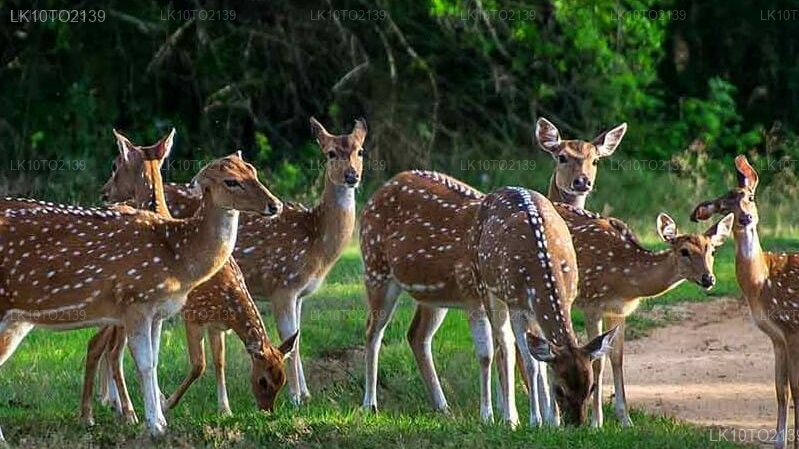
- Kumana National Park: Located around 40 km south of the bay, Kumana (also known as Yala East) protects a significant bird nesting colony at its lagoon and supports leopards, elephants, and deer in its dry-zone forest. Entry is by jeep with a tracker, and the park is less visited than Yala West, which gives it a quieter, more remote atmosphere.
- Lahugala Kitulana National Park: A small tank-and-forest reserve roughly 25 km from Arugam Bay that consistently attracts large elephant herds, particularly in the late afternoon when they gather at the water's edge.
- Pottuvil Lagoon: Accessible directly from the bay, the lagoon supports crocodiles, water birds, and occasional elephant crossings along its banks.
For travellers continuing south toward the cultural heartland, Udawalawe National Park is reachable as a day trip from Arugam Bay, though the drive is substantial; it works better as a stop on the way to or from the south coast.
Where should I stay in Arugam Bay?
Accommodation ranges from basic surf hostels with shared bathrooms to well-designed boutique properties with pools and sea views. The main bay road holds the highest concentration of guesthouses and restaurants. For more privacy, a cluster of smaller properties operates around Panama village, roughly 10 km south, where the setting is more isolated and the proximity to Kumana National Park is an advantage. Kottukal, a short distance from the main bay, offers quieter beachfront stays with a more residential feel.
Booking in advance is strongly advisable for the June-to-August peak window; during the rest of the surf season, a day or two of lead time is usually sufficient.
What should I know before visiting Arugam Bay?
The bay lies in an area with a significant Muslim Tamil population, and the surrounding towns — particularly Pottuvil — reflect this in their mosques, market culture, and food. Respectful dress is appreciated when visiting the town area, and Friday midday is a quieter period near the main mosque. Alcohol is available at licensed establishments within the resort zone but is less freely sold in Pottuvil itself.
Mosquitoes are active around the lagoon fringe, especially at dusk, so repellent is a practical necessity. The ocean current at the main point can be strong during larger swells; swimmers who are not confident in the water should stay well inside the flagged zones. Plastic waste is an ongoing issue on the east coast, and travellers are encouraged to carry reusable bottles and decline single-use packaging where possible.
Nearby places
10 places within about 25 km, nearest first.
- Arugam Bay Cityunder 1 km
- Surfing from Arugam Bayunder 1 km
- Upaar Lagoon1 km
- Kottukal Lagoon2 km
- Whiskey Point3 km
- Muhudu Maha Vihara3 km
- Pottuvil City3 km
- Elephant Rock Point4 km
- Semanikulam Lake4 km
- Pottuvil Point7 km
Related reading
6 pages on closely related subjects.