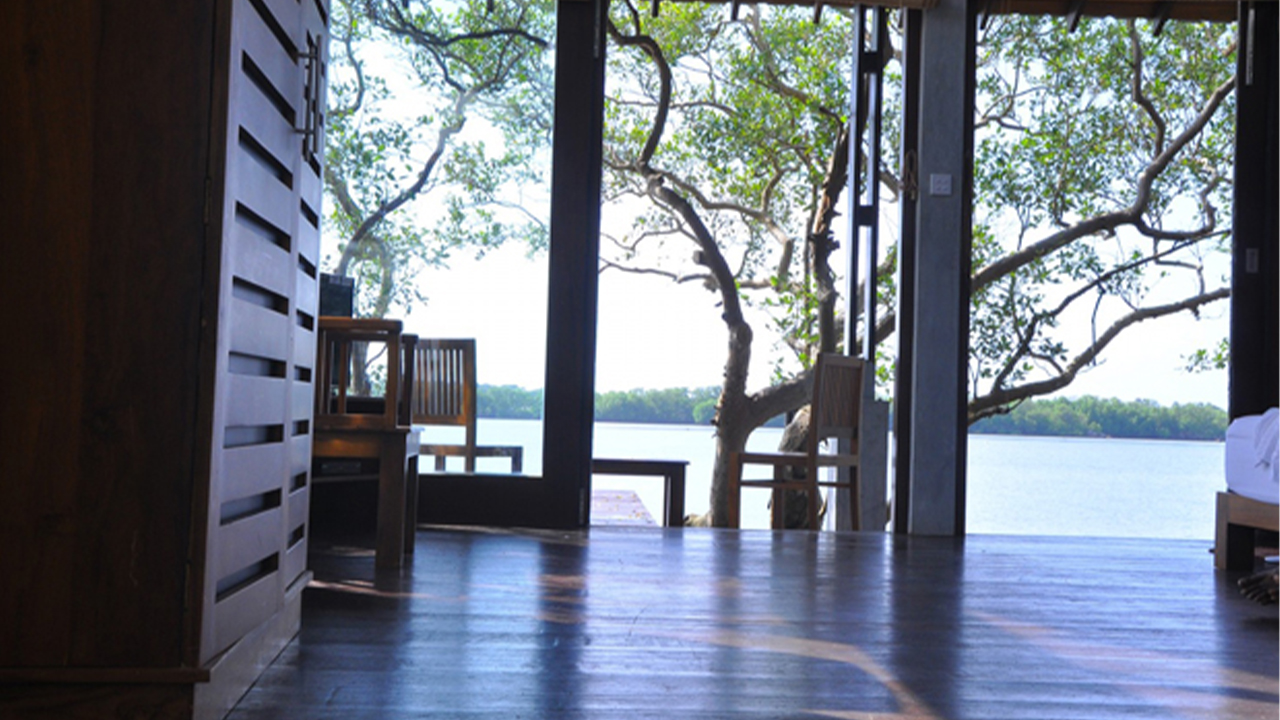
Upaar Lagoon is a quiet, brackish-water lagoon situated on Sri Lanka's east coast, close to the surf town of Arugam Bay and the village of Panama. Separated from the Indian Ocean by a narrow strip of scrub and dune, it forms part of a broader coastal wetland system that supports a remarkable range of wildlife. For travellers making their way along the east coast, it offers a genuine contrast to the beaches nearby — calm water, open sky, and an ecosystem that rewards patience.
Where is Upaar Lagoon?
The lagoon lies in the Ampara District of the Eastern Province, roughly south of Arugam Bay along the coastal road toward Panama. It sits adjacent to the Kumana National Park buffer zone, placing it within a landscape of extraordinary ecological continuity — mangrove fringes, scrub jungle, and coastal wetlands running almost unbroken for many kilometres. The nearest town with accommodation and services is Arugam Bay, typically around 15 to 20 kilometres to the north.
Access is generally by road from Arugam Bay or Panama, with boat excursions available from the lagoon's edge. Roads in this part of the country can be rough, especially after the monsoon, so a four-wheel-drive or a well-maintained vehicle is advisable.
What wildlife can you see at Upaar Lagoon?
The lagoon's combination of open water, mudflats, and fringing mangrove makes it one of the more productive wildlife-watching spots on the east coast. Wading birds are the most reliable draw: painted storks, black-headed ibis, spoonbills, and a variety of herons and egrets gather along the shallows at low water. During the northern-hemisphere winter, migratory shorebirds add considerably to the species list.
Estuarine crocodiles are resident in the lagoon and are regularly spotted basking on exposed banks or drifting just below the surface. Sightings are common enough that local boat operators factor them into their routes. For travellers interested in crocodile watching in Sri Lanka, Upaar is one of the more accessible east-coast options.
Water monitors, fishing cats, and occasional elephant visits from the adjacent dry-zone scrub round out the larger fauna. Dolphins have been reported at the lagoon mouth, though sightings are unpredictable.
When is the best time to visit Upaar Lagoon?
The east coast operates on a weather cycle inverse to the west and south. The dry season on this coast runs roughly from April to September, making those months the most comfortable for travel and wildlife watching. The lagoon's water levels are lower in the dry season, concentrating wildlife around the remaining shallows and making bird and crocodile sightings more likely.
Arugam Bay's surf season overlaps almost exactly with the dry season, so visitors combining a lagoon excursion with time at the beach will find both activities at their best simultaneously. The inter-monsoon months of October and November can bring unsettled weather; travel is possible but boat excursions may be disrupted.
How do I get to Upaar Lagoon from Colombo?
The overland journey from Colombo to the Arugam Bay area takes approximately six to eight hours depending on the route and road conditions. The most common approach is via Monaragala or Batticaloa. Arugam Bay and Panama are the logical bases for a lagoon visit; both have a range of accommodation from simple guesthouses to small eco-lodges. Hiring a vehicle with a driver from Colombo, or arranging transport from Arugam Bay, is the most practical option for most travellers — public buses serve the route but with limited frequency on the final stretch to Panama.
What activities are available at Upaar Lagoon?
- Boat excursions: Local boatmen offer early-morning and late-afternoon trips across the lagoon, timed to coincide with peak bird activity and cooler temperatures. These are typically informal arrangements made through guesthouses in Arugam Bay or Panama.
- Birdwatching: The lagoon is productive at almost any time of day, though dawn and dusk are most rewarding. A basic pair of binoculars and a field guide to Sri Lankan birds will greatly enhance the experience.
- Photography: The open, low-lying landscape offers wide-sky compositions and good light early and late in the day. Crocodiles and wading birds at close range are the primary subjects.
- Kayaking: Quiet paddling through the mangrove channels at the lagoon margin is possible with appropriate equipment, allowing a closer view of the vegetation and its resident wildlife.
The nearby Pigeon Island marine sanctuary, accessible from Nilaveli further north, can be combined with an east-coast itinerary that includes Upaar for travellers spending a week or more on this coast.
Is Upaar Lagoon suitable for a day trip?
A visit to Upaar Lagoon fits comfortably into half a day, making it an easy add-on for anyone staying in Arugam Bay. A typical excursion involves an early morning departure, a boat trip across the lagoon, and a return in time for late breakfast. Combining it with a drive south through Panama to the edge of Kumana National Park fills a full day with minimum effort and covers some of the most rewarding wildlife habitat on the east coast.
Those travelling with a dedicated guide will get considerably more from the visit — species identification, crocodile behaviour, and the ecological context of the mangrove system are all richer with expert commentary. Lakpura can arrange private guided excursions that include Upaar Lagoon as part of a broader east-coast itinerary.
What should I know before visiting?
- There are no formal visitor facilities at the lagoon itself — no ticket booths, cafes, or toilets. Carry water and snacks, and plan for basic conditions.
- Insect repellent is essential, particularly for early-morning visits near the mangrove edge.
- Lightweight, muted clothing is practical — both for comfort in the heat and to avoid disturbing wildlife at close range.
- The lagoon is tidal and connected to the sea; water levels and wildlife distribution shift accordingly. Local boatmen are the best source of current conditions.
- Crocodiles in the lagoon are wild animals. Follow your guide's instructions and do not enter the water.
Nearby places
13 places within about 25 km, nearest first.
Related reading
4 pages on closely related subjects.