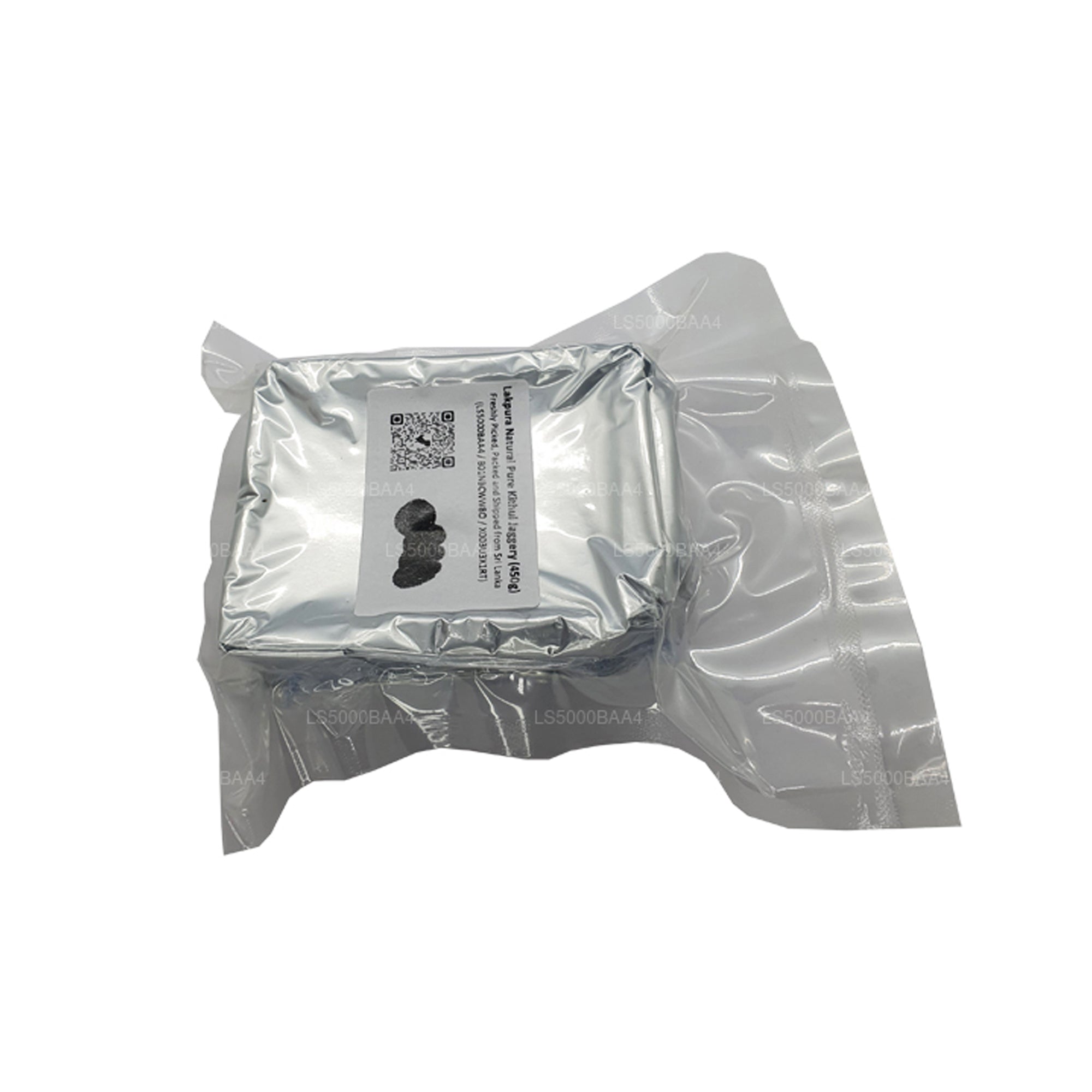
Kithul jaggery is a solid palm sugar made from the sap of the Kithul palm, a tall, fishtail-leafed tree that grows across Sri Lanka's wet and intermediate zones. It is one of the older sweeteners in the Sri Lankan pantry — distinct from the liquid treacle drawn from the same tree — and arrives in firm, dense blocks with a concentrated, caramel-forward flavour that refined cane sugar simply does not replicate.
The journey from tree to jar is long and particular. A Kithul palm takes the better part of a decade and a half to reach the flowering stage at which tapping becomes possible. When it does, a skilled tapper climbs the trunk, wraps the flower stalk with vine, and makes a fresh cut each day to coax sap into clay collection pots below. That sap is filtered and then cooked at length — boiled and stirred continuously until the moisture has driven off and the concentrate is dense enough to set. Poured into moulds and left to harden, it becomes jaggery: a solid block, darker and richer than the raw sap it started as. The tapping tradition, known in Sinhala as kithul madeema or kithul kapeema, was inscribed by UNESCO as an element of intangible cultural heritage in 2025.
In Sri Lankan cooking, kithul jaggery is an everyday workhorse as much as a specialist ingredient. It dissolves into watalappan, the spiced coconut-custard pudding associated with the Malay community, and gives kavum — a deep-fried rice-flour pastry made at festival time — its characteristic dark sweetness. It also finds its way into curries and chutneys, where a small quantity balances acidity and depth. Because the supply of mature, tappable Kithul palms is finite and the pool of skilled tappers is shrinking, the raw material behind every jar is genuinely scarce.
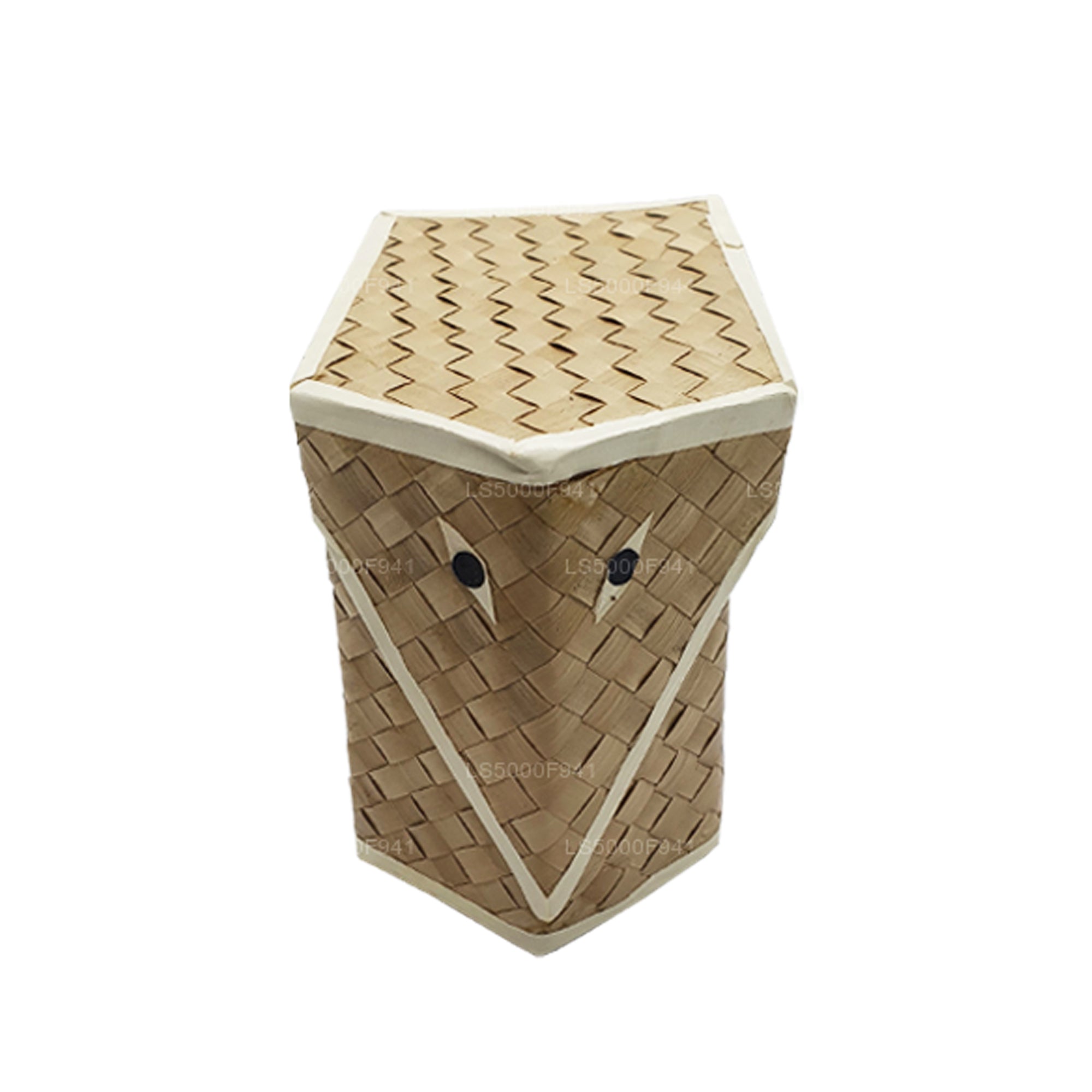
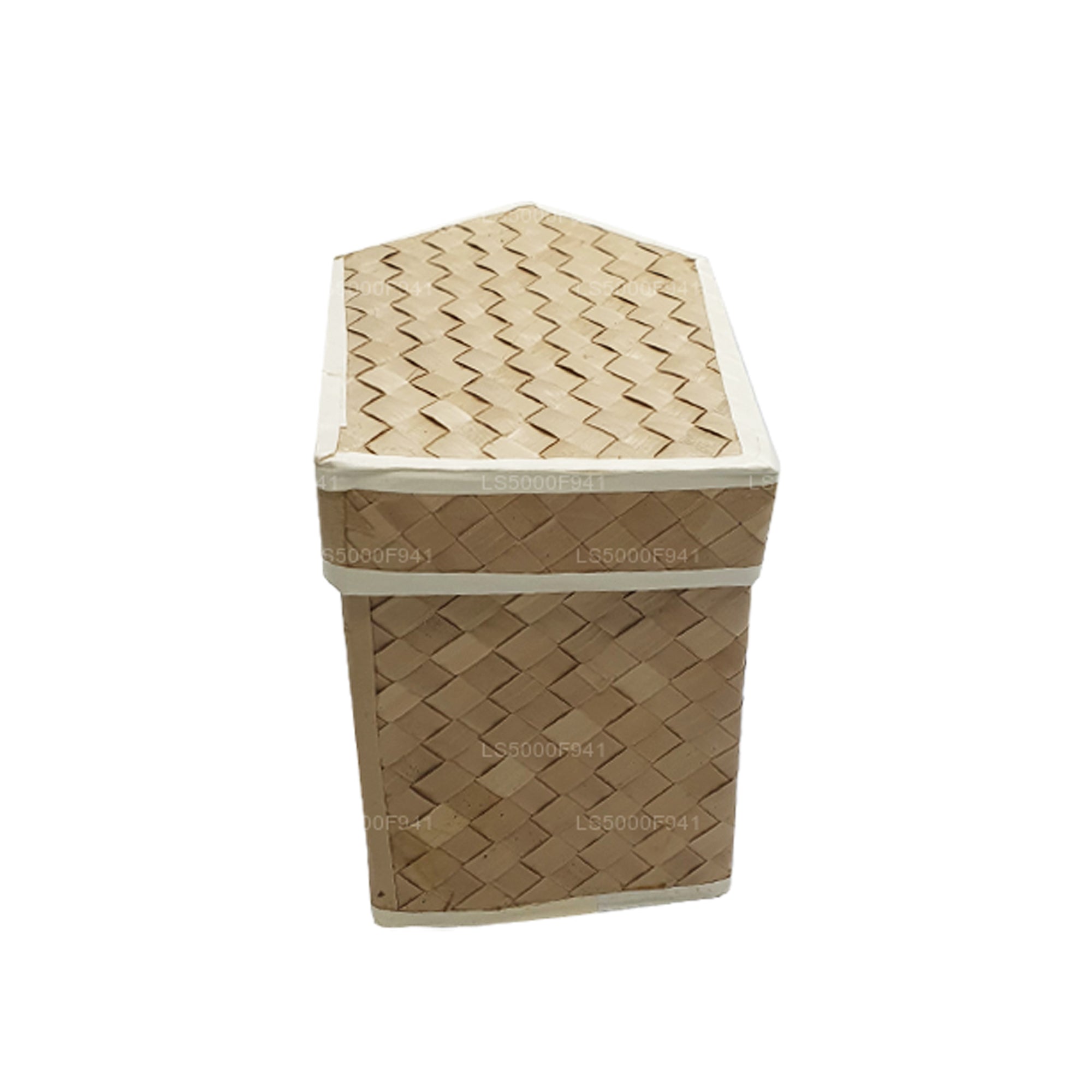
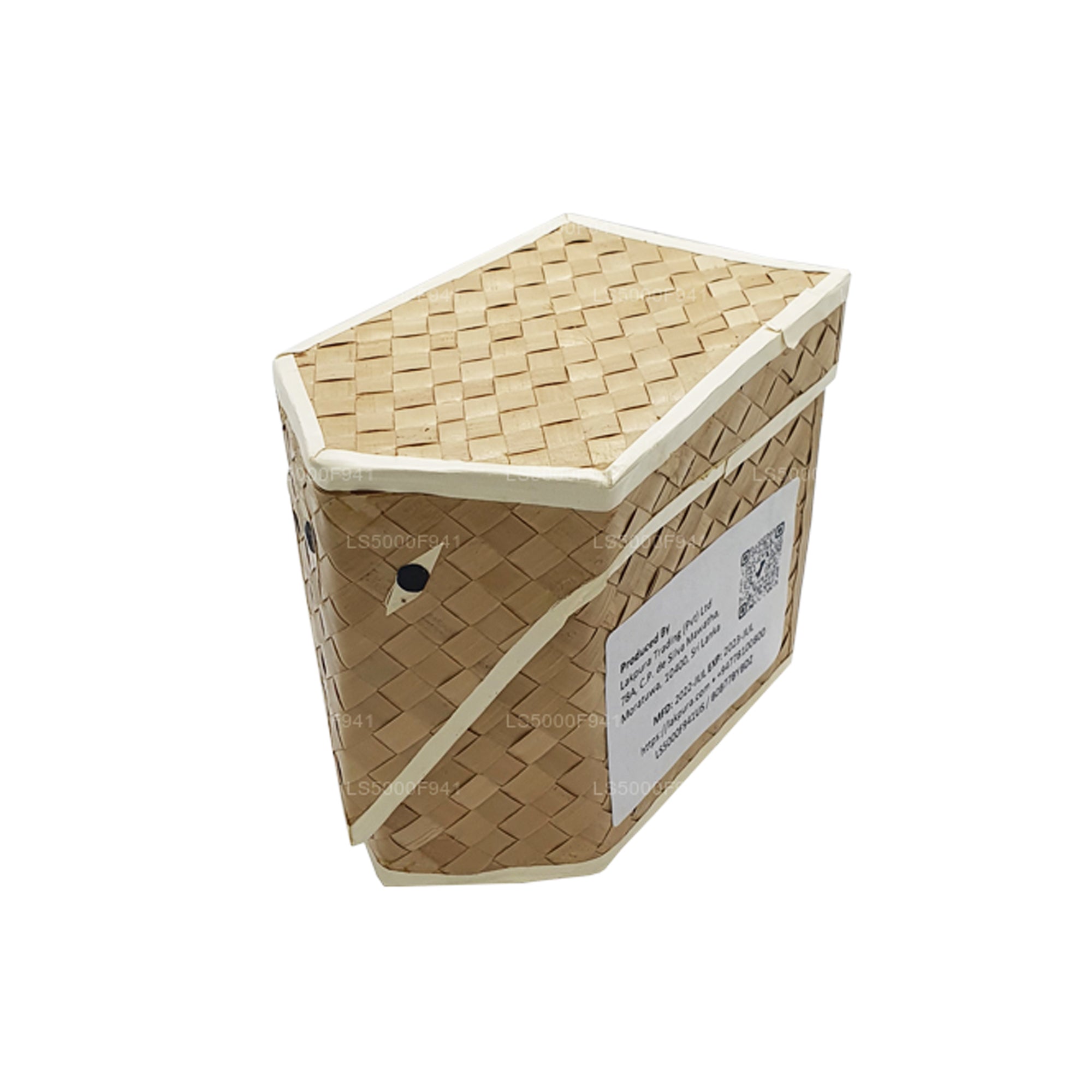
This Lakpura product is produced by Lakpura Trading (Pvt) Ltd in Moratuwa, Sri Lanka, as part of a wider effort to bring small and medium-scale Sri Lankan producers to an international market. The jaggery is presented in a woven natural-fibre basket with a fitted lid, cream fabric edging, and two black button fasteners on the side panels — a package that travels well and reflects the craft sensibility of the product inside. The front label carries the Lakpura name; a QR code on the reverse links back to the producer's own records.
The 250 g size suits a household that uses the jaggery regularly, while the 500 g option is worth considering for anyone who cooks Sri Lankan sweets in larger batches or simply wants a longer supply on hand. Store in a cool, dry place away from moisture, which is the enemy of any solid palm sugar.