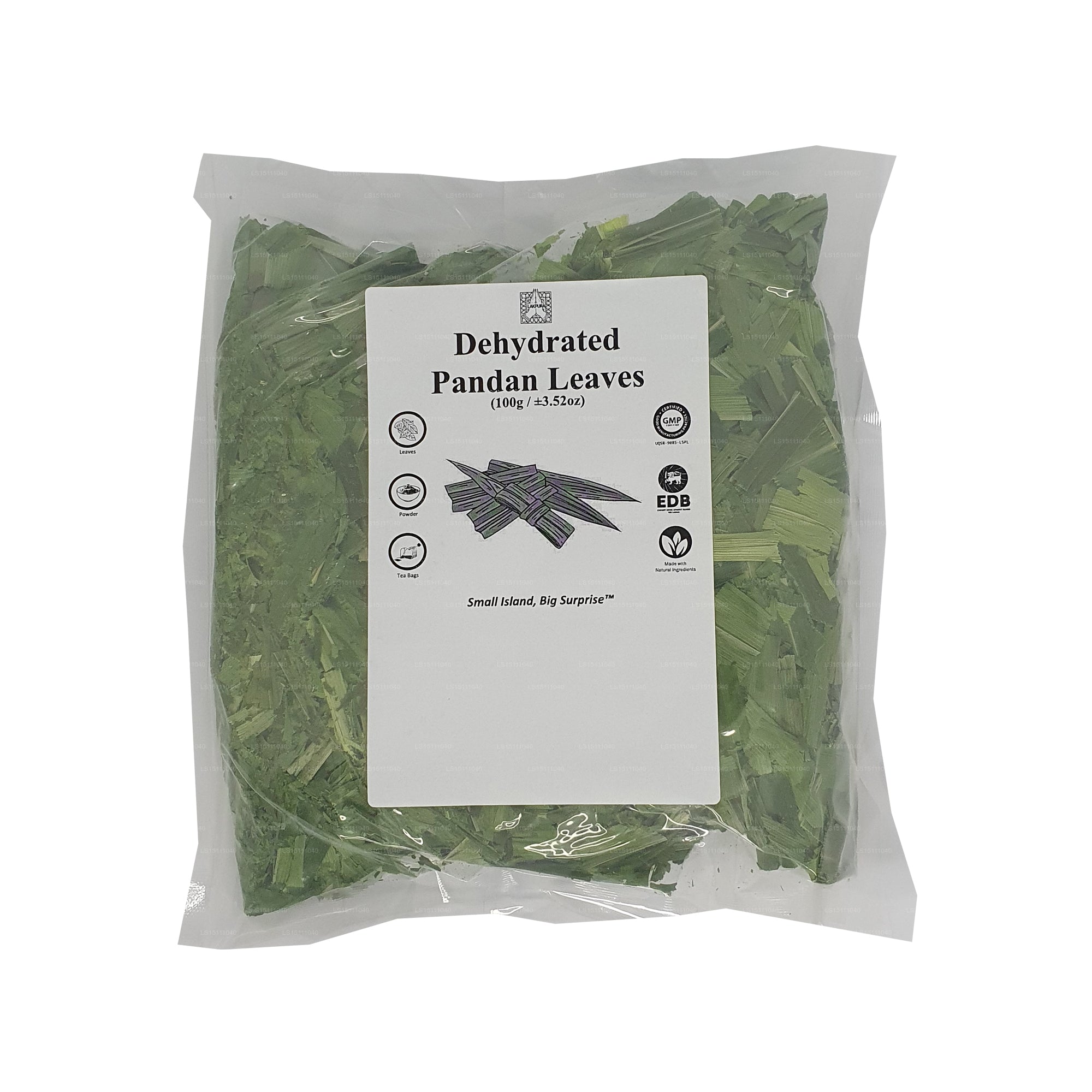
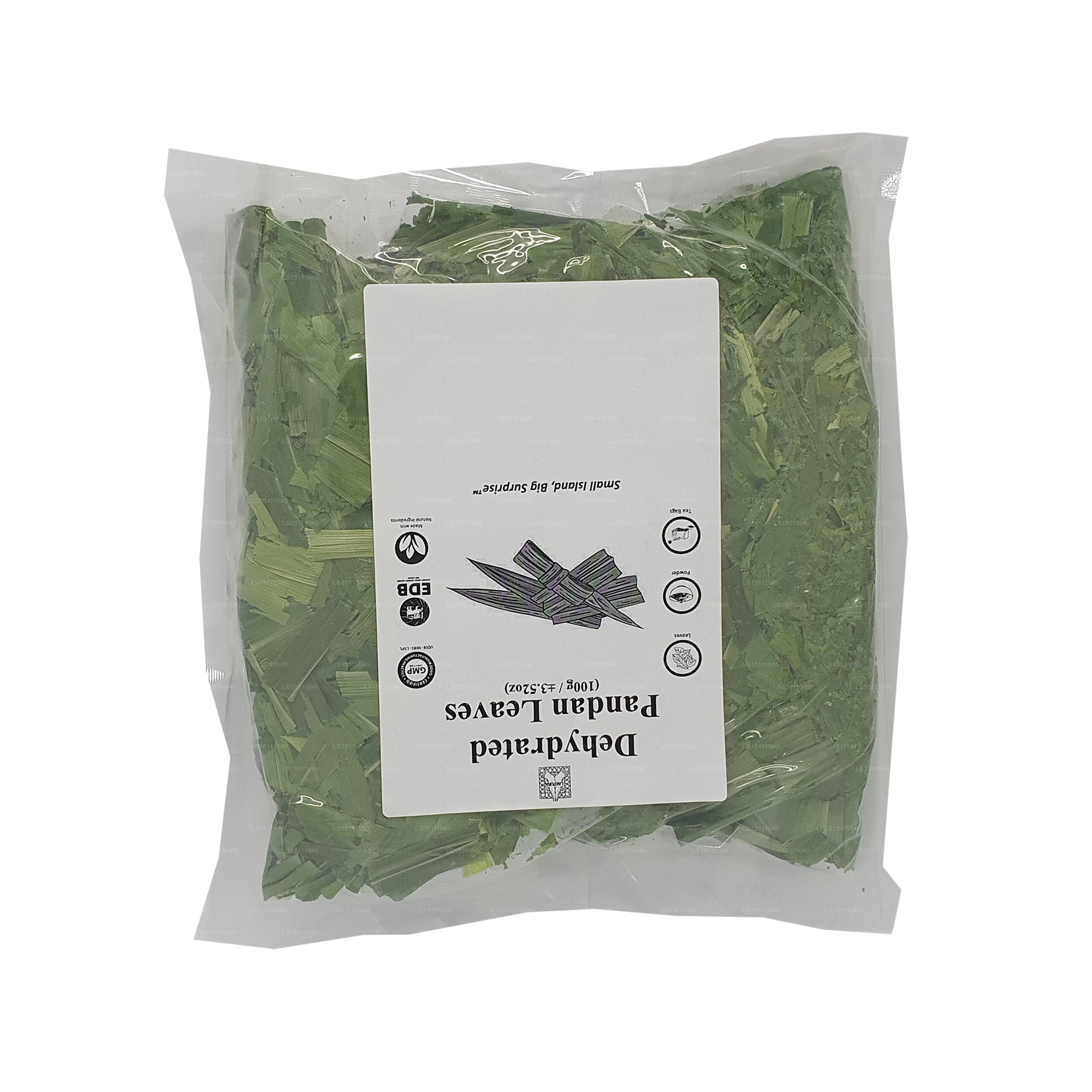
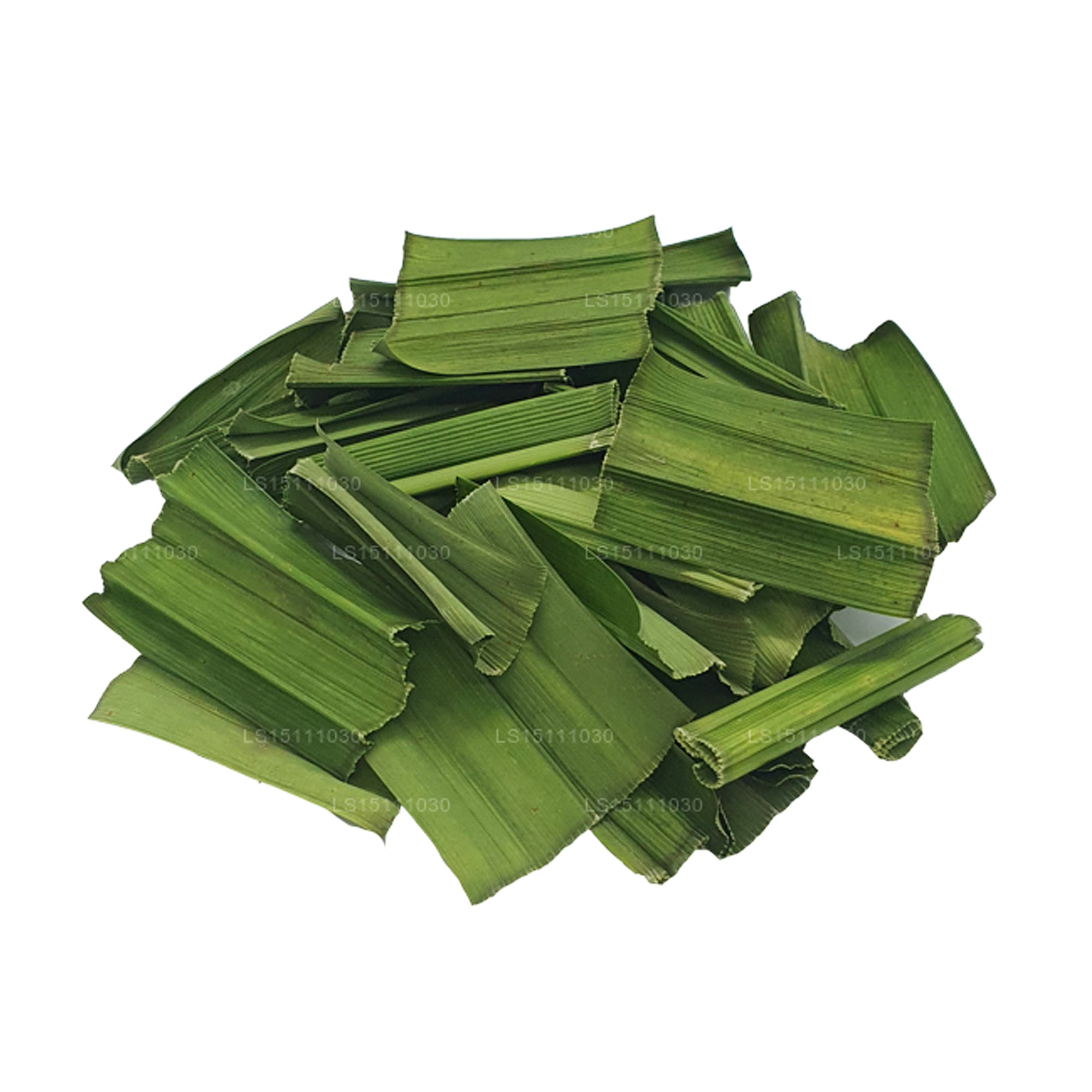
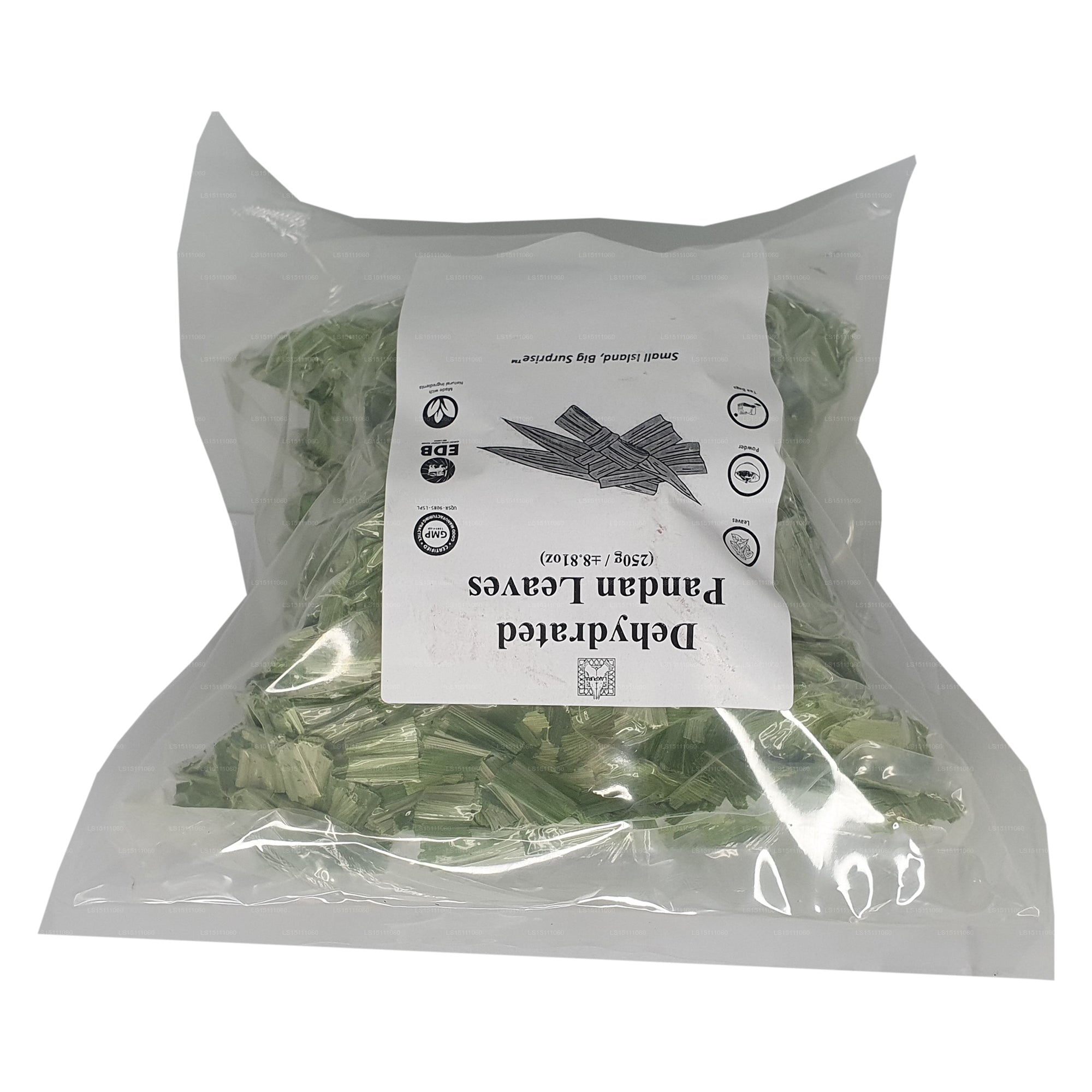
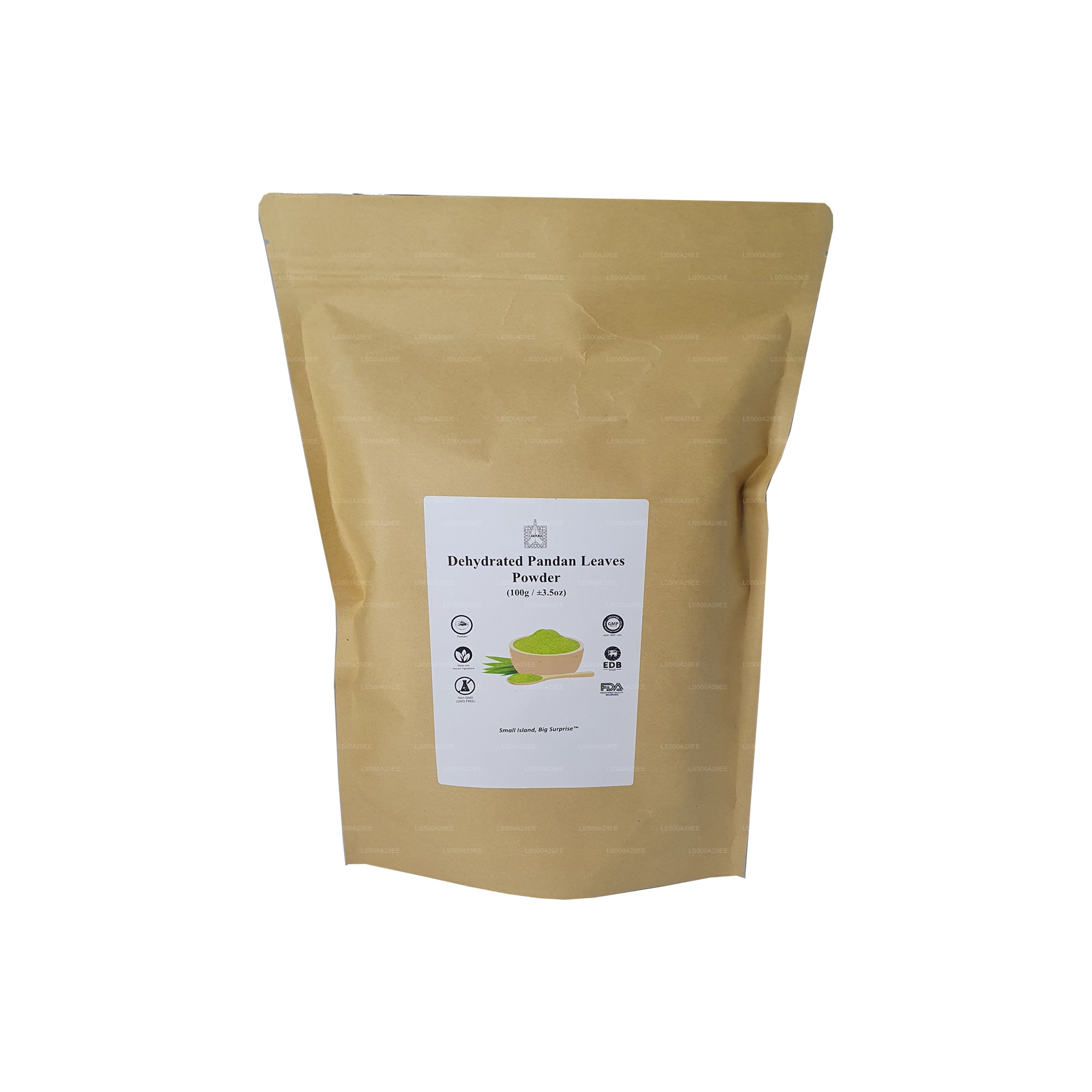
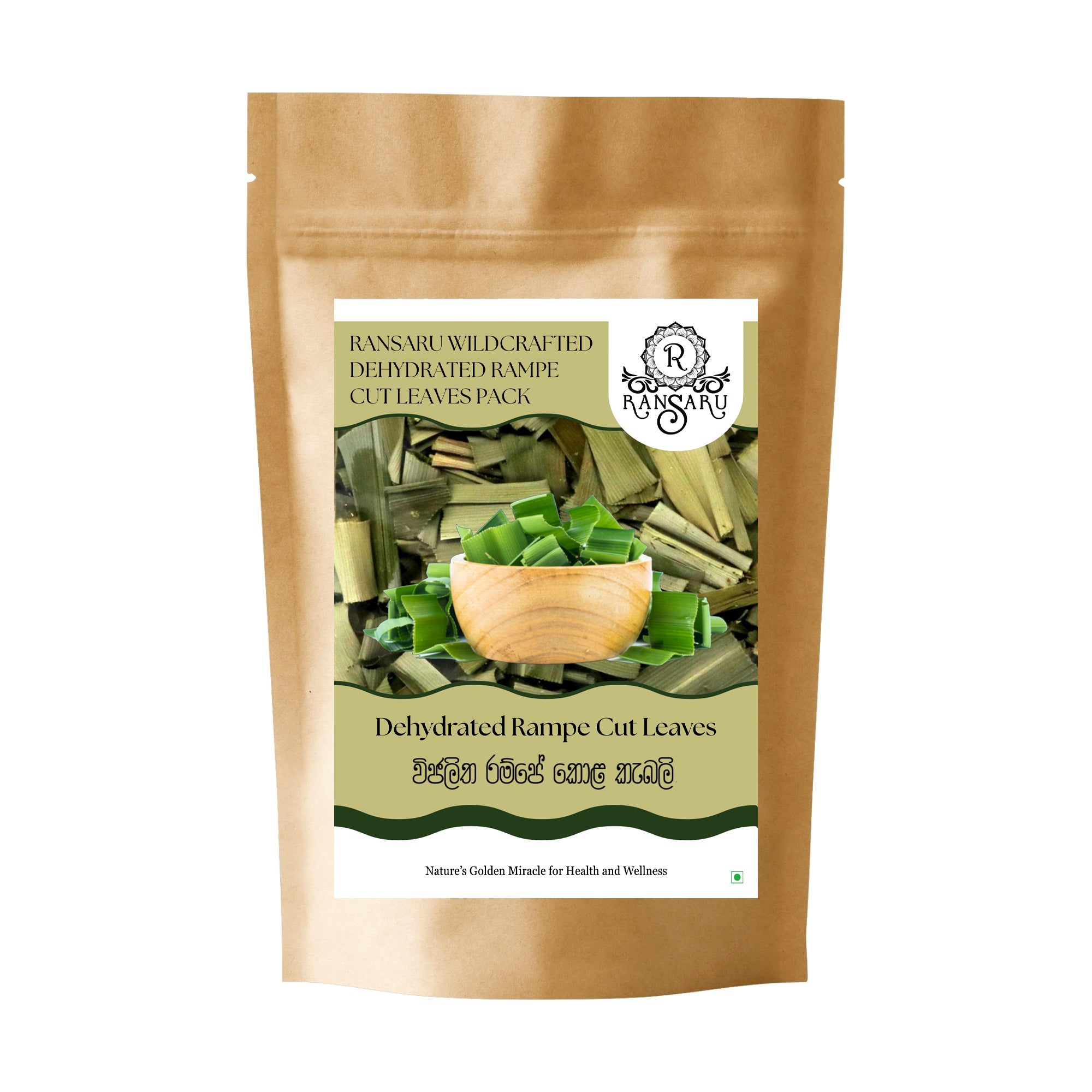
Rampe is the name Sri Lankans give to the long, blade-like leaves of Pandanus amaryllifolius, a tropical plant in the screw-pine family that has been grown and cooked with across South and Southeast Asia for centuries. The leaves carry a distinctively nutty, botanical fragrance — one that is, for anyone who grew up eating Sri Lankan rice and curry, almost inseparable from the smell of a pot coming to the boil. These Lakpura® Dehydrated Pandan Leaves bring that same character to a kitchen anywhere in the world, in a form that sits comfortably in the pantry until needed.
The ingredient declaration on the packaging is straightforward: 100% Pure Organic Pandanus amaryllifolius Leaves, picked in Sri Lanka and shipped from the island. Lakpura describes a dehydration process designed to preserve the leaves' natural aromatic qualities, and the product carries both GMP (Good Manufacturing Practice) and EDB (Sri Lanka Export Development Board) certification, alongside a 'Made with Natural Ingredients' declaration on pack. The leaves are available loose, and the same range extends to a powder and a tea-bag format for those who want a different level of convenience.
Getting the leaves into a dish is a simple process. Rinse them briefly under cool water, then soak in warm water for around ten minutes to rehydrate. Once softened, they can be added directly to a pot or rice cooker — the traditional approach is to tie them into a loose knot, which makes them easy to lift out once the cooking is done. The leaves work particularly well in rice, where the fragrance infuses the grain as it cooks, and they find their way into curries, vegetable dishes and meat or seafood preparations in equal measure. The dried form gives a somewhat milder result than a freshly cut leaf, which is worth bearing in mind if a recipe was written with fresh pandan in mind.
The packaging advises storing the leaves in a cool, dry place away from direct sunlight, and recommends using them in moderation. As with any food ingredient, it is worth checking for individual sensitivities before using for the first time. The serving size noted on the nutrition panel is one leaf, which gives a sense of how sparingly the leaves are generally used — their purpose is flavour and fragrance, not bulk.