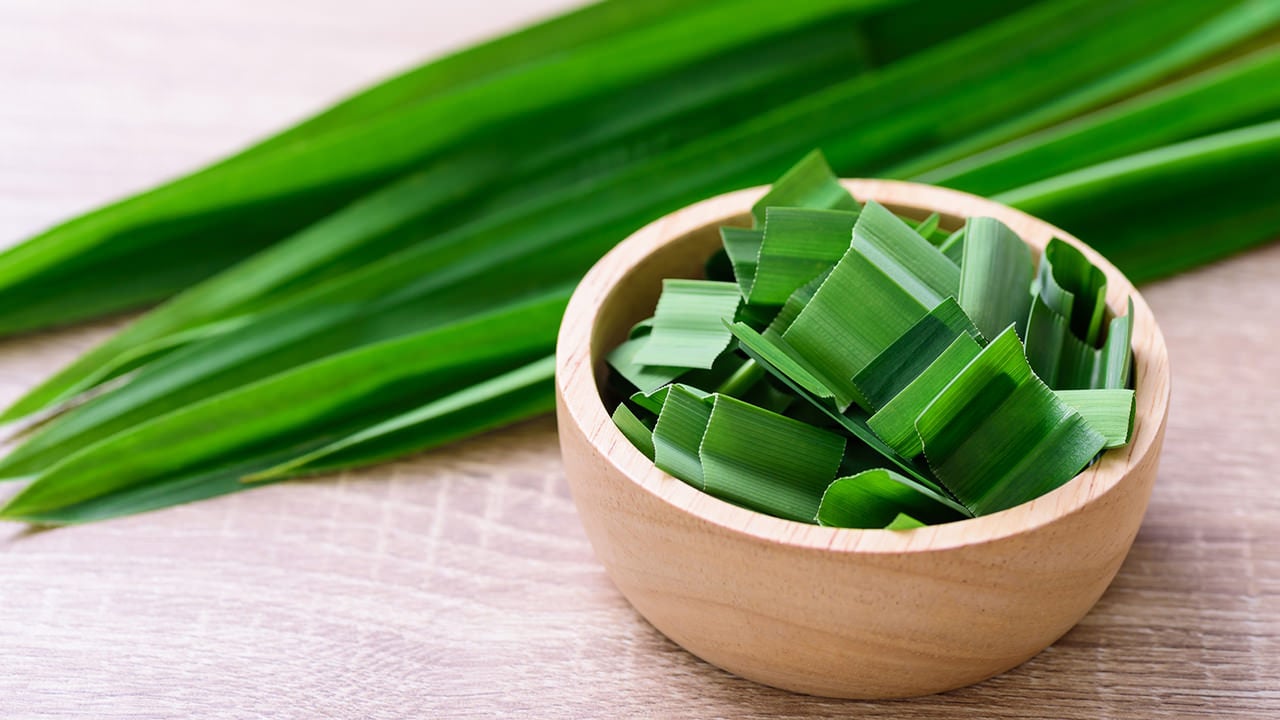

Pandanus amaryllifolius, known locally in Sri Lanka as Rampe and widely as pandan, is one of the most versatile aromatic plants in South and Southeast Asian kitchens. A perennial herb native to Sri Lanka and the broader Southeast Asian region, it has been cultivated for centuries as both a culinary flavouring and a natural food colourant. Unlike many herbs that are prized solely for fragrance, Rampe earns its place through a distinctive sweet, musky aroma with faintly nutty undertones — a quality that no synthetic substitute has fully replicated.
What does Pandanus amaryllifolius look like?
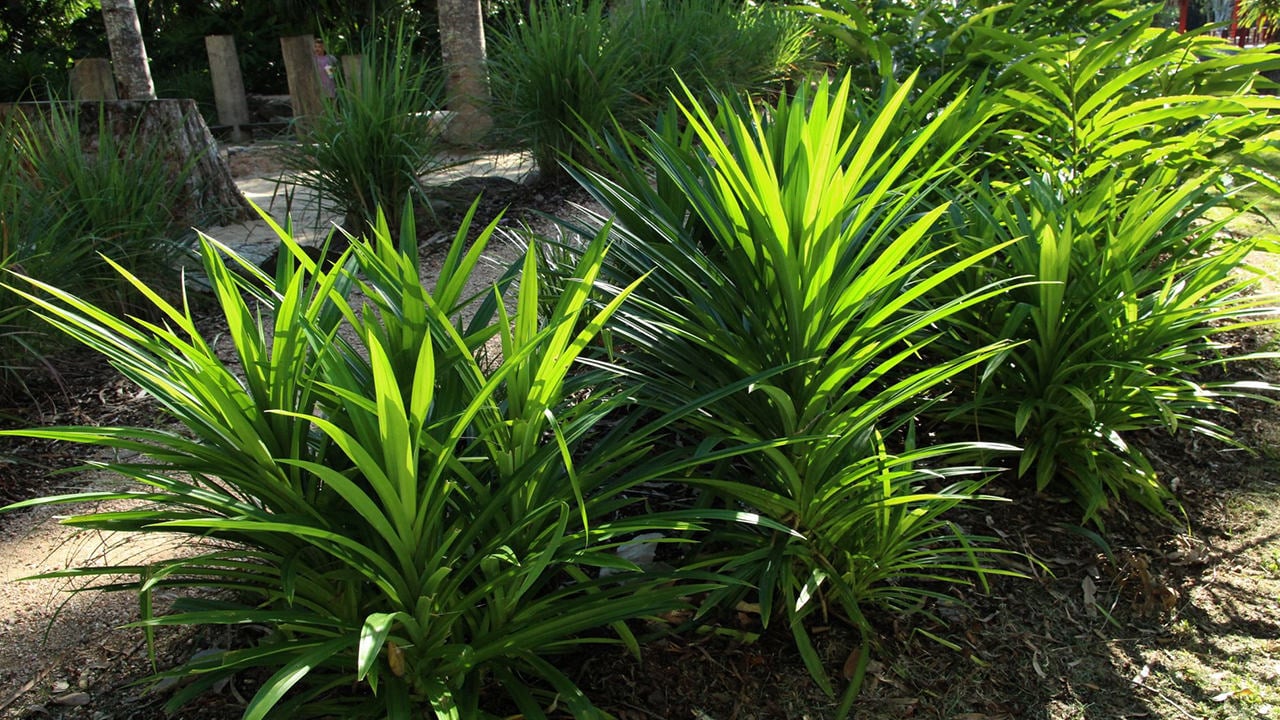
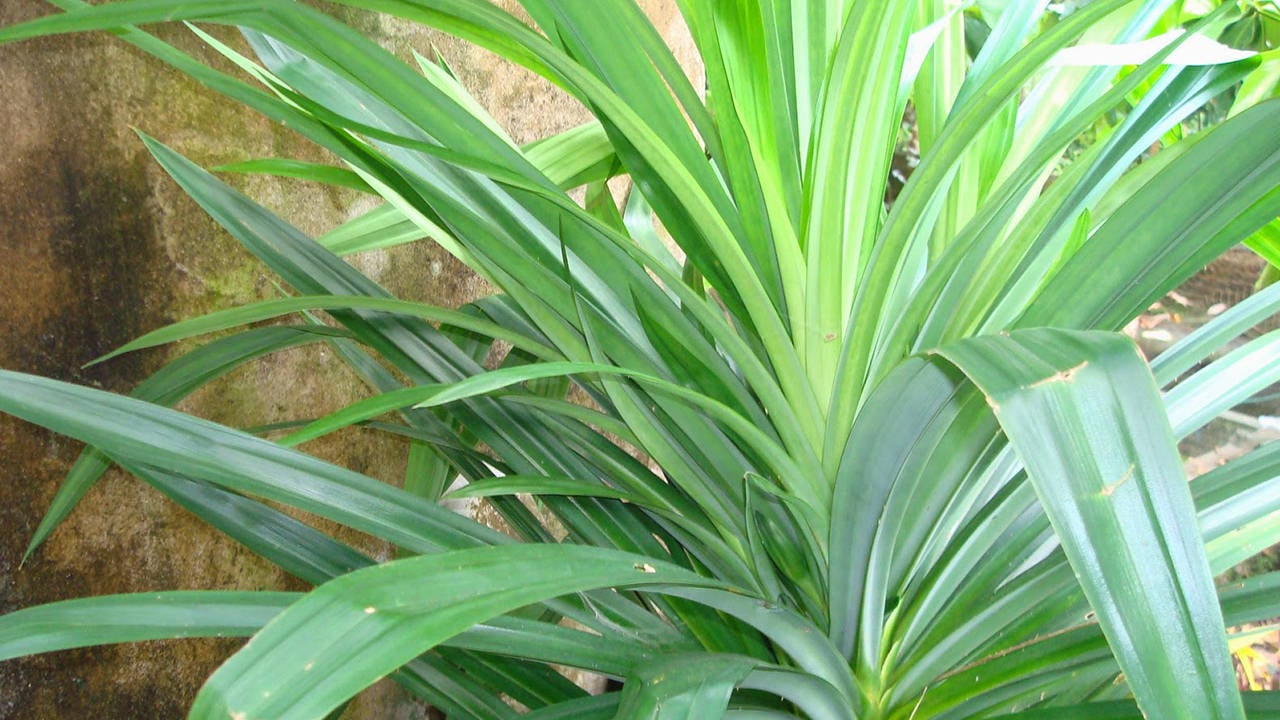
In the wild or when left unmanaged, the plant can grow to around 8 m tall, developing a slender, semi-woody stem marked with neat leaf scars. In home gardens and smallholdings across Sri Lanka, plants are typically kept between 0.5 m and 1.5 m by harvesting the leaves regularly — a practice that also encourages fresh, fragrant new growth.
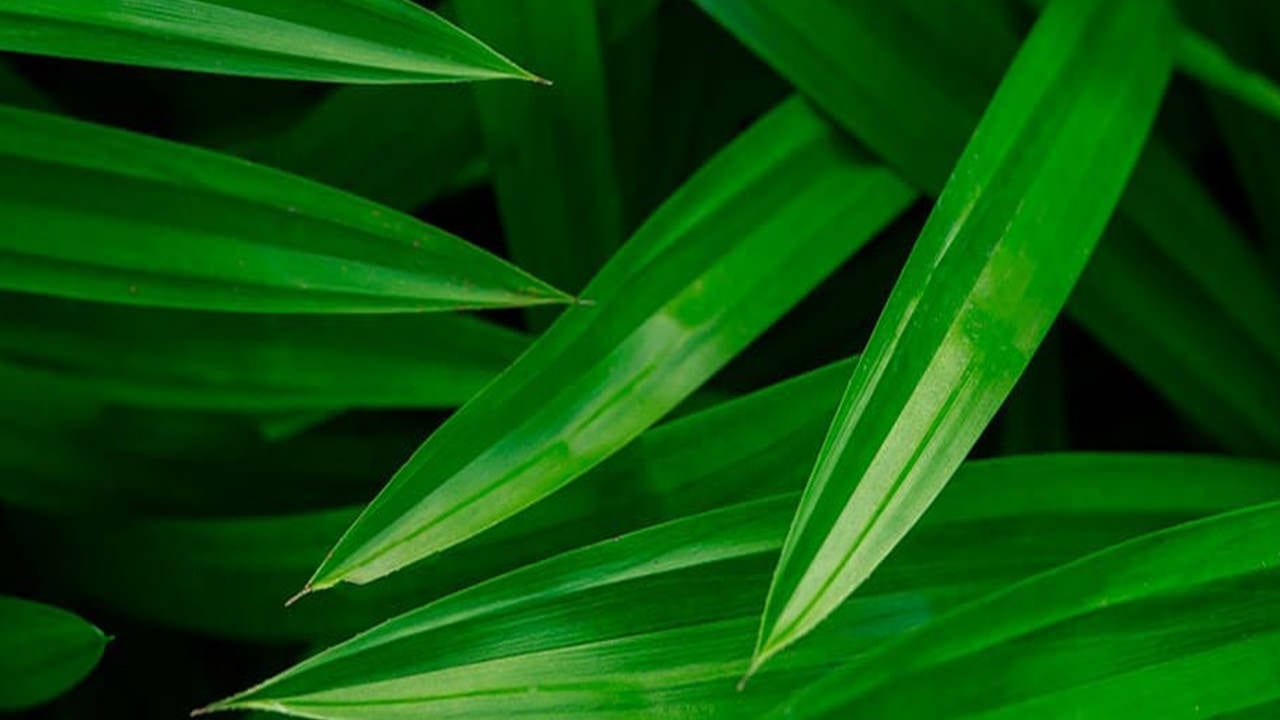
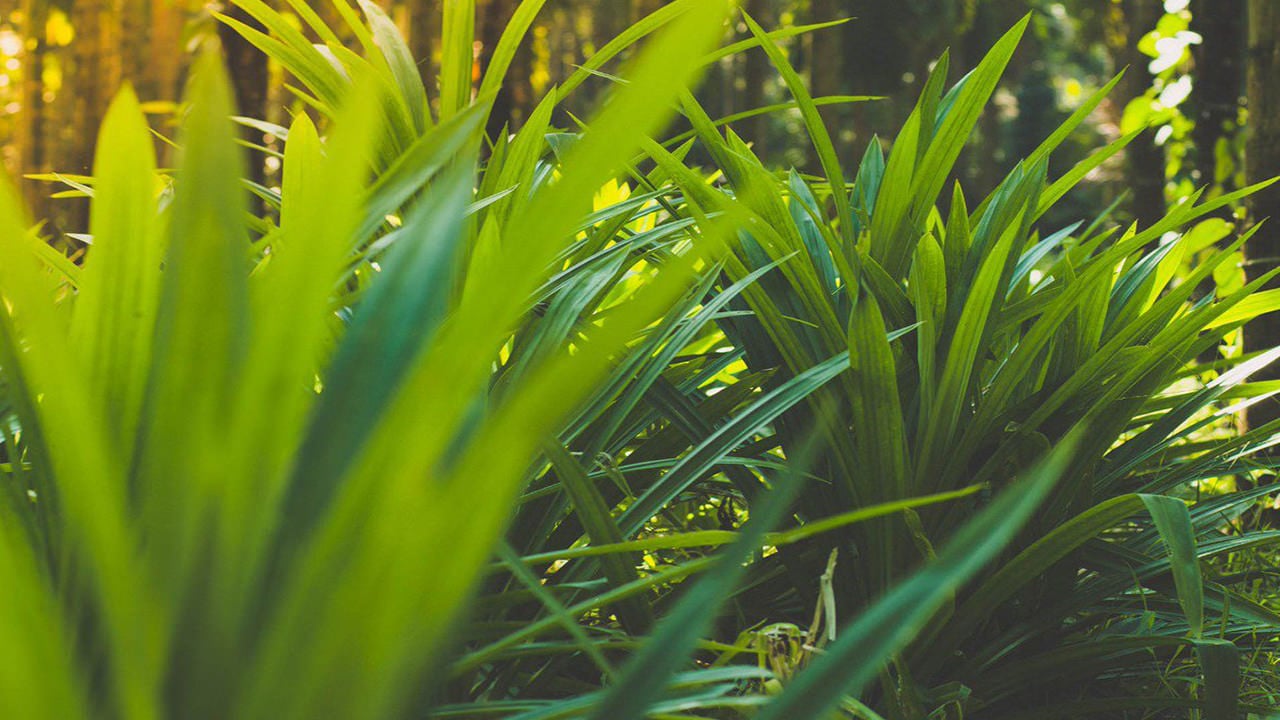
The leaves are long, sword-shaped, and deep green, reaching up to 1 m in length. They spiral around the stem in a tight rosette arrangement that gives the plant its characteristic silhouette. As the plant matures, aerial roots emerge along the stem; those near the base thicken into stilt-like supports that anchor the plant firmly in moist soil. One notable botanical quirk: Pandanus amaryllifolius is not known to flower or set fruit in cultivation anywhere in the world. New plants propagate entirely through root suckers, which are divided and replanted.
How is pandan (Rampe) used in Sri Lankan cooking?
In Sri Lankan households, a Rampe leaf is rarely optional — it is foundational. One or two leaves are tied loosely in a knot and added to the pot at the start of cooking, allowing the heat to draw out their aromatic compounds slowly. They flavour steamed rice, coconut-milk curries, and a wide range of sweets and desserts. Once cooking is complete, the leaves are removed and discarded; their role is purely aromatic rather than textural.
Rampe pairs particularly well with coconut, and the two appear together in many traditional Sri Lankan dishes. The leaf also combines naturally with spices such as lemongrass, cardamom, and clove, anchoring the broader flavour profile of Sri Lankan cuisine without overpowering other ingredients.
Beyond Sri Lanka, pandan leaves are used across Thailand, Malaysia, Indonesia, and the Philippines. In Thailand, for example, chicken pieces are marinated, wrapped in whole pandan leaves to form parcels, and then deep-fried — the leaf both infuses flavour and protects the meat during frying.
How is pandan extract used as a natural food colourant?
The leaves yield a vivid green liquid when blended or crushed with a small amount of water. This extract is strained and added directly to batters, jellies, cakes, and puddings. The resulting colour is a clean, bright green that is entirely natural and free of artificial additives. Across India and Southeast Asia — and increasingly in Sri Lanka's own bakeries and sweet shops — pandan extract is a standard colourant for layered cakes, rice flour sweets, and coconut-milk-based desserts. It is worth noting that heating reduces colour intensity somewhat, so extracts are sometimes added after the primary cooking stage when a deeper green is required.
What are the non-culinary uses of Rampe?
The plant's long, arching leaves have decorative value in floral arrangements. Their dark green colour, clean lines, and structural form make them useful as backing foliage in tall arrangements or as accent greenery in mixed bouquets. In garden design, Pandanus amaryllifolius is occasionally planted as a fragrant border or low groundcover in tropical landscapes. The scent of the leaves is mild enough outdoors that it creates a pleasant sensory effect without becoming overwhelming — a quality that makes the plant a welcome addition near seating areas and pathways.
In some traditional practices across the region, the leaves are also used in modest medicinal preparations, though these applications remain largely within folk tradition rather than standardised medical use.
Where does Rampe grow in Sri Lanka?
Pandanus amaryllifolius thrives in Sri Lanka's warm, humid lowland zones, particularly in the wet and intermediate zones where rainfall is reliable and soils retain moisture well. It is commonly found in home gardens from Colombo's suburbs down through the coastal belt to the south, and in agricultural smallholdings across the island's interior. The plant tolerates partial shade, which makes it a practical companion crop beneath taller trees. Areas around wetland and mangrove margins — such as those along the Madu Ganga — support naturally dense populations of wild Pandanus species, though the cultivated Rampe variety is a garden plant rather than a wetland species.
Growing conditions are straightforward: the plant prefers well-drained but consistently moist soil, filtered to full sunlight, and protection from prolonged cold. At higher elevations such as in the hill country, it grows less readily and is not a common sight above around 1,000 m.
How is Rampe cultivated at home?
Propagation is simple and reliable. Root suckers that emerge at the base of a mature plant are separated and transplanted into prepared soil or large containers. Because the plant does not produce seeds, cuttings with attached root material are the only practical propagation method. Once established, plants require minimal maintenance beyond occasional watering during dry spells and periodic harvesting of outer leaves to keep growth manageable.
- Plant in partial shade to full sun in well-drained, moisture-retentive soil.
- Water regularly but avoid waterlogging, which can cause root rot.
- Harvest outer leaves from established plants; this encourages fresh central growth.
- Divide root suckers every two to three years to propagate new plants or control spread.
- No significant pest pressure is typical; the aromatic oils in the leaves deter most common insects.
Is Pandanus amaryllifolius the same as other Pandanus species?
The genus Pandanus contains several hundred species, most of which are non-aromatic and found in coastal or tropical island environments. Pandanus amaryllifolius is distinguished within the genus by its strong leaf fragrance — a trait absent in most wild Pandanus species. Other Pandanus species found in Sri Lanka are primarily larger, coastal-adapted trees with spiky leaf margins and significant aerial root systems; they share a visual similarity with Rampe but are not used as culinary herbs. The scented pandan leaf's flavour and aroma are unique to P. amaryllifolius and cannot be replicated by substituting leaves from related species.
Other species in this genus
4 more, sharing the same genus.