


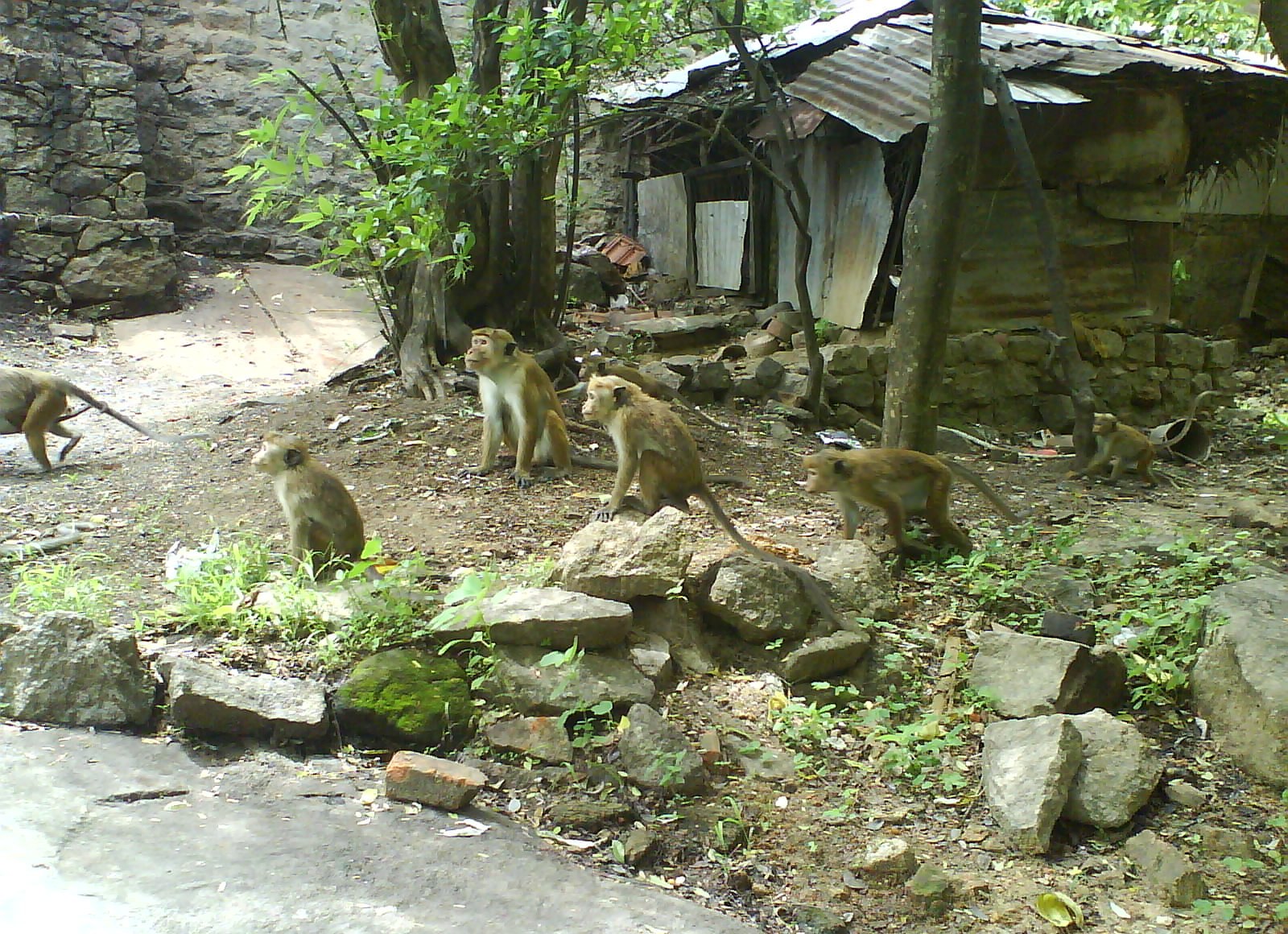
The Toque Macaque (Macaca sinica) is a monkey found only in Sri Lanka, and the one most visitors meet first. Known in Sinhala as rilawa, it lives at temples, in ancient ruins, in forests and on the edges of villages across the island. It is also the star of the 2015 Disney documentary filmed at Polonnaruwa, which is why its home there is now known as the Monkey Kingdom.
How do you identify a Toque Macaque?
The Toque Macaque is a small, golden-brown to reddish monkey with a pale, bare face and a long tail. Its name comes from the feature that sets it apart: a neat whorl of hair on the crown of the head, spreading outwards from the centre like a small cap, or toque. Nothing else on the island looks like it. Sri Lanka's two langurs are larger and more slender, with a black or dark face.
What are the subspecies of the Toque Macaque?
Three subspecies are recognised, each tied to one of the island's climate zones:
- Dry zone toque macaque (M. s. sinica): the northern and eastern lowlands, including Anuradhapura, Polonnaruwa, Kurunegala, Monaragala and Hambantota.
- Wet zone or pale-fronted toque macaque (M. s. aurifrons): the south-west, including Kegalle, Galle and Matara districts.
- Highland toque macaque (M. s. opisthomelas): the hills, including Nuwara Eliya and the area around Hakgala Botanical Garden.
How do Toque Macaques live?
Toque Macaques live in troops of about 8 to 40 animals, with strict dominance hierarchies among both males and females. Rank matters from birth: the young of a high-ranking female generally get better food and shelter. Young males leave their birth troop at around six to eight years old, and tension in the largest troops can push some members out.
Troops have been studied at Polonnaruwa for decades, in one of the longest-running primate field studies in Asia. That is why the macaques there are so used to people, and why their family dramas could be followed closely enough to make a film.
What does the Toque Macaque eat?
The Toque Macaque is mainly a fruit eater. One study found that fruit made up 77% of its diet, with smaller shares of flowers, mushrooms and prey such as insects. Wild figs are among its favourite foods, and cheek pouches let it gather food quickly and eat it somewhere safer. Around temples and towns it also takes offerings and whatever it can steal from visitors.
Where can you see Toque Macaques in Sri Lanka?
This is the easiest of the island's monkeys to find, and it occurs in all three climate zones.
- Polonnaruwa: the classic site, where habituated troops forage among the medieval ruins.
- Sigiriya Rock Fortress: troops live in the forest around the rock and along the path to it.
- Yala and Udawalawe national parks: often seen on safari, usually near water.
- Anuradhapura and Dambulla: common around the ancient sites and cave temples.
To plan a dedicated trip, see our guides to monkey watching and primate watching in Sri Lanka.
Is the Toque Macaque endangered?
Yes. The IUCN Red List classes the Toque Macaque as Endangered. Although it is a familiar sight, it has lost much of its forest habitat to plantations and clearing, and it is also threatened by hunting and the pet trade. Because it raids crops, many farmers see it as a pest, so conflict with people is a growing problem.
How should you behave around Toque Macaques?
- Never feed them. Feeding teaches monkeys to approach people, which leads to bites and to conflict.
- Secure your bags. Macaques at busy sites are quick to snatch food, wrappers and anything that looks like food.
- Keep your distance. Stay a few metres away, and take special care around mothers with infants.
- Go early. Troops are most active in the first hours after dawn, when the light is also best for photographs.
Sri Lanka's other monkeys are the Gray Langur and the Purple-faced Langur.
Related reading
3 pages on closely related subjects.

