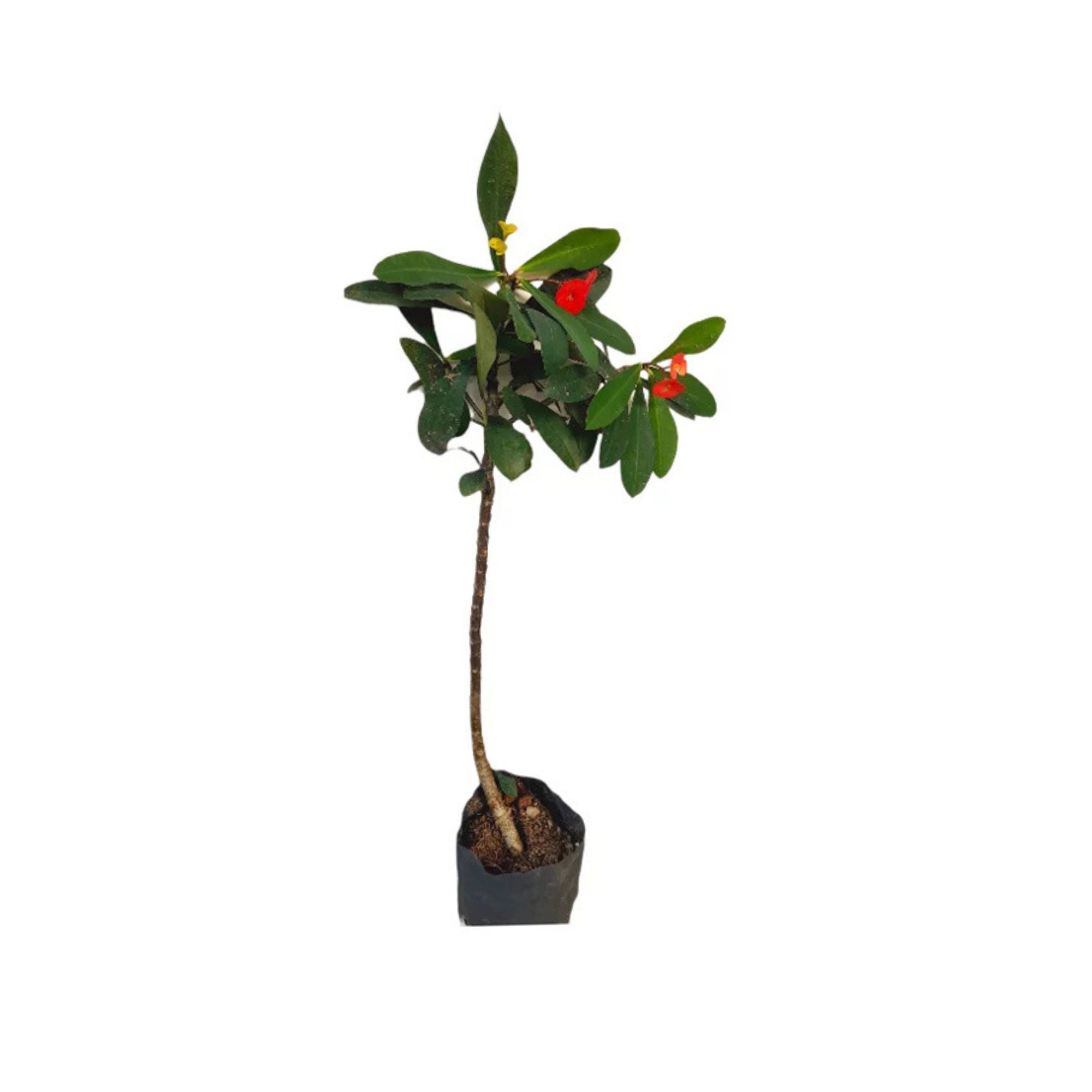




Euphorbia tortilis is a spiny succulent shrub belonging to the large and ecologically diverse genus Euphorbia, within the family Euphorbiaceae. In Sri Lanka it is catalogued as part of the island's ayurvedic medicinal plant heritage — a collection that spans several hundred species used in traditional healing systems practised here for more than two millennia. Though less widely known than flagship plants such as Pongamia pinnata or Acacia chundra, Euphorbia tortilis has a documented place in Sri Lanka's ethnobotanical record and deserves closer attention from anyone interested in the island's natural pharmacopoeia.
What does Euphorbia tortilis look like?
Euphorbia tortilis is characterised by angular, often twisted or contorted stems — the species epithet tortilis is Latin for twisted — which give the plant a sculptural silhouette. Like most euphorbias, it produces a milky white latex when any part of the plant is cut or broken. This latex is a chemical defence against herbivores and is the source of several medicinally active compounds studied in pharmacological research. Flowers are small and inconspicuous, typical of the genus, grouped in specialised structures called cyathia. Growth habit is shrubby and compact, making the plant well adapted to dry and disturbed habitats.
The genus Euphorbia is one of the largest flowering plant genera on Earth, with well over 2,000 species distributed across tropical and subtropical regions. Sri Lanka hosts multiple native and naturalised representatives of the genus, some found in the dry lowland zones of the north and north-west, others distributed across scrubland margins and rocky outcrops.
Where does Euphorbia tortilis grow in Sri Lanka?
Species in the Euphorbia genus associated with dry-zone scrubland and thorny thicket habitats are most frequently encountered in Sri Lanka's North Central and Northern provinces. The arid climate, shallow soils, and seasonal drought of these regions suit euphorbias' drought-tolerant physiology. Areas surrounding ancient tank systems and heritage landscapes — including the region around Polonnaruwa — support a rich understory of dry-zone medicinal plants including various Euphorbia species.
The plant is generally found at low to mid elevations, in open woodland, roadside margins, scrubland, and areas of secondary vegetation. It is not typically associated with the wet-zone rainforest of the south-west, such as the Sinharaja Forest Reserve, which supports a fundamentally different botanical community.
What are the traditional and ayurvedic uses of Euphorbia tortilis?
Within Sri Lanka's ayurvedic tradition, plants of the Euphorbia genus have been employed for a range of applications. The latex, roots, and aerial parts have been used in various traditional formulations, typically under careful practitioner supervision given the potentially irritant nature of euphorb latex. Documented traditional uses across related species in the genus include treatments for skin conditions, inflammatory complaints, and as components in compound herbal preparations.
Sri Lanka's ayurvedic system, codified in classical texts such as the Charaka Samhita and locally compiled Vedakam manuals, classifies medicinal plants according to their doshic effects, taste (rasa), potency (virya), and post-digestive effect (vipaka). Plants like Euphorbia tortilis that produce active latex compounds often fall into categories associated with strong therapeutic action that requires careful dosing. In contemporary ayurvedic practice, such plants are rarely used in isolation but appear as constituents of compound formulations, sometimes alongside preparations such as Yogaraja Guggulu or Kaishore Guggulu.
What active compounds make Euphorbia tortilis medicinally significant?
Phytochemical research on species within the Euphorbia genus has identified several classes of bioactive compounds, including diterpene esters, triterpenoids, flavonoids, and tannins. These compounds are associated with a range of pharmacological activities in laboratory studies, including anti-inflammatory, antimicrobial, and antioxidant effects. The latex specifically contains ingenol and phorbol ester derivatives in various species — compounds that have attracted interest in oncology research, though clinical translation remains an active area of study.
It is important to note that the euphorb latex can be a significant skin and mucous membrane irritant. Traditional practitioners who work with such plants typically have detailed knowledge of preparation methods that mitigate these risks. Self-administration without qualified ayurvedic guidance is not advisable.
How does Euphorbia tortilis fit into Sri Lanka's broader medicinal plant heritage?
Sri Lanka's geographic position at the junction of Indian Ocean trade routes contributed to a layered botanical tradition. The island's ayurvedic physicians — known as vedamahatmayas — developed an extensive materia medica drawing on both indigenous species and plants introduced over centuries of cultural exchange. Today, the Department of Ayurveda of Sri Lanka maintains an official catalogue of medicinal plants that includes several hundred species, with Euphorbia tortilis among those formally recognised.
This recognition matters for conservation as well as medicine. Medicinal plants face pressure from habitat loss, over-harvesting, and climate variability. Several Sri Lankan ayurvedic plant species are now monitored by the government's plant conservation programmes, which document distribution, assess population health, and in some cases support cultivation to reduce pressure on wild stocks. For travellers interested in this tradition, specialist herbal gardens and ayurvedic wellness centres across the island offer guided introductions to the country's medicinal flora in a responsible and educational context.
Can visitors see or learn about Sri Lanka's medicinal plants?
Several established botanical gardens and eco-tourism sites in Sri Lanka include dedicated sections on medicinal plants. The Peradeniya Royal Botanic Gardens near Kandy maintains collections of ayurvedic species with interpretive labelling. Village-based agriculture and spice tourism experiences — particularly in the wet zone of the south-west — often showcase cultivated medicinal plants alongside spice crops. The Midigama Fruit Farm is one example of a rural site where visitors encounter the intersection of Sri Lankan horticulture and traditional plant knowledge.
For those following a wellness-focused itinerary, Sri Lanka's established ayurvedic resorts provide deeper immersion: consultations with qualified physicians, personalised herbal treatments, and sometimes guided walks through on-site medicinal plant gardens. Lakpura can incorporate these experiences into a broader tour itinerary on request.
Is Euphorbia tortilis related to ornamental euphorbias sold as houseplants?
Yes, in the sense that all euphorbias share the same genus and many of the same characteristics — the milky latex, cyathium flower structure, and succulent tendencies in arid-adapted species. Several ornamental euphorbias, including the popular Euphorbia milii (crown of thorns) and various columnar forms, are widely sold as decorative plants. The genus spans both tropical succulents and temperate herbaceous perennials, united primarily by their distinctive floral structure and latex production. Collectors and gardeners interested in the genus often find the wild species of Sri Lanka — including ethnobotanically significant ones like E. tortilis — fascinating complements to cultivated varieties.
Other species in this genus
7 more, sharing the same genus.