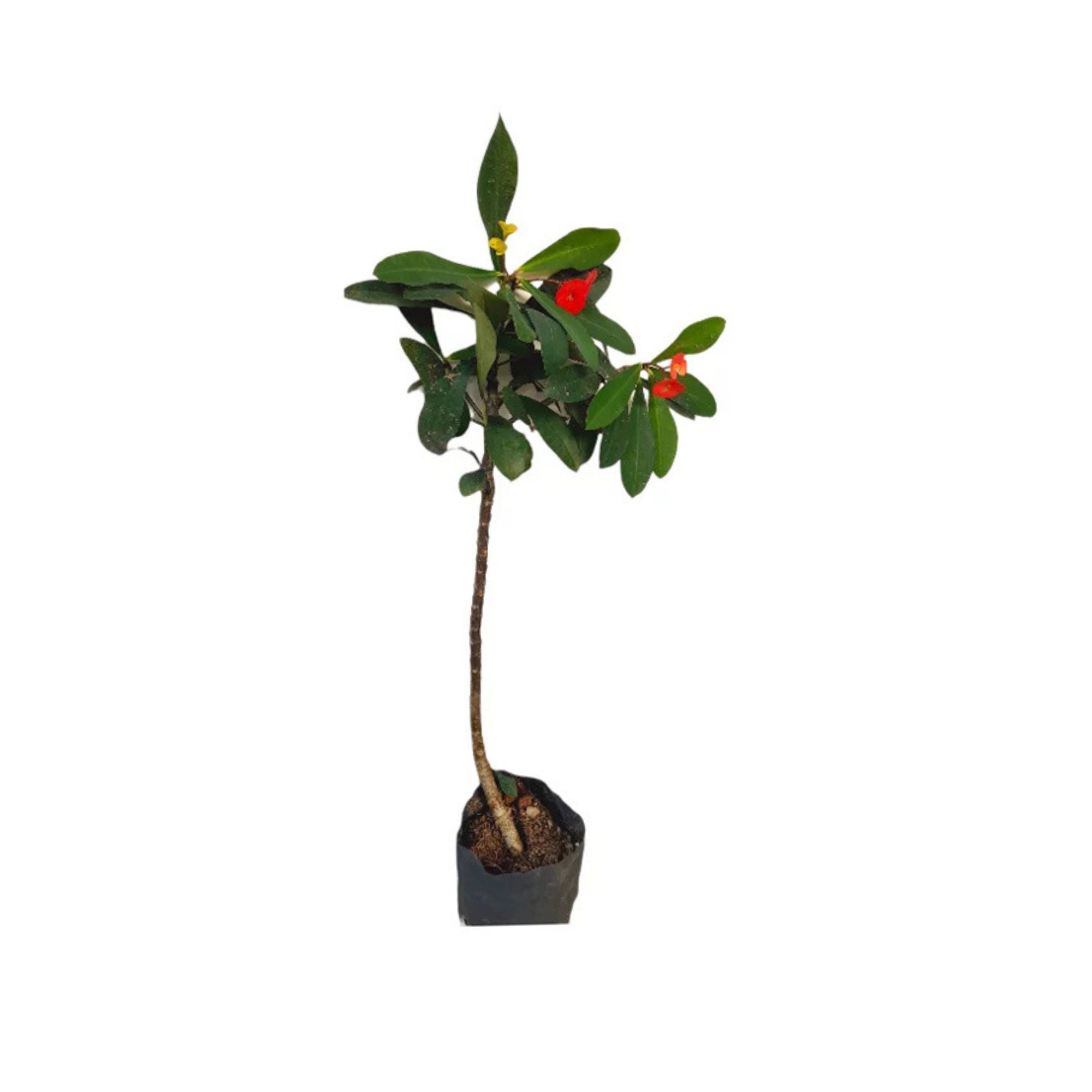




Euphorbia rosea is a small flowering plant belonging to the vast and ecologically diverse family Euphorbiaceae. In Sri Lanka, it holds an established place in the catalogue of ayurvedic medicinal plants — a living pharmacopoeia that practitioners have drawn on for well over two thousand years. While it may not attract the same attention as towering rainforest trees or commercially cultivated spices, Euphorbia rosea is valued precisely for its understated but purposeful role in traditional healing.
What is Euphorbia rosea and where does it grow in Sri Lanka?
Euphorbia rosea is a low-growing, herbaceous species that favours disturbed ground, roadsides, and open scrubby habitats across tropical and subtropical regions. In Sri Lanka, it appears in the drier lowland zones as well as along disturbed forest margins. The plant produces small, inconspicuous flowers framed by the pinkish-red cyathophylls — the leaf-like bracts that give the species its descriptive name, rosea, referring to a rosy or pinkish hue.
Like other members of the Euphorbia genus, the plant exudes a milky white latex when any part is broken. This latex is a chemically complex substance and, depending on the species, can range from mildly irritant to strongly caustic — a property that has historically shaped both its medicinal applications and the caution with which traditional healers handle it.
How is Euphorbia rosea used in Sri Lankan ayurvedic medicine?
Within the ayurvedic tradition practised in Sri Lanka — which draws on both classical Sanskrit texts and a locally evolved Sinhala tradition known as deshiya chikitsa — plants in the Euphorbia genus have been employed for a range of therapeutic purposes. Various species have been used to address skin conditions, inflammation, and digestive complaints, with specific parts of the plant — roots, latex, or leaf — prepared in different ways depending on the intended application.
Euphorbia rosea in particular appears in Sri Lankan ayurvedic catalogues as a recognised medicinal species, though its use is typically guided by trained practitioners rather than casual self-administration. The latex-bearing nature of the plant calls for careful preparation and dosage control. This is consistent with the broader ayurvedic principle that many effective medicines require precise formulation to be safe and beneficial.
Sri Lanka's rich tradition of plant-based medicine includes many such species with dual characters — potent when correctly prepared, hazardous when mishandled. Other well-documented examples in the ayurvedic catalogue include Acacia chundra and Pongamia pinnata, each occupying a specific role in the healing system.
What is the botanical classification of Euphorbia rosea?
Euphorbia rosea sits within one of the largest and most morphologically varied genera in the plant kingdom. The Euphorbia genus contains over two thousand species worldwide, ranging from tiny annual herbs to large succulent trees that resemble cacti. The family Euphorbiaceae to which it belongs also includes economically significant plants such as rubber (Hevea brasiliensis) and cassava (Manihot esculenta).
- Kingdom: Plantae
- Family: Euphorbiaceae
- Genus: Euphorbia
- Species: Euphorbia rosea
- Growth habit: Low-growing annual or short-lived perennial herb
- Distinctive feature: Milky latex in stems and leaves; pinkish cyathophylls
What role do ayurvedic plants play in Sri Lankan culture and wellness?
Ayurveda in Sri Lanka is not a relic of the past but a living, regulated system of medicine. The government recognises it as an official healthcare stream, with dedicated hospitals, a Ministry of Indigenous Medicine, and formal degree programmes at institutions such as the Gampaha Wickramarachchi Ayurveda Institute. Traditional physicians, known as veda mahattaya, continue to practice across both urban and rural communities.
The country's biodiversity underpins this tradition. Sri Lanka's forests — from the wet-zone lowlands of the Sinharaja Forest Reserve to the montane cloud forests — harbour hundreds of medicinal plant species. Many, including Euphorbia rosea, are documented in classical Sinhala texts on herbal medicine that date back centuries. Conserving these plants is therefore not only an ecological priority but a cultural one.
For visitors interested in wellness and traditional medicine, Sri Lanka offers a range of authentic experiences — from ayurvedic consultations at established resorts to visits to herb gardens and working plantations. Understanding individual plants like Euphorbia rosea adds depth to that experience and connects travellers to the intellectual heritage behind the treatments they may encounter.
Is Euphorbia rosea safe to handle or use without professional guidance?
As with many Euphorbia species, caution is warranted. The white latex present throughout the plant can cause skin and eye irritation on contact, and internal use without proper preparation and professional supervision carries risk. Ayurvedic practitioners with formal training in dravyaguna (the study of medicinal plant properties) assess the correct preparation method, dosage, and suitability for an individual patient before recommending any Euphorbia-based remedy.
This is a plant best appreciated through the lens of trained practitioners or in a curated botanical context — not harvested or applied independently by travellers or casual foragers. Reputable ayurvedic centres and herb gardens in Sri Lanka can provide a safe, informative introduction to its properties and proper use.
How does Euphorbia rosea relate to Sri Lanka's broader medicinal plant heritage?
Sri Lanka's ayurvedic plant catalogue is extensive — documenting hundreds of native and naturalised species that form the material basis of traditional treatments. Euphorbia rosea represents the category of plants whose value lies not in commercial cultivation or export, but in localised knowledge passed between generations of healers. Compound preparations such as Yogaraja Guggulu and Kaishore Guggulu exemplify how individual plant ingredients are combined in classical ayurvedic formulations to produce multi-action remedies.
Protecting this knowledge — and the habitats in which these plants grow — is an ongoing concern shared by botanists, traditional physicians, and environmental advocates alike. Sri Lanka's inclusion of such species in official ayurvedic catalogues is a step toward documentation and conservation that benefits both scientific research and indigenous practice.
Other species in this genus
7 more, sharing the same genus.