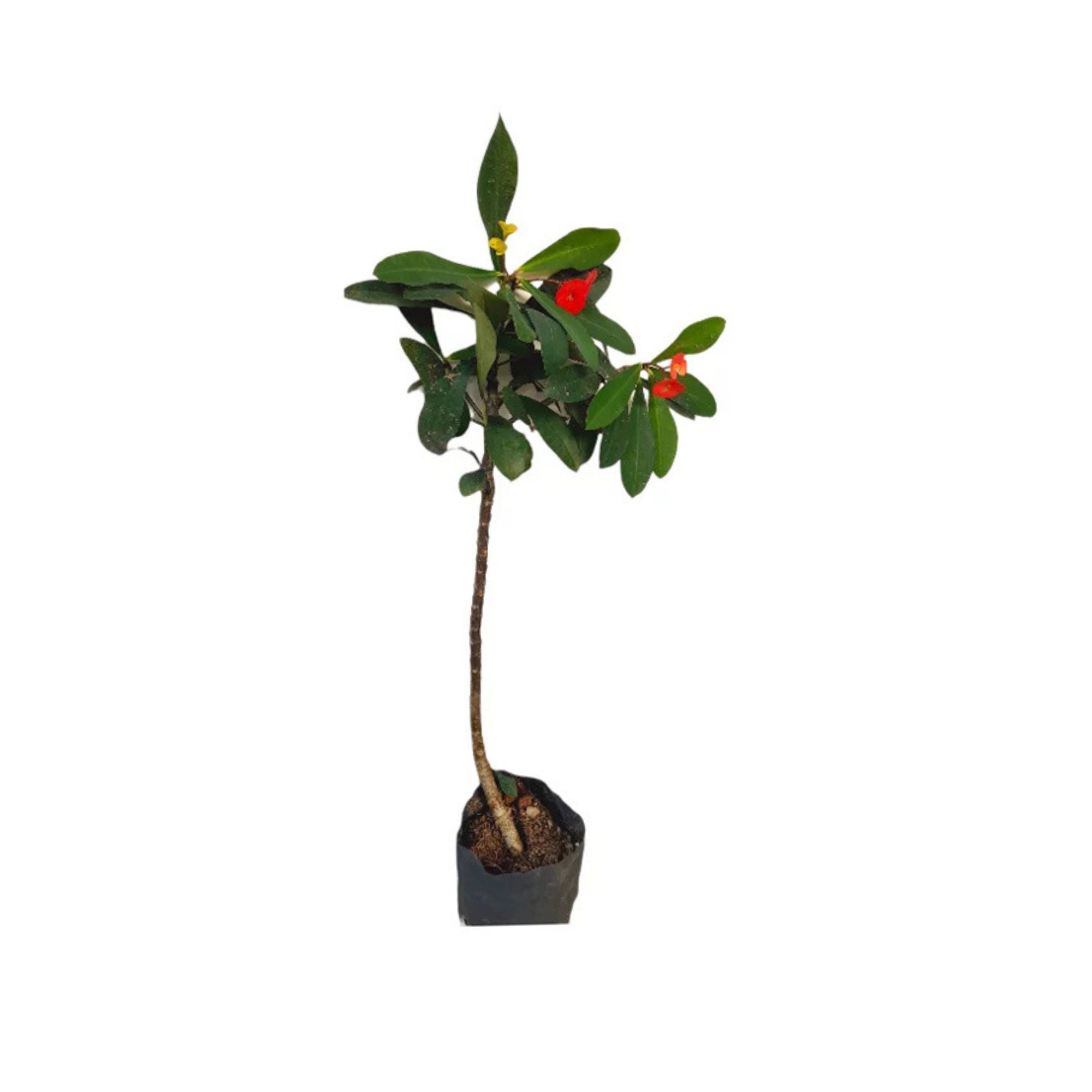




Euphorbia neriifolia, commonly known as Indian spurge tree or common milk hedge, is one of the more recognisable succulent shrubs found across Sri Lanka and the broader Indian subcontinent. Reaching heights of up to four metres, its thick, fleshy stems bear short paired spines and lance-shaped leaves that give the plant an almost sculptural silhouette. In Sri Lanka it is known colloquially as Ela Kalli and has been cultivated for centuries both as a living fence and as a plant of considerable therapeutic value in the Ayurvedic tradition.
What is the botanical profile of Euphorbia neriifolia?
Euphorbia neriifolia belongs to the family Euphorbiaceae, a large and diverse plant family that includes everything from rubber trees to poinsettias. The genus Euphorbia alone contains over 2,000 species. E. neriifolia is a succulent shrub or small tree characterised by angular, green stems arranged in whorls, small deciduous leaves, and a milky white latex that oozes from any cut surface. This latex — while medicinally active — is caustic and should be handled with care; it can irritate skin and mucous membranes on direct contact.
The plant produces small, yellow-green flowers clustered in structures called cyathia, typical of the Euphorbia genus. Fruit is a small, three-lobed capsule. It grows well in dry and seasonally dry zones, tolerating poor soils and extended dry periods, which explains its widespread planting across Sri Lanka's lowland dry zone.
Where does Euphorbia neriifolia grow in Sri Lanka?
The plant thrives in Sri Lanka's dry and intermediate climatic zones, particularly in the North Central, Northern, and Eastern provinces. It is frequently planted along field boundaries and homestead perimeters as a living fence — its spiny stems and toxic latex making it an effective natural barrier against livestock. Village gardens, temple compounds, and agricultural smallholdings across regions such as Polonnaruwa commonly feature this plant.
It also grows semi-wild on rocky outcrops and scrubland, where its drought tolerance gives it a competitive advantage over softer vegetation during the dry season.
What are the traditional ayurvedic uses of Euphorbia neriifolia?
In Sri Lankan and South Asian Ayurveda, Euphorbia neriifolia has been documented across classical texts and is formally included in the catalogue of ayurvedic medicinal plants of Sri Lanka. Different parts of the plant are used for different preparations:
- Latex: Used externally in small, carefully controlled quantities for skin conditions, earaches, and as a counterirritant for rheumatic complaints. Its application requires expert guidance due to its vesicant (blister-causing) properties.
- Leaves: Traditionally applied as a warm poultice to reduce local inflammation. The leaves are sometimes incorporated into compound formulations for digestive ailments.
- Stem bark: Preparations derived from the bark have historically been used in treatments related to liver and spleen disorders, as well as for respiratory complaints including asthma and chronic coughs.
- Roots: Used in some traditional formulations as a purgative and to address rheumatic conditions.
Ayurvedic practitioners typically classify E. neriifolia under the category of plants with tikta (bitter) and katu (pungent) tastes, and assign it heating properties (ushna virya). It is considered to pacify kapha and vata doshas while potentially aggravating pitta in excess. Like other potent medicinal plants — such as Acacia chundra — it is used within compound formulations rather than in isolation.
How is Euphorbia neriifolia used in compound ayurvedic formulations?
In classical Ayurveda, E. neriifolia appears as a secondary or supporting ingredient in a range of compound preparations. It is sometimes combined with aromatic and resinous plants to broaden the therapeutic scope of a formula. The plant's latex, processed and detoxified through traditional shodhana (purification) methods, can be incorporated into medicated oils and pills used for musculoskeletal pain and edema.
Practitioners in Sri Lanka also employ it in combination with other indigenous plants in treatments for dermatological conditions. Given the inherent toxicity of the raw latex, traditional processing protocols are strictly followed to reduce adverse effects before therapeutic application.
Is Euphorbia neriifolia safe to handle or cultivate at home?
The milky latex produced by all parts of the plant is a significant irritant and can cause severe skin inflammation, eye injury, and — if ingested — gastrointestinal distress. Anyone cultivating the plant in a garden setting should wear gloves when pruning and avoid touching the eyes or mouth after contact. The plant should be kept away from children and pets.
Despite these precautions, it remains a popular garden plant across Sri Lanka precisely because its protective properties — both horticultural and medicinal — make it a pragmatic choice for rural and peri-urban settings. Its low water requirements also make it well-suited to home gardens in drier parts of the island.
What is the cultural significance of Euphorbia neriifolia in Sri Lanka?
Beyond medicine, the plant occupies a quiet but stable role in Sri Lankan village life. Its use as a living fence dates back many centuries and reflects a practical agrarian tradition of choosing plants that serve multiple functions simultaneously — boundary marker, livestock deterrent, and medicinal resource. Temple gardens in the dry zone sometimes include it among other traditionally significant plants, linking it loosely to ritual as well as practical use.
Sri Lanka's formal recognition of indigenous medicinal plants through government and academic institutions has helped maintain documentation of species like E. neriifolia within the national ayurvedic plant catalogue, ensuring that knowledge of its preparation and use continues to be transmitted through qualified practitioners.
How does Euphorbia neriifolia relate to broader Sri Lankan herbal traditions?
Sri Lanka's ethnobotanical heritage is remarkably rich for an island of its size, with hundreds of plant species catalogued for medicinal, culinary, or ritual use. Euphorbia neriifolia sits within a broader ecosystem of tropical and dry-zone plants that Ayurvedic and traditional medicine practitioners have refined knowledge of over many generations. Other well-documented examples in the island's herbal tradition include Pongamia pinnata, used in oil preparations for skin conditions, and aromatic species such as Syzygium aromaticum.
Visitors with a genuine interest in Sri Lanka's living botanical heritage can explore this tradition through dedicated herbal garden visits, Ayurveda wellness centres, and rural community experiences that responsible tour operators can arrange as part of a broader cultural itinerary.
Other species in this genus
7 more, sharing the same genus.