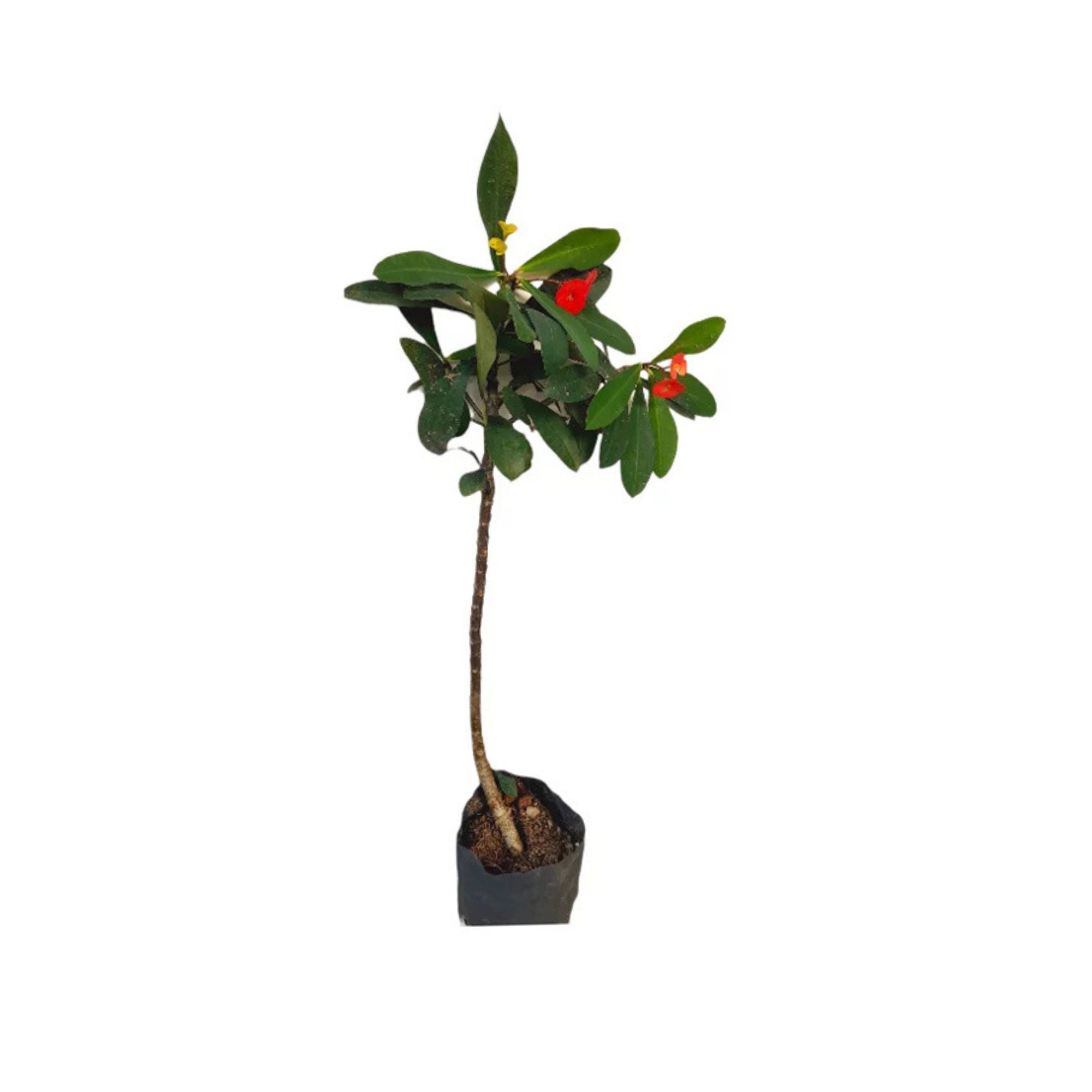




Euphorbia antiquorum is a succulent shrub native to tropical Asia and one of the recognized medicinal plants in Sri Lanka's traditional Ayurvedic pharmacopoeia. Known for its distinctive three-angled or four-angled fleshy stems lined with paired spines, it grows along dry coastal scrublands, rocky hillsides, and village boundaries across the island. Although it resembles a cactus, it belongs to the entirely separate family Euphorbiaceae — a common point of confusion among first-time observers.
What does Euphorbia antiquorum look like?
The plant typically grows as an erect, many-branched shrub reaching two to five metres in height under favourable conditions. Its stems are green, angular, and jointed in a segmented pattern, with pairs of short, sharp spines running along each ridge. Small, inconspicuous flowers emerge at the tips of the branches, and the plant produces small, fleshy fruits that turn red when ripe. The entire plant contains a milky white latex sap, which is highly caustic and should never come into contact with eyes or open skin.
Where does Euphorbia antiquorum grow in Sri Lanka?
In Sri Lanka, Euphorbia antiquorum is most commonly found in the dry and arid zones — particularly in the North Central, Northern, and Eastern provinces. It thrives in thin, well-drained soils with low rainfall, making it well suited to the dry lowland habitats around the ancient cities of the Cultural Triangle. It is also planted as a living fence in rural villages, where its dense, spiny growth creates an effective barrier for livestock. The plant is occasionally seen growing in disturbed ground near Polonnaruwa, where the dry-zone climate matches its preferred conditions.
What are the traditional Ayurvedic uses of Euphorbia antiquorum?
In Sri Lanka's Ayurvedic tradition, Euphorbia antiquorum — known locally as Nagadamana or Thiru Kalli in Tamil-speaking regions — has been employed for a range of therapeutic applications. Practitioners have historically used preparations derived from the stem and latex to address conditions including rheumatism, skin diseases, and certain digestive complaints. The latex, diluted and processed according to classical formulations, has been applied externally to treat warts and other dermatological conditions.
Classical Ayurvedic texts classify the plant under the category of tikshna (sharp or penetrating) herbs, reflecting the highly active nature of its phytochemical constituents. Among the compounds identified in modern phytochemical studies are triterpenoids, flavonoids, and euphol — substances that have attracted interest in contemporary pharmacological research for their potential anti-inflammatory and antimicrobial properties. This intersection of traditional knowledge and modern inquiry is characteristic of many plants in Sri Lanka's rich medicinal flora.
Related plants in the Ayurvedic catalogue — such as Acacia chundra and Pongamia pinnata — share a similarly deep integration into both village-level folk medicine and formally documented classical practice.
How is Euphorbia antiquorum used safely?
The latex of Euphorbia antiquorum is toxic and irritating, and self-medication using raw plant material is strongly discouraged. Traditional preparations are always processed and combined with other ingredients to moderate the plant's intensity before therapeutic use. Handling the plant in a garden context requires gloves and eye protection; latex contact with skin causes burning and inflammation, and ingestion of any part of the raw plant can be dangerous. Only qualified Ayurvedic practitioners should prescribe or prepare remedies involving this species.
If you are interested in exploring Sri Lanka's Ayurvedic heritage more broadly, a consultation with a licensed practitioner at a recognised wellness centre is the safest and most rewarding approach.
What is the ecological role of Euphorbia antiquorum?
Beyond its medicinal applications, Euphorbia antiquorum plays a practical ecological role in Sri Lanka's dry-zone landscape. Its dense, spiny habit provides shelter for small reptiles and birds, and its flowers attract pollinators during dry periods when few other plants are in bloom. As a pioneer species capable of colonising degraded or rocky land, it contributes to early-stage vegetation recovery in disturbed habitats. Its tolerance of drought makes it a useful subject for discussion in the context of dryland agroforestry and traditional land management.
The plant is also notable for its carbon-storing capacity relative to its size — fleshy succulent tissues retain water and organic compounds efficiently, a survival strategy shared across succulent euphorbias worldwide.
How does Euphorbia antiquorum fit into Sri Lanka's broader medicinal plant tradition?
Sri Lanka's Ayurvedic tradition is one of the oldest continuous systems of plant-based medicine in the world, drawing on over 1,500 medicinal plant species documented across the island's diverse biomes. Euphorbia antiquorum occupies a specific and well-defined niche in this system — valued precisely because its sharp bioactive properties, when properly managed, can address conditions that milder herbs cannot. This philosophy of matching the intensity of a remedy to the nature of an ailment is central to Ayurvedic reasoning.
Other formulated Ayurvedic preparations used in Sri Lanka — such as Yogaraja Guggulu, Kaishore Guggulu, and Pushyanuga Churna — often incorporate multiple plant materials in precise ratios, illustrating how individual plants like Euphorbia antiquorum rarely function in isolation but rather as part of a carefully calibrated system.
Visitors to Sri Lanka who wish to engage seriously with this tradition can seek out dedicated Ayurvedic hospitals, university programmes, and heritage herbal gardens that present these plants in their living context, enabling a more grounded understanding than a brief encounter with a labelled specimen can provide.
Can I grow Euphorbia antiquorum outside Sri Lanka?
Euphorbia antiquorum adapts well to tropical and subtropical climates with a pronounced dry season, and it is cultivated as an ornamental or hedge plant in parts of India, Southeast Asia, and East Africa. In cooler temperate climates it can be grown as a container plant, though it requires excellent drainage, minimal watering during cooler months, and bright direct light. It is not frost-tolerant and will not survive outdoors in temperate winters. Export of plant material from Sri Lanka is subject to national and CITES regulations, so travellers should not attempt to carry cuttings or seeds across international borders without appropriate documentation.
Other species in this genus
7 more, sharing the same genus.