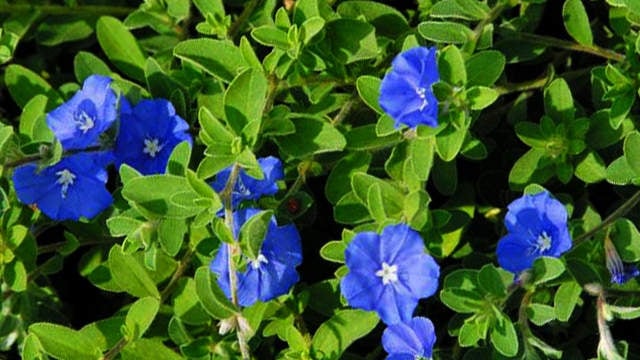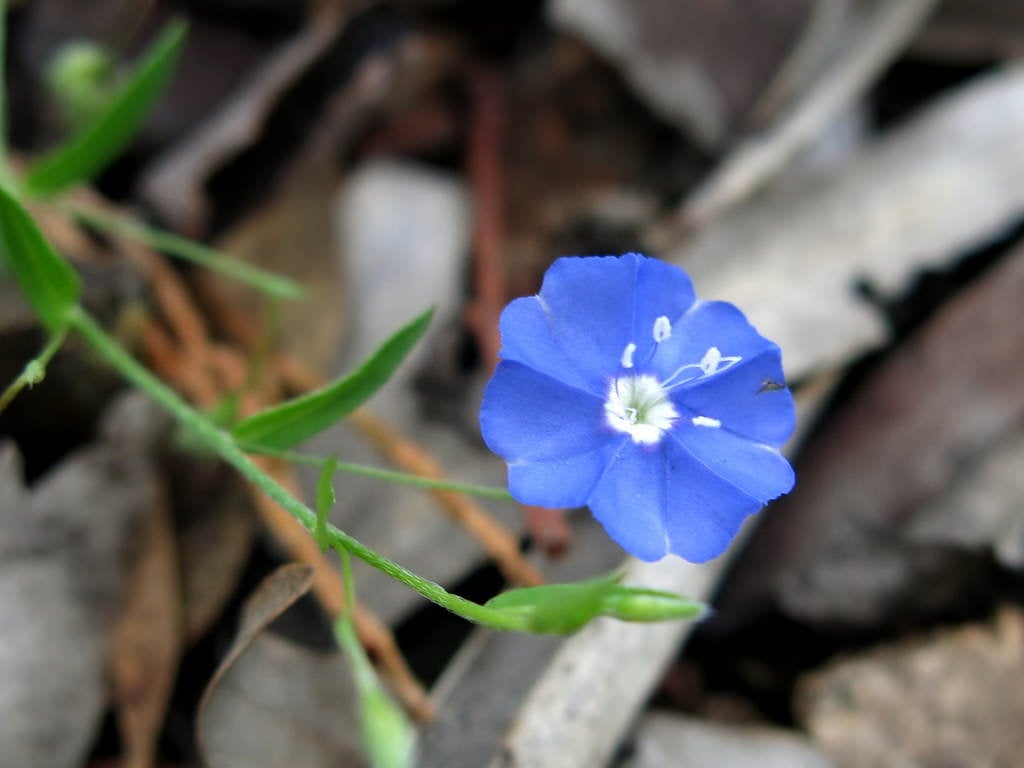
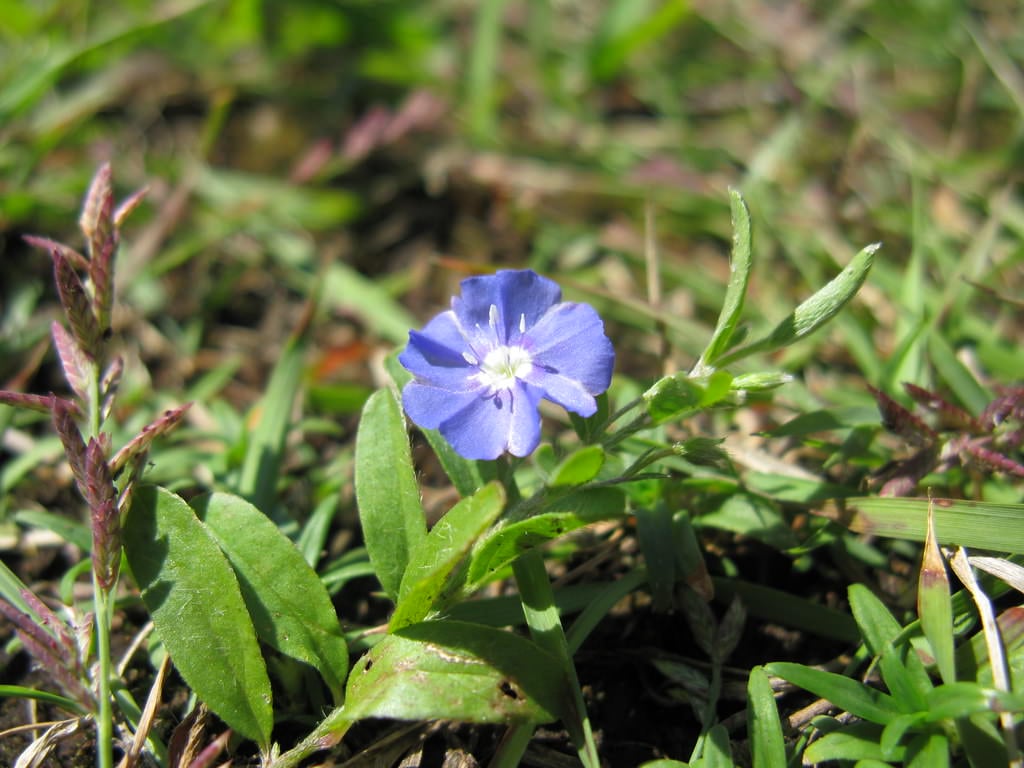
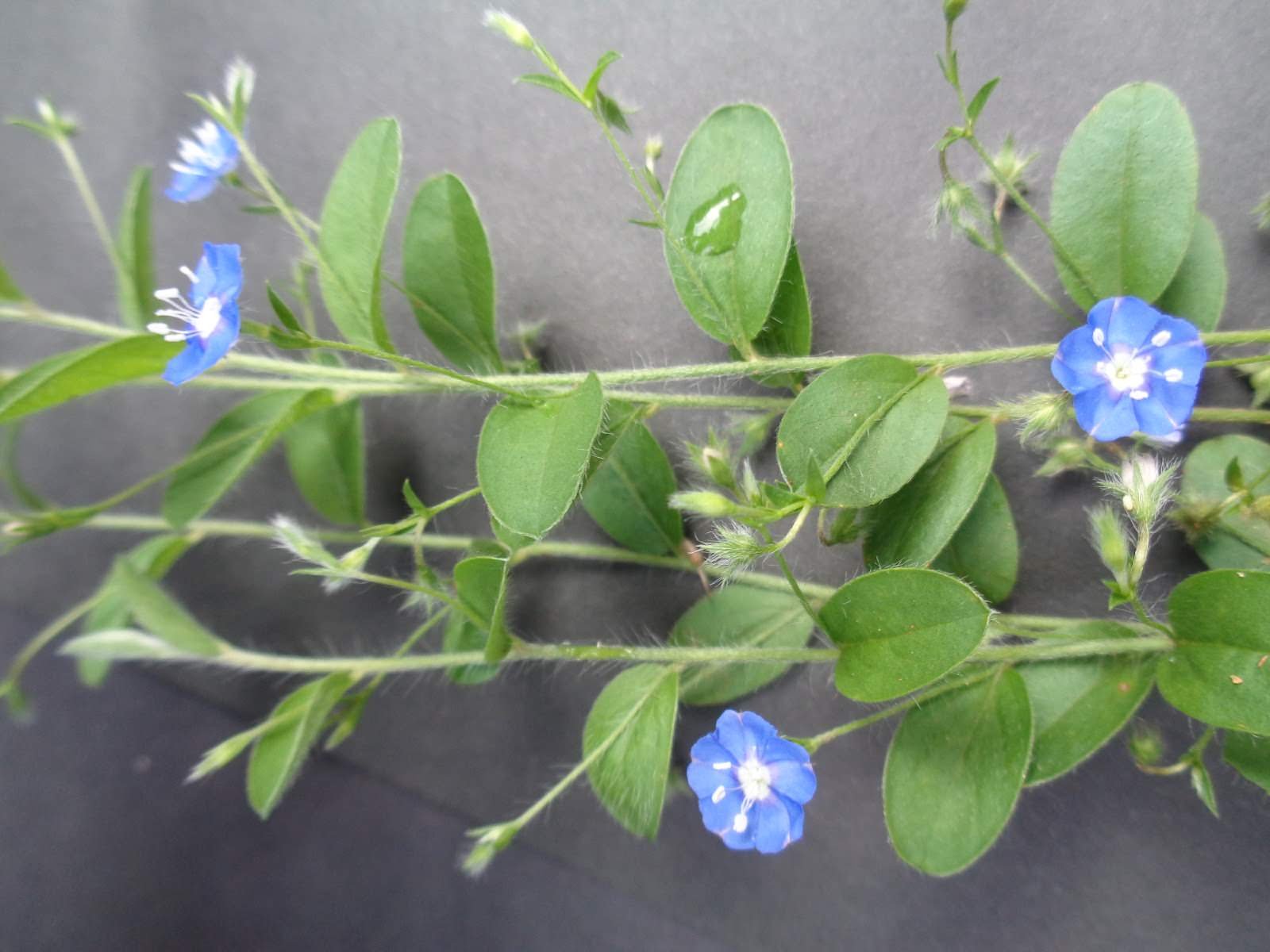

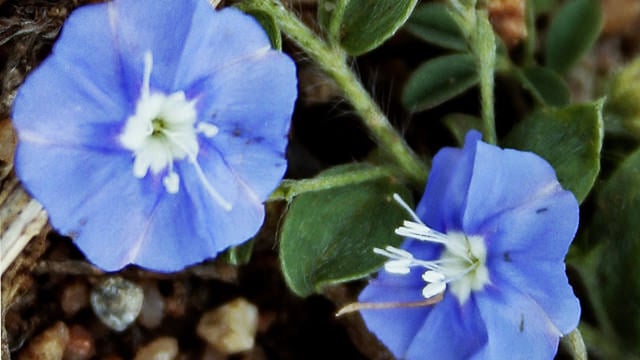
Evolvulus alsinoides, known in Sri Lanka as Vishnukranthi (විෂ්ණුක්රාන්ති), is a small but botanically significant flowering plant belonging to the family Convolvulaceae — the same family as the familiar morning-glory vine. Despite its modest size, this plant holds considerable importance in traditional healing systems across South and Southeast Asia, and it has been formally catalogued among the ayurvedic medicinal plants of Sri Lanka.
What is Evolvulus alsinoides?
Commonly called dwarf morning-glory or slender dwarf morning-glory, Evolvulus alsinoides is a low-growing, softly hairy herb that typically spreads along the ground or scrambles gently over other vegetation. Its small flowers — usually pale blue to violet, occasionally white — are characteristic of the Convolvulaceae family and appear throughout much of the year in tropical climates. The leaves are small, oval to oblong, and arranged alternately along slender stems.
Unlike many of its climbing relatives, Evolvulus does not twine or latch onto supports. It grows as a prostrate or semi-erect herb, often found in open grasslands, roadsides, dry scrublands, and the margins of cultivated fields. In Sri Lanka, it is encountered across a range of ecological zones, from coastal lowlands to the drier inland regions of the country.
Where does Evolvulus alsinoides grow naturally?
This species has a pantropical distribution, meaning it occurs naturally across the tropical and warm-temperate zones of multiple continents. Its native and naturalised range spans Indomalaya (including Sri Lanka and the Indian subcontinent), Australasia, Polynesia, Sub-Saharan Africa, and the Americas. Few herbaceous plants of this size can claim such a wide geographic footprint.
Within Sri Lanka, the plant is found primarily in the dry and intermediate zones, where open, sunny habitats with well-drained soils are common. It is frequently seen alongside roadsides and in the margins of agricultural land, particularly in the North Central and Northern provinces. In the wetter parts of the island — such as the wet zone around the Sinharaja Forest Reserve — it is less commonly encountered, as it favours drier, more exposed conditions.
What is the Ayurvedic significance of Vishnukranthi?
In the Ayurvedic tradition, Evolvulus alsinoides occupies a respected position. It is classified as one of the Dasapushpa — ten sacred flowering herbs of Kerala — and is also recognised in the broader South Asian Ayurvedic pharmacopoeia. In Sri Lanka, it has been formally included in the national catalogue of ayurvedic medicinal plants, reflecting its documented role in traditional healing practices on the island.
The entire plant — roots, stems, leaves, and flowers — is considered medicinally active. Traditional formulations use it primarily as a nervine tonic and cognitive support herb. It is believed to support memory, mental clarity, and general neurological well-being. Within the classical framework of Ayurveda, it is associated with medhya rasayana — a category of preparations specifically intended to enhance intellect and learning.
In Sri Lankan traditional medicine (Deshiya Chikitsa), preparations of Vishnukranthi are used in formulations targeting conditions of the nervous system, as well as in general tonic preparations for convalescence. It is sometimes combined with other locally available medicinal plants in compound formulations, a practice documented across generations of traditional practitioners.
How is Evolvulus alsinoides used in traditional medicine?
Traditional preparations vary by region and practitioner, but broadly follow several approaches:
- Whole-plant decoctions: The fresh or dried plant is boiled in water to make a tea-like preparation taken as a nervine tonic.
- Powder (churna): Dried, powdered plant material is mixed with honey, ghee, or milk for oral consumption.
- Oil infusions: The plant is infused in sesame or coconut oil for external application in traditional head massage preparations aimed at calming the mind.
- Compound formulations: It appears as an ingredient in classical Ayurvedic compound medicines, where it is combined with other botanicals to produce synergistic effects.
Contemporary phytochemical research has investigated several of these traditional uses. Studies have identified alkaloids, flavonoids, and triterpenoids in the plant, and laboratory work has explored potential neuroprotective, adaptogenic, and antioxidant properties. While clinical evidence in humans remains limited, the body of pharmacognostic research is growing and broadly consistent with traditional claims of cognitive support.
How does Vishnukranthi relate to Sri Lanka's broader herbal tradition?
Sri Lanka has one of the longest continuously documented Ayurvedic traditions in Asia, supported by ancient texts including the Charaka Samhita and regional Sinhala medical manuscripts. The island's rich botanical diversity — shaped by its position as a biodiversity hotspot — has made it a natural repository of medicinal plants. Evolvulus alsinoides is one among many herbs that bridge the gap between wild ecology and healing knowledge.
Other well-known members of Sri Lanka's ayurvedic plant catalogue include Pongamia pinnata (Karanda) and Syzygium aromaticum (clove), each with distinct therapeutic profiles and cultivation histories on the island. Vishnukranthi, by contrast, is rarely cultivated at scale — it is largely a wild-harvested herb gathered by practitioners and collectors from its natural habitat.
Is Evolvulus alsinoides cultivated or endangered in Sri Lanka?
The plant is not currently listed as threatened in Sri Lanka and remains relatively common in suitable dry-zone habitats. It is occasionally cultivated in home herb gardens and Ayurvedic farm holdings, but large-scale cultivation is uncommon. Its tolerance for poor, sandy soils and full sun makes it relatively easy to grow in home settings without intensive management.
Conservation attention for medicinal plants in Sri Lanka has tended to focus on rarer forest species under pressure from habitat loss, rather than adaptable open-habitat herbs like Evolvulus alsinoides. Nevertheless, the sustainability of wild harvesting — particularly for commercial Ayurvedic supply chains — remains an area of ongoing discussion among practitioners and botanists in the country.
Where can travellers encounter Ayurvedic plant culture in Sri Lanka?
For visitors interested in Sri Lanka's living herbal traditions, a number of experiences offer genuine engagement with Ayurvedic plant knowledge. Spice and herb gardens in the Kandy and Matale regions provide guided introductions to medicinal plants. Certified Ayurvedic wellness centres — particularly in Kandy, Colombo, and Bentota — offer consultations and treatments rooted in classical practice. The Kandy city tour can often be extended to include visits to traditional medicine practitioners or botanical collections.
For those seeking a deeper, rural immersion, village-based experiences in the dry zone — where plants like Vishnukranthi grow wild — provide a compelling contrast to resort Ayurveda. Guides familiar with traditional plant knowledge can identify and contextualise the herbs encountered along roadsides and in fields, giving botanical travellers a more grounded understanding of Sri Lanka's healing plant heritage.
Other species in this genus
1 more, sharing the same genus.