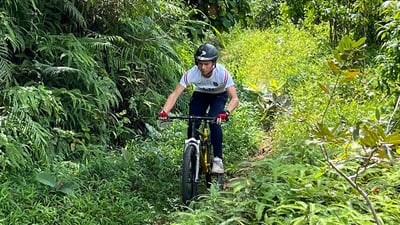
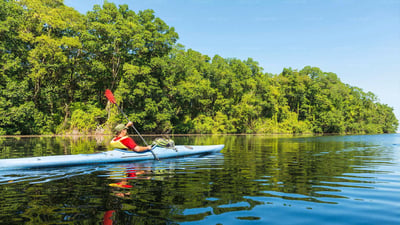
Few places in Sri Lanka carry the quiet weight of Kithulgala. Tucked into the wet-zone lowlands where the Kelani River cuts through dense rainforest, this small town played an unlikely role in cinema history: it was here, on the banks of a fast-flowing tropical river, that David Lean filmed the Oscar-winning The Bridge on the River Kwai in 1956 and 1957.
What is the story behind The Bridge on the River Kwai?
The 1957 British-American war film was adapted from Pierre Boulle's 1952 novel Le Pont de la Rivière Kwaï. Set in 1943, the film follows British prisoners of war held in a Japanese camp in Burma, who are forced to construct a railway bridge over the River Kwai for military use. A commanding officer, driven by personal pride and a deeply British sense of duty, ultimately oversees the construction himself — only to find his creation targeted for sabotage by his own side. The film won seven Academy Awards, including Best Picture and Best Director, and is widely regarded as one of the greatest war films ever made.
The plot drew loosely from the real wartime construction of a railway bridge over the Mae Klong River in Thailand. That river was later renamed Kwae Yai in the 1960s, adding a layer of historical irony to the story's geography.
Why was Kithulgala chosen as the filming location?
Director David Lean needed a tropical river setting with dramatic jungle scenery and enough flow to make the bridge demolition sequence believable. Kithulgala, then part of British Ceylon, offered all of this within a relatively accessible distance from Colombo. The Kelani River here is wide, muscular, and flanked by Makandawa Rainforest — dense primary growth that doubled convincingly for the Burmese interior.
The shoot was conducted between 1956 and 1957, when the river ran somewhat less aggressively than it does today. Even so, conditions were dangerous. The bridge-demolition sequence had to be reshot twice; there was at least one near-drowning, and one member of the crew died during the explosives work. The production was one of the most ambitious — and physically hazardous — location shoots of its era.
What can visitors see at the filming site today?
After production wrapped, the bridge prop was dismantled to restore the riverbank ecology. What remains are a handful of concrete pillar bases rising from the riverbed — the last physical evidence of the shoot. A small, weathered metal sign near the water's edge marks the location for those who know to look for it.
The site is not a formal heritage attraction with ticketed entry or interpretive signage. It is a quiet, somewhat overgrown spot best appreciated by those who arrive having already watched the film. The contrast between the grand cinematic spectacle and the modest remains on the ground is, for many visitors, precisely the point.
Sri Lanka's tourism authorities have discussed building a replica bridge at the site to better mark its significance, though no such structure had been completed at the time of writing. Whether or not a replica eventually appears, the Kelani River gorge itself is striking enough to merit a visit.
What else is there to do in Kithulgala?
Kithulgala has developed into one of Sri Lanka's leading adventure-sport destinations, and most visitors today come as much for the river activities as for the film history. White-water rafting on the Kelani is the headline draw — the rapids here are among the most accessible in the country for first-time rafters. River boarding, kayaking, and canyoning are also on offer from operators based in town.
Beyond the river, the Makandawa Rainforest on the eastern bank is a rewarding birdwatching area. The Sri Lanka blue magpie, red-faced malkoha, and several endemic species inhabit the canopy here. Nature walks guided by local naturalists can be arranged through most guesthouses.
How do I get to Kithulgala from Colombo?
Kithulgala lies roughly 70 kilometres east of Colombo along the A7 highway towards Kandy. By car or private transfer the journey typically takes around two hours, depending on traffic leaving the capital. The town is also served by buses from Colombo and Kandy, though the journey by public transport takes considerably longer and involves a change in some cases. Most visitors combine Kithulgala with a broader hill-country itinerary, stopping here en route to or from Ella or the central highlands.
When is the best time to visit Kithulgala?
The Kelani River is fed by the southwest monsoon, which typically runs from May to August. River levels are highest during and immediately after this period, making white-water conditions more intense. For those primarily interested in rafting, December through April — when the river is lower and more predictable — is generally preferred. Birdwatchers and rainforest walkers can visit year-round, as the wet-zone forests remain lush in all seasons. The film location itself can be accessed in any weather, though the riverbank path becomes muddy during heavy rain.
Is Kithulgala worth visiting if I am not an adventure sports enthusiast?
Yes. The rainforest, river scenery, and film history alone justify a half-day stop. The pace in Kithulgala is unhurried, the accommodation options range from simple guesthouses to comfortable eco-lodges, and the surrounding landscape is genuinely beautiful without requiring any physical exertion to appreciate. Visitors interested in the history of cinema, World War II, or colonial-era Sri Lanka will find the location quietly evocative.
Nearby places
12 places within about 25 km, nearest first.
- Abseilingunder 1 km
- Makandawa Rainforestunder 1 km
- Raftingunder 1 km
- Makandawa Rain Forestunder 1 km
- White Water Raftingunder 1 km
- Kitulgala Cityunder 1 km
- Handun Ellaunder 1 km
- Sandun Ellaunder 1 km
- Belilena Cave, Kitulgala1 km
- Kithulgala Belilena Caves5 km
- Olu Ella6 km
- Danagirigala7 km
Related reading
5 pages on closely related subjects.