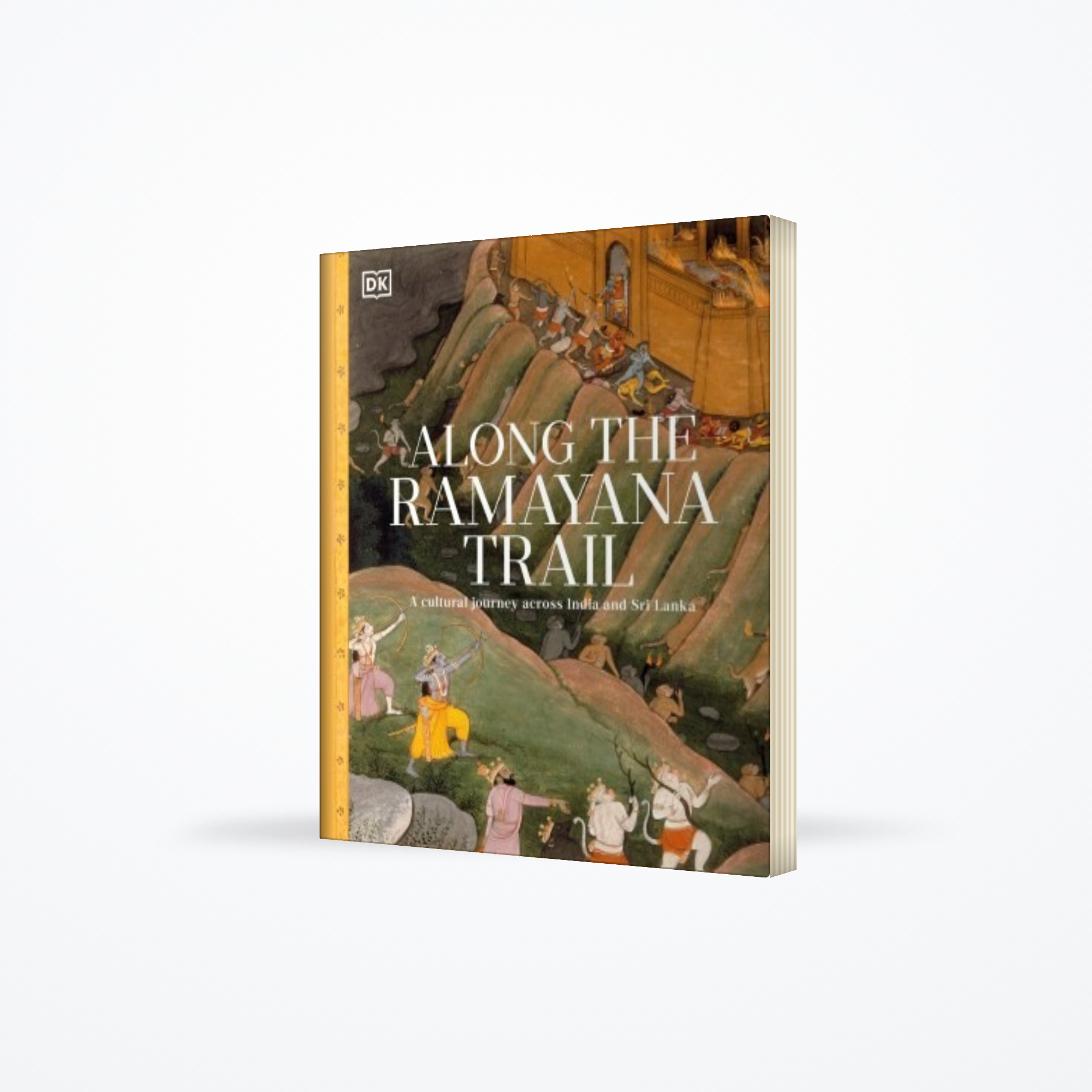
Few epics have shaped the spiritual geography of a nation the way the Ramayana has shaped Sri Lanka. The island that ancient texts call Lankapura is home to more than fifty sites connected to the legend of Rama, Sita, Ravana, and Hanuman — places where local memory, landscape, and scripture have converged for millennia. Whether you approach the Ramayana as a pilgrim, a historian, or a curious traveller, following this trail across Sri Lanka is an unusually absorbing way to understand the island's deeper cultural layers.
What is the Ramayana and why does it matter in Sri Lanka?
The Ramayana is one of the two great Sanskrit epics of ancient India, attributed to the sage Valmiki. It tells of Prince Rama of Ayodhya, who follows his exiled years in the forest, and whose wife Sita is abducted by Ravana — the ten-headed demon-king who rules Lankapura. With the help of the monkey-god Hanuman and a vast army, Rama crosses the ocean, defeats Ravana, and brings Sita home. The story has been recited, performed, painted, and debated across Asia for thousands of years.
Sri Lanka's connection to the epic is not merely literary. Communities in the central highlands, the north, and the south have preserved oral traditions that place specific hills, rivers, temples, and clearings within the narrative. Soil colour, botanical anomalies, and unchanged place-names are cited as physical evidence — and, for many visitors, that living continuity is the most compelling aspect of the trail.
What are the most significant Ramayana sites in Sri Lanka?
The sites span the length of the island, but they cluster in several regions that correspond to the epic's key episodes.
Sita's Captivity — the Central Highlands
- Sita Amman Temple, Seetha Eliya — situated near Nuwara Eliya at around 1,900 metres above sea level, this active Hindu shrine is traditionally identified as the Ashoka Vatika, the grove where Ravana held Sita captive. Footprints carved into a nearby rock are venerated as Sita's own.
- Hakgala Botanical Garden — the garden borders the rocky outcrop of Hakgala, which some traditions identify as a fragment of the Himalayan mountain that Hanuman carried to Sri Lanka to provide life-restoring sanjeevani herbs. The presence of genuinely alpine Himalayan plant species in this tropical setting is frequently cited in support of that identification.
- Divurumpola — in the Uva region, this ancient temple marks the spot where Sita is said to have undergone Agni Pariksha, the trial by fire to prove her purity. Oaths sworn here are still considered binding in some local village assemblies, a remarkable instance of epic geography entering everyday legal practice.
Ravana's Kingdom — Forts, Caves, and Waterfalls
- Ravana's Cave, Ella — a series of caves in the rock escarpment above Ella is associated with Ravana's palace and treasury. The surrounding highlands, with their dramatic terrain, fit the epic's description of a mountain citadel.
- Ravana Ella Falls — the waterfall below the cave complex is one of the widest in Sri Lanka and draws as many Ramayana pilgrims as scenic visitors.
- Rawanagala — the rocky summit known as Rawanagala in the Sabaragamuwa foothills is another site identified with the demon-king's domain, offering panoramic views across the lowland forests.
Hanuman's Footprint — the Northern and Eastern Coasts
- Maniyankanda (Rumassala Hill), Unawatuna — the forested hill near Galle is said to be a fragment of the herb-bearing mountain that Hanuman dropped on his return journey. The hill contains an unusual concentration of medicinal plants not typically found elsewhere along the southern coast.
- Ussangoda — a flat, eerily barren plateau on the southern coast, with reddish soil distinct from the surrounding earth, is identified in local tradition as one of Ravana's airports, allegedly scorched when Hanuman set it alight during his search for Sita.
- Koneshwaram Temple, Trincomalee — this ancient Shaivite temple on Swami Rock is linked in tradition to Ravana himself, who is said to have been a devoted worshipper of Shiva and to have performed penance here.
The Battlefield — Adam's Bridge and the North
- Mannar and Adam's Bridge (Rama Setu) — the chain of limestone shoals connecting Sri Lanka to southern India is identified in the Ramayana as the causeway built by Rama's army to cross the ocean. The geological formation is real and visible from the air; its origins remain a subject of scientific debate.
- Muhudu Maha Viharaya, Pottuvil — this ancient Buddhist temple on the east coast sits near a stretch of coastline associated with the army's landing point.
Medicinal Heritage — Ritigala
Ritigala Strict Nature Reserve in the North Central Province protects one of Sri Lanka's most ecologically unusual forests: an isolated mountain range harbouring over 150 medicinal plant species, including several that are endemic or atypical for the dry zone. Local tradition holds that this is one of the sites where fragments of Hanuman's herb-carrying mountain landed, seeding the forest with Himalayan flora. The reserve also contains substantial archaeological remains from the early centuries CE.
How do I plan a Ramayana trail tour in Sri Lanka?
The sites are spread across multiple provinces, from the deep south to the far north, so most visitors cover them over eight to twelve days. A logical route runs from Colombo northward to Mannar and Trincomalee, then south through the Cultural Triangle and the central highlands to Ella, Nuwara Eliya, and the southern coast. Alternatively, pilgrimage groups often begin in the highlands — where the emotional core of Sita's story is concentrated — and radiate outward.
Dedicated Ramayana trail packages remove the logistical complexity considerably. Lakpura's ten- and eleven-day itineraries cover the principal sites with a knowledgeable driver-guide and private transport, which makes a significant difference when navigating rural roads to sites such as Divurumpola or Ussangoda that have limited public transport access.
When is the best time to visit Ramayana sites in Sri Lanka?
The highland sites — Sita Amman Temple, Hakgala, Divurumpola — are most comfortable between January and April, when the hill country is dry and clear. The southern coastal sites are best visited from November through April. If you are including the north (Mannar, Trincomalee), plan for the May-to-September dry season in that region. The Horton Plains and the Nuwara Eliya belt can be cold and misty from June to September. In practice, a well-planned itinerary in December or March works well for most of the trail.
What should I know before visiting Sita Amman Temple?
The temple is an active place of Hindu worship, so modest dress is expected: shoulders and knees covered, and shoes removed before entering the inner sanctum. The site receives significant numbers of Indian pilgrims, particularly during the Tamil month of Panguni (March–April), when special rituals are held. The temple is located a short drive from Nuwara Eliya town and is easily combined with a visit to Hakgala Botanical Garden on the same day.
Is the Ramayana trail suitable for non-Hindu visitors?
Entirely. The sites are maintained by Hindu trusts and local communities, but non-Hindu visitors are welcomed warmly at all the major locations, including the active temples, provided they dress respectfully. Many visitors approach the trail as a cultural and archaeological journey rather than a religious pilgrimage, and the landscape itself — waterfalls, mountain forests, coastal plateaus, ancient cave complexes — rewards that framing independently of the epic's spiritual dimension.
What other heritage can I combine with the Ramayana trail?
Several of Sri Lanka's mainstream heritage circuits overlap naturally with Ramayana sites. The Sinharaja Forest Reserve, accessible from the southern foothills, adds a UNESCO-listed biodiversity perspective to the Rumassala and Ussangoda leg of the trail. The ancient city of Polonnaruwa, a short detour from Ritigala, adds a Buddhist archaeological dimension that rounds out the cultural picture considerably. The Esala Perahera Festival in Kandy, if your timing coincides, provides a living example of the region's syncretic religious heritage.