Ussangoda National Park sits on a narrow coastal headland in the Hambantota District, where the land drops sharply into the Indian Ocean and the soil runs a deep, rusty red. It is one of Sri Lanka's smaller protected areas, yet few places in the country offer a landscape quite this distinctive — part geological curiosity, part living mythology, and part quiet wildlife sanctuary all at once.
What makes Ussangoda so unusual?
The park's most arresting feature is its iron-rich laterite soil, which gives the plateau an almost lunar complexion. Vegetation here is sparse by design: low scrub, hardy coastal grasses, and wind-sculpted shrubs have adapted to both the saline air and the nutrient-poor ground. The result is an open, panoramic landscape unlike the dense forest found in parks such as Udawalawe National Park or the dry-zone woodlands to the north.
Geologists note that the unusual soil chemistry — elevated iron and magnesium concentrations — suppresses normal vegetation growth and gives the surface its characteristic reddish-brown hue. Standing on the plateau with the Indian Ocean stretching to the horizon, it is easy to understand why early travellers and local communities attached extraordinary significance to this place.
What is the legend of Ussangoda?
Local tradition weaves Ussangoda into the Ramayana narrative. According to folklore, the site was scorched by Hanuman during his search for Sita, and the reddened earth is said to be evidence of that ancient fire. A second, parallel tradition holds that Ussangoda served as a landing ground for the flying craft — the Dandu Monara — said to have been operated by the demon king Ravana, whose legendary kingdom was located in Sri Lanka.
Whether these stories are read as mythology or interpreted through an archaeoastronomical lens, they have made Ussangoda a pilgrimage point for visitors tracing the Ramayana trail across the island. The site is also considered sacred by some local communities, and a degree of reverence is appropriate when visiting.
What archaeological evidence exists at Ussangoda?
Beyond legend, the area holds tangible signs of ancient human activity. Remnants of early settlements and burial sites have been identified in and around the park boundary, suggesting the headland was occupied or used ceremonially well before written records. The proximity to the southern coastline also raises the possibility of the area functioning as a navigational landmark for ancient maritime routes across the Indian Ocean. Formal excavations in this zone remain limited, and the site's full historical depth is still being understood.
What wildlife can you see at Ussangoda?
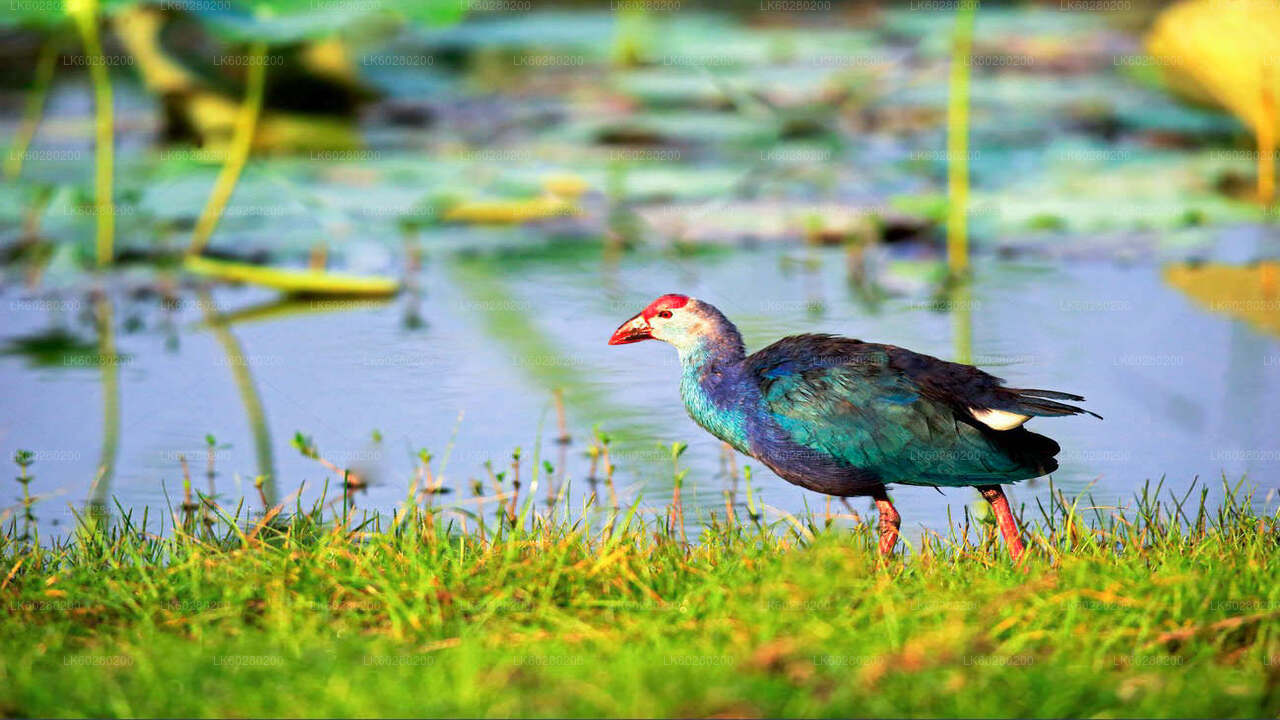
The open scrubland and coastal fringe support a modest but interesting community of species. Birdwatchers will find shore birds and raptors using the headland as a perch and hunting ground, particularly during the northeast monsoon migration season. The low canopy is patrolled by endemic lizards and small reptiles, while the rocky outcrops near the shore attract occasional monitor lizards. Dolphins are sometimes visible from the cliff edge, and the surrounding waters are known for their marine diversity.
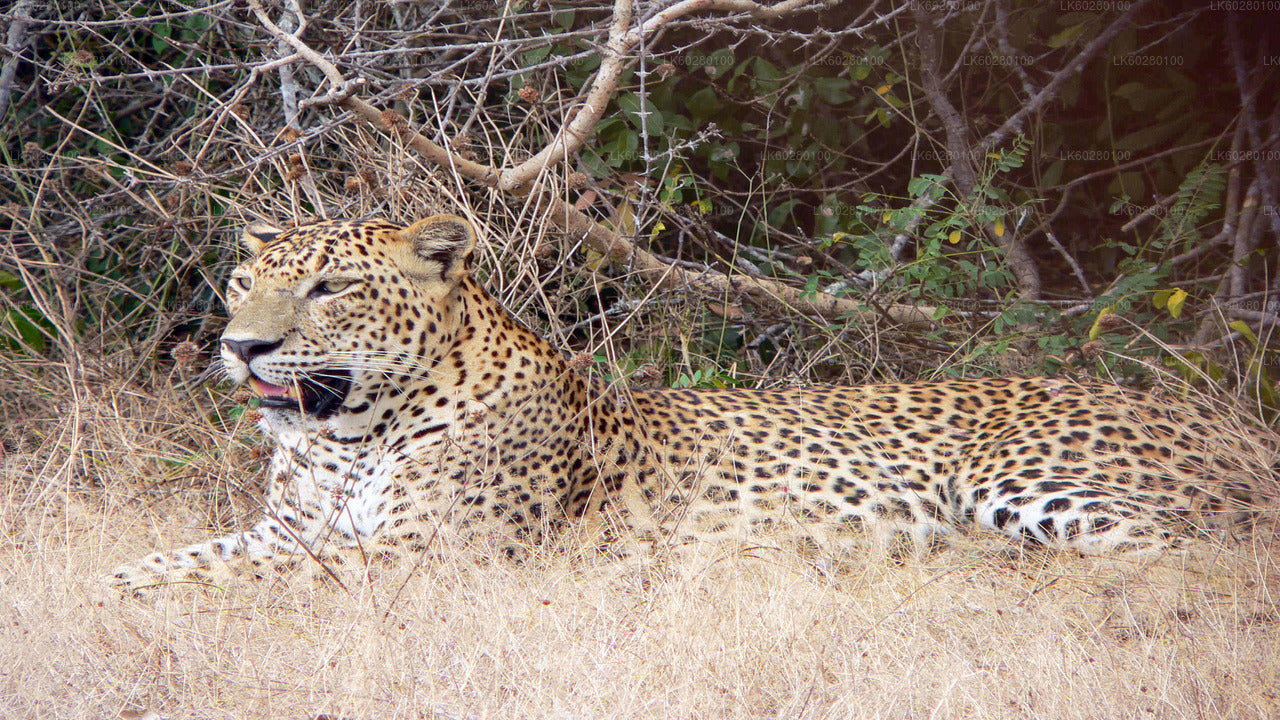
Ussangoda is not a destination for large mammal sightings in the way that a classic Sri Lankan safari park is, but its bird diversity relative to its size is worth noting for serious wildlife enthusiasts.
When is the best time to visit Ussangoda?
The southern coast of Sri Lanka is generally most accessible between November and April, when the southwest monsoon has subsided and skies are clear. During this window, the sea views from the plateau are at their sharpest, and the walking conditions on the open terrain are comfortable. Visiting early in the morning avoids the strongest midday heat and gives better chances of spotting coastal birds before they retreat from the open ground.
The southwest monsoon, which typically arrives between May and September, brings heavy rain and strong coastal winds to this part of the island. The site remains accessible in principle, but visibility is reduced and the exposed plateau can be uncomfortable in stormy weather.
How do I get to Ussangoda National Park?
Ussangoda lies along the southern coastal highway (A2) between Weligama and Hambantota, close to the small town of Nonagama. It is roughly 190 km from Colombo by road and sits conveniently between Tangalle and Hambantota, making it a natural stop on a southern coastal itinerary.
| Departure point | Approximate distance | Typical drive time |
|---|---|---|
| Colombo | ~190 km | 3.5–4.5 hours |
| Galle | ~90 km | 1.5–2 hours |
| Hambantota | ~20 km | 25–35 minutes |
| Tangalle | ~25 km | 30–40 minutes |
There is no dedicated public transport stop at the park entrance. Most visitors arrive by private vehicle or tuk-tuk from Tangalle or Hambantota. The site is accessible on foot once you reach the coastal road, and no four-wheel-drive vehicle is required for the plateau itself.
What should visitors know before going?
Ussangoda is a nationally protected area managed by the Department of Wildlife Conservation. Visitors are expected to stay on marked paths, refrain from removing soil, rocks, or plant material, and avoid littering on what is a genuinely fragile ecosystem. The combination of its sacred status for local communities and its ecological sensitivity means that loud or disrespectful behaviour is particularly unwelcome here.
- Wear sun protection — the open plateau offers no natural shade.
- Bring sufficient water; there are no refreshment facilities inside the park.
- Footwear with grip is advisable; the laterite surface can be slippery after rain.
- Photography is permitted but using drones requires prior approval from the Department of Wildlife Conservation.
- There is no formal accommodation within the park; Tangalle and Hambantota offer the nearest range of hotels.
How does Ussangoda fit into a southern Sri Lanka itinerary?
Most visitors to the southern coast combine Ussangoda with Elephant Transit Home in Udawalawe, the beaches around Tangalle, and a safari in one of the larger neighbouring parks. Bundala National Park, a Ramsar-listed wetland famous for flamingos and migratory birds, is less than an hour's drive east and makes an excellent full-day pairing with Ussangoda given their shared coastal geography and contrasting ecosystems.
For travellers already exploring the deep south, Ussangoda works well as a late-afternoon stop — the low angle of the evening light intensifies the red of the soil and turns the Indian Ocean views a warm gold.
Nearby places
8 places within about 25 km, nearest first.
- Ussangoda Plainsunder 1 km
- Ussangoda3 km
- Hungama4 km
- Kalametiya4 km
- Ussangoda Beach5 km
- Ambalantota City9 km
- Nonagama City9 km
- Mawella Beach10 km
Related reading
6 pages on closely related subjects.