


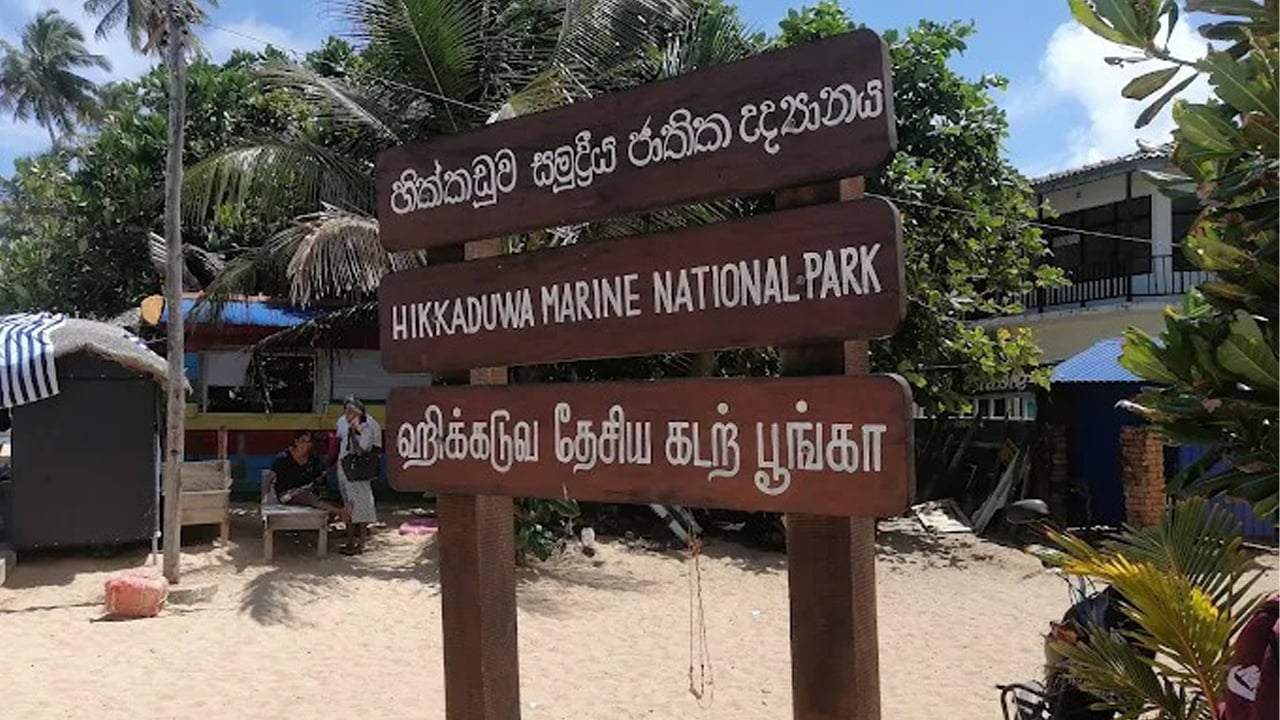
Sri Lanka's Marine National Parks are a network of legally protected coastal and ocean areas managed by the Department of Wildlife Conservation. Established to safeguard the country's rich underwater ecosystems, these parks cover coral reefs, seagrass meadows, mangrove lagoons, and open-ocean habitats that together support an exceptional diversity of marine life. For visitors, they offer some of the most rewarding wildlife encounters in South Asia — above and below the waterline.
What marine life can you see in Sri Lanka's Marine National Parks?
The parks collectively protect habitats for hundreds of species. Coral reefs here are home to surgeonfish, parrotfish, lionfish, and moray eels, while the reef edges attract larger pelagic visitors including reef sharks and barracuda. Green turtles and hawksbill turtles forage in the seagrass beds and nest on adjacent beaches. Spinner dolphins are regularly spotted in offshore waters, and blue whales pass through seasonally in the deep channels to the south and west.
Mangrove systems fringing several parks serve as nursery grounds for juvenile fish and shelter for wading birds including painted storks and lesser adjutants. The biodiversity here is not incidental — these ecosystems are ecologically interconnected, with each habitat type supporting the others.
Which are Sri Lanka's designated Marine National Parks?
Sri Lanka has several protected marine areas, each with a distinct character:
- Pigeon Island Marine National Park — Located off Nilaveli on the east coast, Pigeon Island protects one of Sri Lanka's last significant blacktip reef shark populations and some of the healthiest hard coral colonies in the country. Snorkelling here is among the best available anywhere on the island.
- Hikkaduwa Marine National Park — Situated along the southwest coast, this reef system is one of Sri Lanka's oldest protected marine areas. Four rocky islets and the surrounding reef attract hawksbill turtles year-round. The nearby Hikkaduwa Turtle Hatchery complements the conservation work done within the park boundary.
- Bar Reef Marine Sanctuary — Located off Kalpitiya in the northwest, Bar Reef is Sri Lanka's largest coral reef system and one of the most remote protected marine areas. Large pods of spinner dolphins are regularly seen in the surrounding waters.
- Rekawa Lagoon — Though classified differently, Rekawa on the south coast functions as an important marine wildlife corridor, particularly for sea turtles that nest on its beach in significant numbers.
What activities are permitted inside Marine National Parks?
Activities within the parks are regulated to minimise disturbance to marine habitats. Permitted and commonly available activities include:
- Snorkelling — guided and unguided, depending on the park
- Glass-bottom boat rides — for visitors who prefer to stay dry
- Marine wildlife observation from licensed boats
- Educational guided tours focused on reef ecology and conservation
Scuba diving is permitted at some parks under specific conditions and with authorised operators. Fishing, coral collection, and anchoring on reef areas are prohibited throughout all designated marine protected areas. Visitors are expected to follow briefing guidelines on reef etiquette — no touching corals, no feeding fish, no standing on the reef.
For a complementary wetland wildlife experience, the Madu River Safari through the Madu Ganga wetlands offers mangrove channels, monitor lizards, and waterbirds in a similarly protected estuary environment on the southwest coast.
When is the best time to visit Sri Lanka's Marine National Parks?
The optimal season depends on which coast you are visiting, as Sri Lanka's two monsoons operate on opposite sides of the island.
| Park / Area | Best Months | Season |
|---|---|---|
| Hikkaduwa (southwest) | November – April | Inter-monsoon / NE monsoon |
| Bar Reef, Kalpitiya (northwest) | November – March | NE monsoon |
| Pigeon Island (east) | April – September | Inter-monsoon / SW monsoon |
Outside the recommended windows, swell, reduced visibility, and the occasional temporary park closure can affect the experience. It is always worth checking current sea conditions with a local operator before booking boat excursions.
Why are Marine National Parks important for Sri Lanka's coastline?
Coral reefs perform several practical functions beyond supporting biodiversity. Healthy reef systems act as natural breakwaters, dissipating wave energy and reducing coastal erosion — a factor of growing importance given changing sea conditions. Reef ecosystems also underpin artisanal fisheries that local communities depend on, making their conservation an economic as well as an environmental priority.
Sri Lanka's Department of Wildlife Conservation works alongside international organisations including the IUCN to monitor reef health, track turtle nesting populations, and enforce no-take zones. Tourism, when conducted responsibly, generates revenue that directly funds these programmes. The Kosgoda Sea Turtle Conservation Project is one example of how community-based conservation on the southwest coast links directly to the broader marine protection framework.
How do you get to Sri Lanka's Marine National Parks?
Access routes differ by park:
- Hikkaduwa — Roughly 100 km south of Colombo along the coastal highway. Easily reached by train or private vehicle in around two hours from the capital.
- Pigeon Island — Accessible by short boat transfer from Nilaveli beach, which is approximately 15 km north of Trincomalee. Trincomalee is around 250 km from Colombo by road.
- Bar Reef — The most remote option. Reached by boat from Kalpitiya, roughly 130 km north of Colombo. Liveaboard or day-trip operators run from Kalpitiya town.
Entry to gazetted Marine National Parks requires a valid permit issued by the Department of Wildlife Conservation. Fees apply separately for foreign and local visitors. Licensed boat operators typically include permit processing as part of their service packages.
What should visitors know before going?
- Apply reef-safe sunscreen — standard chemical sunscreens are harmful to coral and are discouraged in park waters.
- Bring water shoes or fins with closed heels to protect both your feet and the reef substrate.
- Book with a licensed operator; unlicensed boats operating in park waters are in violation of Department of Wildlife Conservation regulations.
- Sea conditions change quickly — flexibility in your schedule is advisable, particularly during shoulder months.
- Photographing marine life is permitted and encouraged, but flash photography near turtles and reef sharks should be avoided.
Nearby places
8 places within about 25 km, nearest first.
- Rasvehera4 km
- Ballooning4 km
- Kandalama Reservoir6 km
- Kekirawa7 km
- Kekirawa Railway Station7 km
- Kandalama City7 km
- Rathna Prasadaya Stupa8 km
- Sigiriya Airport (GIU)9 km
Related reading
5 pages on closely related subjects.


