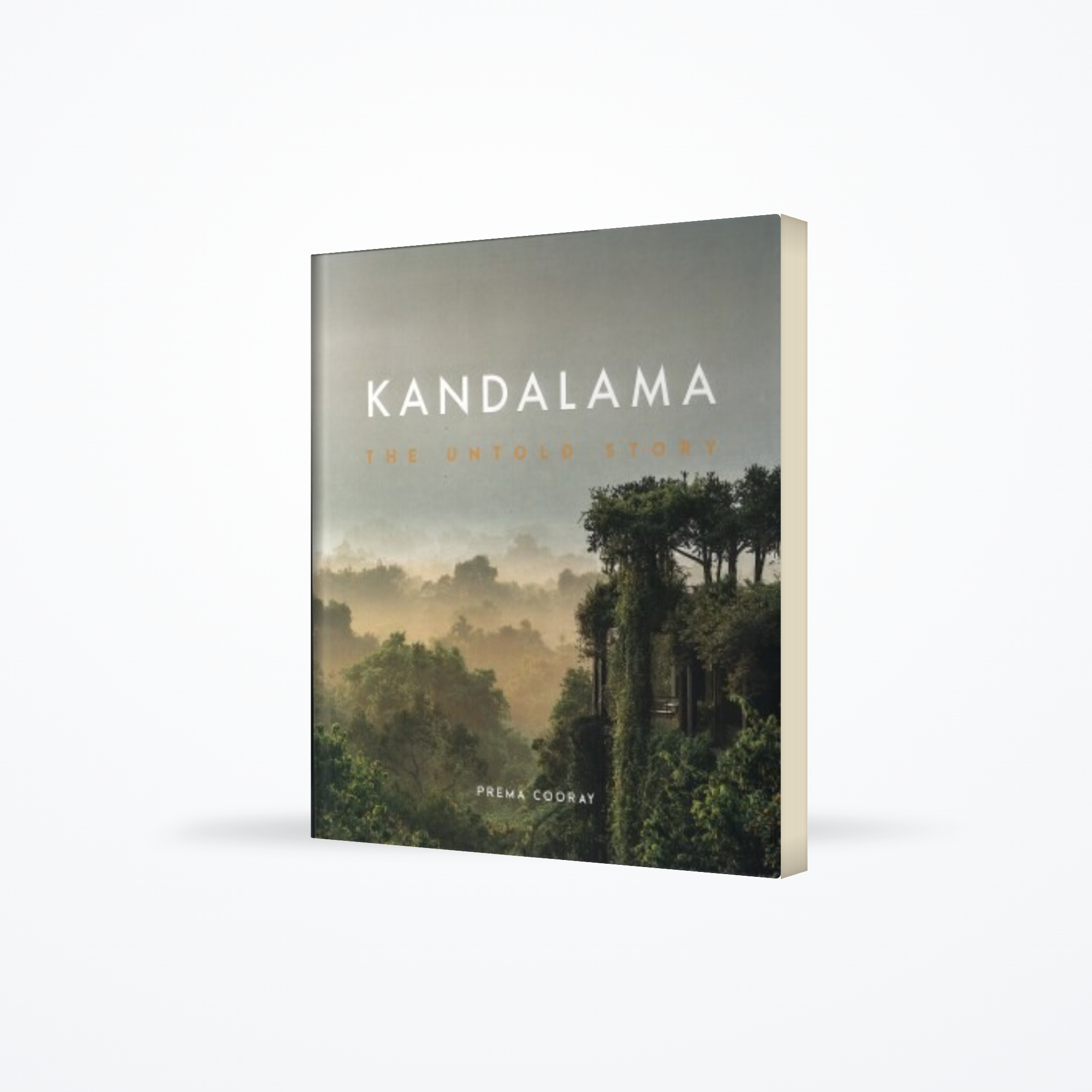
Kandalama Reservoir sits quietly in the dry-zone lowlands of Sri Lanka's North Central province, framed by granite outcrops and dense scrub forest. Though man-made, it reads as entirely natural — the tree line reaches to the water's edge, elephants wade at dusk, and the surrounding hills cast long reflections across its surface. Ancient kings ordered its construction to store monsoon runoff for the paddy fields of the surrounding plains, and that same water still irrigates farmland as far as the Kekirawa region today.
What is the history behind Kandalama Reservoir?
The reservoir's origins are ancient, though precise records have not survived. Colonial-era travellers who crossed Ceylon in the early nineteenth century knew it as the Kandelle or Candelay tank, and several wrote admiringly about its engineering. John Davy, writing in 1821, described the embankment as running nearly in a straight line from one rocky hillock to a high ledge of rock, with a sloped stone face composed of courses of roughly uniform stones — a construction method consistent with the great irrigation works of the Anuradhapura and Polonnaruwa periods.
The dam wall itself stands around 21 metres high and stretches approximately 1,600 metres across — dimensions that prompted early European visitors to marvel at how such a structure could have been raised without modern machinery. The reservoir has two traditional sluice outlets, one of which carries a constant flow; the other opens only when water levels are unusually high.
By the nineteenth century Kandalama was already a recognised point of interest on the colonial touring circuit, appearing in accounts by military surgeons, administrators, and amateur naturalists. Its reputation among British travellers as the finest tank in Ceylon speaks to both its scale and the drama of its setting among forested hills.
How large is Kandalama Reservoir?
The lake measures roughly 4.8 km in length and 2.3 km across at its widest point. Its catchment area extends over approximately 102 km², and the reservoir holds around 33.3 million cubic metres of water at capacity — enough to sustain irrigation across a wide belt of the surrounding dry zone. Unlike some tanks that shrink to mudflats in the dry season, Kandalama retains water year-round, which sustains its resident wildlife even during the months between monsoons.
What wildlife can be seen at Kandalama Reservoir?
The forested shoreline and adjacent scrubland support a range of dry-zone species. Elephants are regularly spotted drinking or crossing the shallows, particularly in the early morning and at dusk. Spotted deer, wild boar, and grey langur monkeys move through the surrounding forest, and the water attracts large flocks of waterbirds — painted storks, open-billed storks, cormorants, and various herons among them.
Mugger crocodiles inhabit the reservoir and are best observed from a respectful distance from the bank or from a boat. The area around the lake falls within a broader ecological corridor that connects several protected zones in the region, which explains the relatively undisturbed character of its wildlife. Birdwatchers visiting between October and March may also encounter migratory species passing through the dry zone.
What can I see near Kandalama Reservoir?
The reservoir's greatest asset may be its location. Within a short drive, several of Sri Lanka's most significant heritage and natural sites cluster in what is often called the Cultural Triangle.
- Dambulla Cave Temple — less than 8 km away, this UNESCO-listed rock temple contains five cave shrines with some of the finest ancient murals in Asia.
- Sigiriya — the celebrated fifth-century rock fortress rises from the plains roughly 20 km to the north and is among Sri Lanka's most visited heritage sites.
- Polonnaruwa — the medieval royal capital, with its remarkable concentration of ruins, lies around 60 km to the northeast.
- Ibbankatuwa Megalithic Burial Ground — a little-visited prehistoric site on the reservoir's southern shore that dates back several thousand years.
- Aukana Buddha Statue — a towering fifth-century standing Buddha carved from a single granite face, located roughly 35 km to the northwest.
The Dambulu Oya river, one of the tributaries dammed to create the reservoir, flows through the surrounding landscape and can be explored on foot along sections of its bank.
When is the best time to visit Kandalama Reservoir?
The dry season between May and September generally offers the clearest skies and most concentrated wildlife sightings around the waterline, as animals converge on permanent water sources when seasonal pools dry up. Birdwatching is particularly rewarding between November and February, when migratory species augment the resident population. The reservoir is accessible year-round, but the access roads can become muddy during the northeast monsoon (October to January), so a vehicle with reasonable ground clearance is advisable if you plan to explore the less-developed sections of the shoreline.
How do I get to Kandalama Reservoir from Colombo?
Kandalama lies approximately 160 km northeast of Colombo, a drive of roughly three to four hours depending on traffic and the route taken. The most common approach is via the Colombo–Kandy expressway to Kurunegala, then continuing northeast through Dambulla. Private transfer is the most practical option, as public transport does not serve the reservoir directly — the nearest town with regular bus connections is Dambulla. Several internationally recognised hotels have been built on or near the reservoir's shores, making it straightforward to use Kandalama as a base for exploring the Cultural Triangle over two or three nights.
Is hot-air ballooning available near Kandalama?
Yes. The flat terrain and reliable early-morning conditions of the Cultural Triangle make the area around Kandalama well suited to hot-air ballooning. Flights typically launch at dawn and offer aerial views across the reservoir, the surrounding forest, and — on clear days — the silhouette of Sigiriya Rock in the distance. Balloons operate seasonally and are subject to weather, so advance booking is recommended.
What makes Kandalama Reservoir different from other Sri Lankan tanks?
Most ancient irrigation tanks in Sri Lanka's dry zone were built on flat terrain and present an open, unshaded aspect from at least one direction. Kandalama is unusual in being enclosed on multiple sides by hills and rocky outcrops, which gives it a more enclosed and scenic character than tanks of comparable size. Early British travellers specifically noted this quality — one wrote that unlike other tanks, which are generally tame at their lower extremities, the ground at Kandalama ascends everywhere from the water's edge, creating an impression of being inside a natural amphitheatre rather than looking across an artificial flat.
This topography also explains why the site attracted architects and hoteliers in the modern era: the forested ridges that ring the lake offered building positions with panoramic water views, while the surrounding jungle ensured a sense of seclusion unusual for a lake so close to major tourist routes.
Nearby places
9 places within about 25 km, nearest first.
Related reading
1 pages on closely related subjects.