



Ashok Vatika is one of the most evocative sites in Hindu mythology — a garden in the kingdom of Lanka where Sita, wife of Rama, was held captive by the demon king Ravana. Referenced in Valmiki's Ramayana, the Vishnu Purana, and Tulsidas's Ramacharitamanas (particularly in the Sundar Kand), the Vatika occupies a central role in one of South Asia's oldest and most beloved epics. For many Hindu pilgrims and mythology enthusiasts, tracing its believed location in Sri Lanka is a deeply meaningful journey.
What is the story of Ashok Vatika in the Ramayana?
After Ravana abducted Sita from the Dandaka forest, he initially tried to keep her in his palace at Lanka. Sita refused his hospitality and insisted on remaining apart from him. Ravana, at her request, allowed her to stay in the royal garden known as Ashok Vatika — a grove of ashoka trees (Saraca asoca) designed and built by Vishwakarma, the divine architect. Garden houses surrounded the grove, and the setting, while lush, was as much a gilded cage as a refuge.
It was beneath a shimshapa tree in this garden that Sita waited, steadfast in her devotion to Rama. Ravana's queen, Mandodari, visited her here, as did Ravana himself on several occasions, pressing his suit. The garden also witnessed the pivotal moment when Hanuman leapt to Lanka in search of Sita and revealed himself to her by presenting Rama's finger ring — proof of his identity and the promise of her rescue.
Hanuman's visit was not without consequence for the garden. In the account given in the Valmiki Ramayana, he devastated much of Ashok Vatika before his capture, destroying trees, garden houses, and the inner pleasure grove known as Pramada Van at its centre. Sita remained unharmed and stayed in the garden until Rama's forces crossed the sea, fought the great battle, and Ravana was finally slain.
Where is Ashok Vatika believed to be located in Sri Lanka?
Tradition and local belief place Ashok Vatika in the hill country of Sri Lanka, specifically in the area around Seetha Eliya, close to the resort town of Nuwara Eliya. Several sites in this region are associated with episodes from Sita's captivity, and together they form an informal pilgrimage circuit for visitors interested in Ramayana heritage.
The Hakgala Botanical Garden, established on the slopes of the Hakgala Rock, is widely considered to correspond to the garden itself. The rock and its surrounding jungle are sometimes identified with Sita Pokuna — a high, barren plateau where, according to local tradition, Sita was confined. The botanical garden today is a functioning horticultural reserve known for its rose collections, temperate-climate plants, and cloud-forest fringes; its dramatic hillside setting lends itself naturally to the legend.
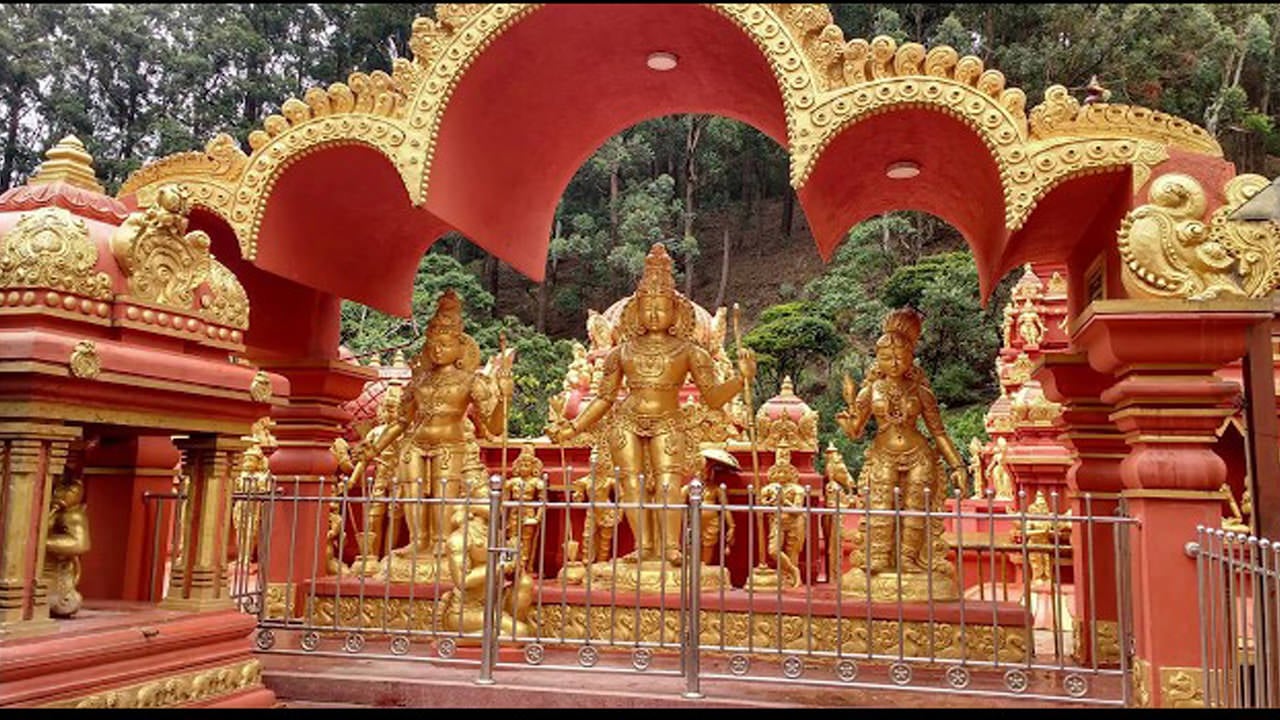
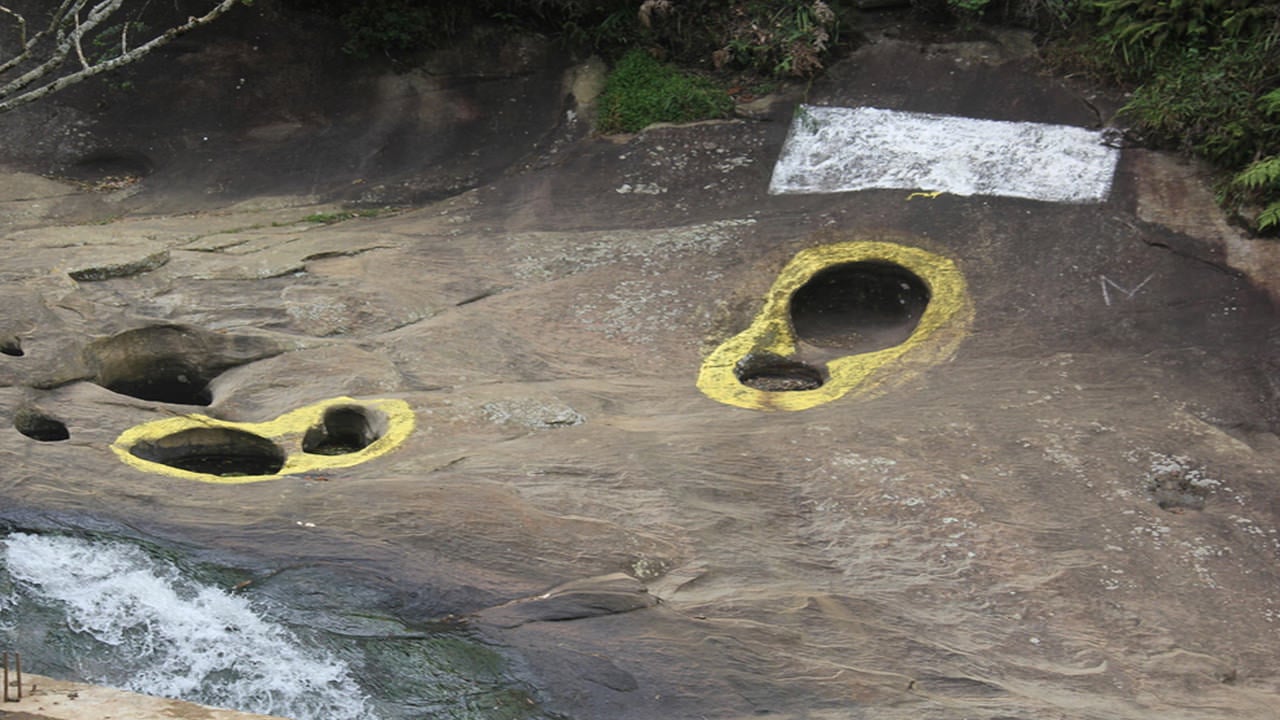
Nearby, the Sita Amman Temple — one of the few Hindu temples in Sri Lanka's central highlands — stands as an active place of worship drawing pilgrims from India and the Tamil diaspora. The temple enshrines images of Sita, Rama, Lakshmana, and Hanuman, and the footprints of Hanuman are said to be preserved in the rock close by. A short distance away at Sita Eliya, a rocky stream is identified as Sita Jharna (Sita's spring), where she is believed to have bathed during her captivity.
What is the significance of the ashoka tree at this site?
The ashoka tree (Saraca asoca) is central to the legend — Sita is said to have sheltered beneath one throughout her captivity, and the species has carried the epithet Sita-Ashok ever since. The tree holds considerable significance in both Hindu and Buddhist traditions across South Asia. Specimens grow in the grounds of the Hakgala Botanical Garden, and garlands made from its orange-red flowers are offered at the Sita Amman Temple during festivals. For many visitors, simply standing beneath one of these trees while knowing the story lends a particular quiet weight to the experience.
How does Ashok Vatika fit into Sri Lanka's Ramayana trail?
Sri Lanka has developed a broader Ramayana heritage trail linking sites associated with the epic across the island — from Mannar in the northwest (where Ravana's forces are said to have landed) to Ella and the central highlands. The Seetha Eliya cluster — Hakgala, Sita Amman Temple, and Sita Jharna — forms the emotional heart of this trail, because it is where Sita's long wait is commemorated.
Visitors combining a Ramayana trail with a broader hill-country itinerary will find that Nuwara Eliya is well-positioned as a base. The town sits at around 1,868 metres above sea level and is most easily reached from Kandy by road or by the celebrated mountain railway. The Horton Plains National Park, another highland landmark, lies roughly 30 km to the south and can be paired with a Seetha Eliya visit on the same itinerary.
What should visitors know before going to Seetha Eliya?
- Hakgala Botanical Garden charges a nominal entrance fee (rates may vary; confirm locally before visiting). The garden is generally open daily during daylight hours.
- Sita Amman Temple welcomes visitors of all faiths. Modest dress is appropriate — shoulders and knees should be covered. Remove footwear before entering the temple precinct.
- The area sits at high altitude and the weather can shift quickly, with mist and rain common even outside the monsoon months. A light waterproof layer is advisable.
- Seetha Eliya village is approximately 10 km from central Nuwara Eliya along the Badulla road and is easily reached by tuk-tuk or private car.
- Pilgrimage activity peaks around Ram Navami (typically March or April) and Diwali, when the Sita Amman Temple hosts special puja ceremonies.
How does local Sri Lankan culture relate to the Ramayana?
The Ramayana is not merely an imported Hindu text in Sri Lanka — aspects of the story have woven into local memory and place-names across the island for centuries. Ravana in particular has been rehabilitated in recent Sri Lankan popular culture as a figure of ambiguity rather than pure villainy: a scholar-king whose obsession proved his undoing. Sites like Rawanagala, a rocky outcrop in the Knuckles region associated with Ravana, draw visitors curious about this layered mythology. The Ramayana trail has also become economically significant, attracting substantial numbers of Indian tourists each year and encouraging investment in interpretation at heritage sites.
Whether you approach Ashok Vatika as a place of pilgrimage, as literary history, or simply as a beautiful corner of the Sri Lankan highlands, the landscape around Seetha Eliya — cool air, mist-draped hills, and the scent of eucalyptus and pine — creates a setting unlike anywhere else on the island.

