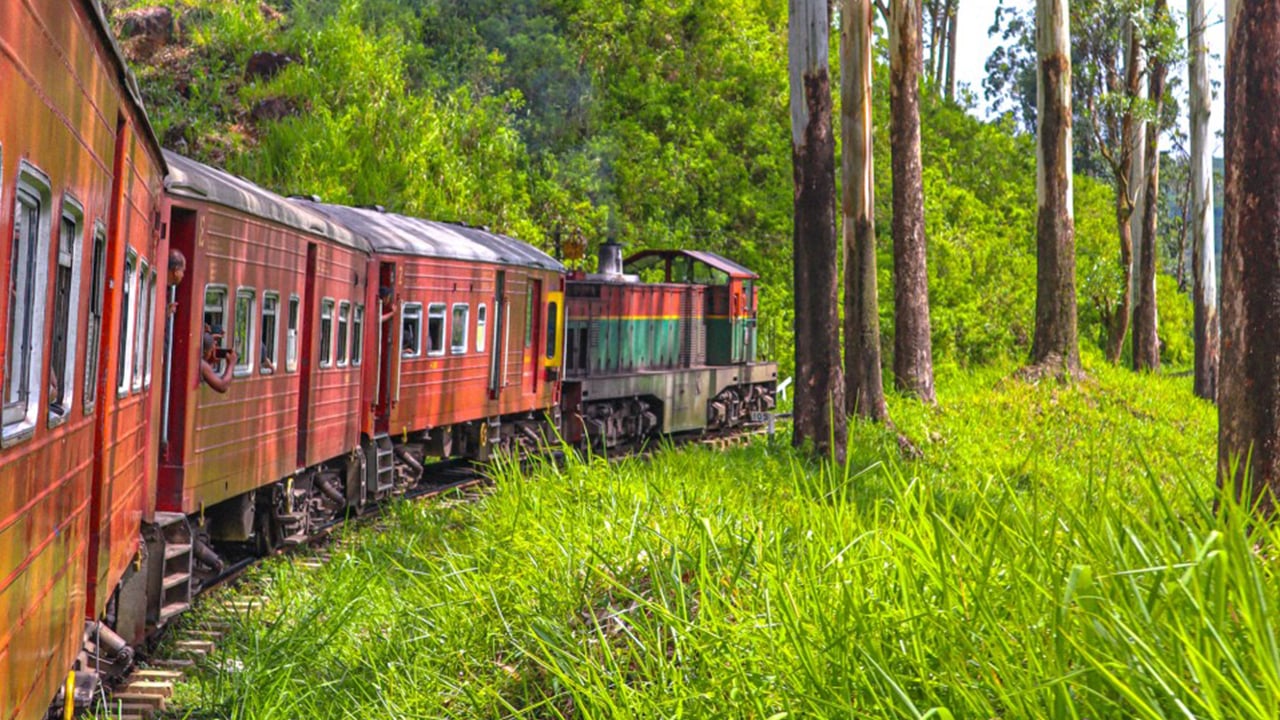
Watagoda Railway Station sits quietly in the Nuwara Eliya District, a small stop on one of the most celebrated rail journeys in Asia. The station lies on the Main Line that connects Colombo to Badulla, threading through the central highlands past tea-covered slopes, cloud-wrapped ridgelines, and cascading streams. For most passengers, Watagoda is a fleeting glimpse from the window — but for those who step off, it offers an unhurried encounter with hill-country life at its most unpolished.
What is the history of Watagoda Railway Station?
Like most stations along this stretch of the Main Line, Watagoda was established during British colonial rule, when the Ceylon Government Railway extended its tracks into the highlands to support the tea industry. The line reached Nanu Oya in 1885 and continued toward Badulla by 1924, and stations such as Watagoda were built as practical waypoints for freight and passengers alike.
The station's structure reflects the functional architecture of that era — a modest platform, a compact ticket hall, and a waiting area designed for efficiency rather than grandeur. Colonial-era railway buildings across this route share a similar restrained aesthetic, and Watagoda is no exception. Despite more than a century of service, the station retains much of its original character.
The railways were central to the colonial economy of the highlands. Trains carried chests of Ceylon Tea down to Colombo for export, and brought goods and workers up into the hills. That functional legacy continues today, though passengers now vastly outnumber freight cars.
What can you see and do at Watagoda Station?
The station itself is compact — a single platform with enough room to stretch your legs and take in the surroundings. The real draw is what lies immediately beyond the platform edge: a panorama of terraced tea estates, mist-softened hills, and dense forest that typifies this section of the highlands.
- Tea estate walks: Several working estates are within easy walking distance. Visitors can observe the plucking process, particularly in the morning hours when leaf collection is most active.
- Waterfalls and hiking trails: The Nuwara Eliya District is laced with short trails leading to waterfalls and viewpoints. The terrain around Watagoda is accessible without specialist equipment, though sturdy footwear is advisable given the frequent rain.
- Photography: The station platform, with its weathered stonework and passing trains, is a popular subject for railway photographers. Morning light, when mist lingers in the valleys, produces particularly atmospheric conditions.
- Birdwatching: The surrounding mixed habitat — tea, scrub, and native forest fragments — attracts several endemic bird species characteristic of the Sri Lankan highlands.
For visitors continuing by rail toward Ella, the stretch beyond Watagoda passes through some of the most celebrated scenery on the entire route, including the area around Ella.
How do I get to Watagoda Railway Station from Colombo?
The most direct route is by train from Colombo Fort station. Intercity and express trains on the Main Line stop at varying stations along the highland route; Watagoda is served by several named express trains, including the Denuwara Menike, Podi Menike, and Udarata Menike, in addition to local services., or to travel the full scenic route on an observation-car train that calls at smaller stations.
The journey from Colombo to Watagoda typically takes around five and a half to six and a half hours by train, depending on the service. By road, Watagoda is accessible via the A5 highway, which links Colombo to Nuwara Eliya and continues toward Badulla. Private transfers from Colombo or from nearby hill-country towns can be arranged for those who prefer door-to-door travel.
| Nearest town | Approximate distance | Typical travel time by road |
|---|---|---|
| Nanu Oya | Around 8 km | 20–30 minutes |
| Nuwara Eliya town | Around 15 km | 35–50 minutes |
| Hatton | Around 25 km | 50–70 minutes |
| Colombo Fort | Around 194 km | 4–5 hours by road |
What is the best time to visit Watagoda?
The central highlands have two distinct dry seasons: roughly January to March, and July to September. During these windows, the skies are clearer, rail journeys are less likely to be disrupted by heavy rain, and the views from the station are at their sharpest. That said, the hills are rarely entirely dry — expect some mist and drizzle even in the dry season, which is part of the landscape's appeal.
The southwest monsoon (May to July) and the northeast monsoon (October to December) bring heavier rainfall to different parts of the highlands. Travelling in these periods is still entirely feasible, but landscapes are greener and conditions more variable. The tea estates are most active during flush seasons, which follow periods of rain — so monsoon-adjacent months can offer the best chance of seeing plucking in full swing.
Why does Watagoda Station matter to local communities?
For the villages surrounding Watagoda, the railway is not a tourist attraction — it is a practical lifeline. Students commute to schools in Nanu Oya and Nuwara Eliya; estate workers use the trains to reach employment; and small-scale farmers transport agricultural produce, including tea and spices, to markets in larger towns.
This dual identity — functional community transport and scenic tourist route — is what makes stations like Watagoda genuinely interesting. The same platform that carries a traveller with a camera also carries a schoolchild with a backpack. Understanding that context adds depth to the journey that no highlight reel can fully capture.
The Horton Plains National Park, one of the highlands' most visited protected areas, lies within reasonable reach of the Watagoda area, making the station a convenient staging point for visitors combining a rail experience with a nature excursion.
How does Watagoda fit into the broader hill country rail route?
The Main Line through the highlands is regularly cited among the world's great railway journeys, and UNESCO recognition of the cloud forest ecosystems that flank much of the route underscores the ecological significance of the landscape through which the train travels. Watagoda occupies the middle section of this journey — past the commercial bustle of Kandy and before the popular tourist hub of Ella — and that position gives it a more local, less curated character than either of those endpoints.
Travellers who build itineraries around the rail route rather than around a single destination tend to appreciate Watagoda most. A slow journey that allows time at smaller stations — watching the platform activity, buying a cup of tea from a trackside vendor, observing the landscape shift from lowland forest to high-altitude grassland — is a fundamentally different experience from rushing between sights.
What practical information should I know before visiting?
- Facilities: Watagoda is a small station. Do not expect restaurants, ATMs, or tourist infrastructure on-site. Carry what you need.
- Train schedules: Sri Lanka Railways publishes schedules at railway.gov.lk. Services can run late; build flexibility into your itinerary.
- Reservations: Express trains through the highlands require reserved seats, especially during peak season (December–January and July–August). Book in advance.
- Weather: Temperatures in the Nuwara Eliya District can drop significantly, particularly in the evening and early morning. A light jacket is advisable year-round.
- Photography etiquette: The station and surrounding estates are working environments. Ask permission before photographing individuals, particularly estate workers.
Watagoda railway station timetable
15 trains call at Watagoda on a typical day.
Main Line · 194.3 km from Colombo Fort · Central Province
Station telephone: 051-2236071
| Departs | Towards | Train | Runs |
|---|---|---|---|
| 01:30 am | Badulla | Daily | |
| 03:09 am | Badulla | Night Mail | Daily |
| 04:16 am | Kandy | Daily | |
| 06:32 am | Colombo Fort | Daily | |
| 08:13 am | Badulla | Daily | |
| 09:43 am | Colombo Fort | Udarata Menike | Daily |
| 12:30 pm | Colombo Fort | Daily | |
| 12:35 pm | Badulla | Denuwara Menike | Daily |
| 02:03 pm | Badulla | Podi Menike | Daily |
| 02:29 pm | Colombo Fort | Podi Menike | Daily |
| 03:33 pm | Badulla | Udarata Menike | Daily |
| 04:38 pm | Kandy | Daily | |
| 05:21 pm | Nanuoya | Daily | |
| 08:49 pm | Nanuoya | Daily | |
| 10:46 pm | Colombo Fort | Night Mail | Daily |
Timetable mirrored from published Sri Lanka Railways schedules, last checked 2026-09-14. Times can change without notice — confirm with the railway before travelling. See the whole network on the Sri Lanka railway station list.
Nearby places
13 places within about 25 km, nearest first.