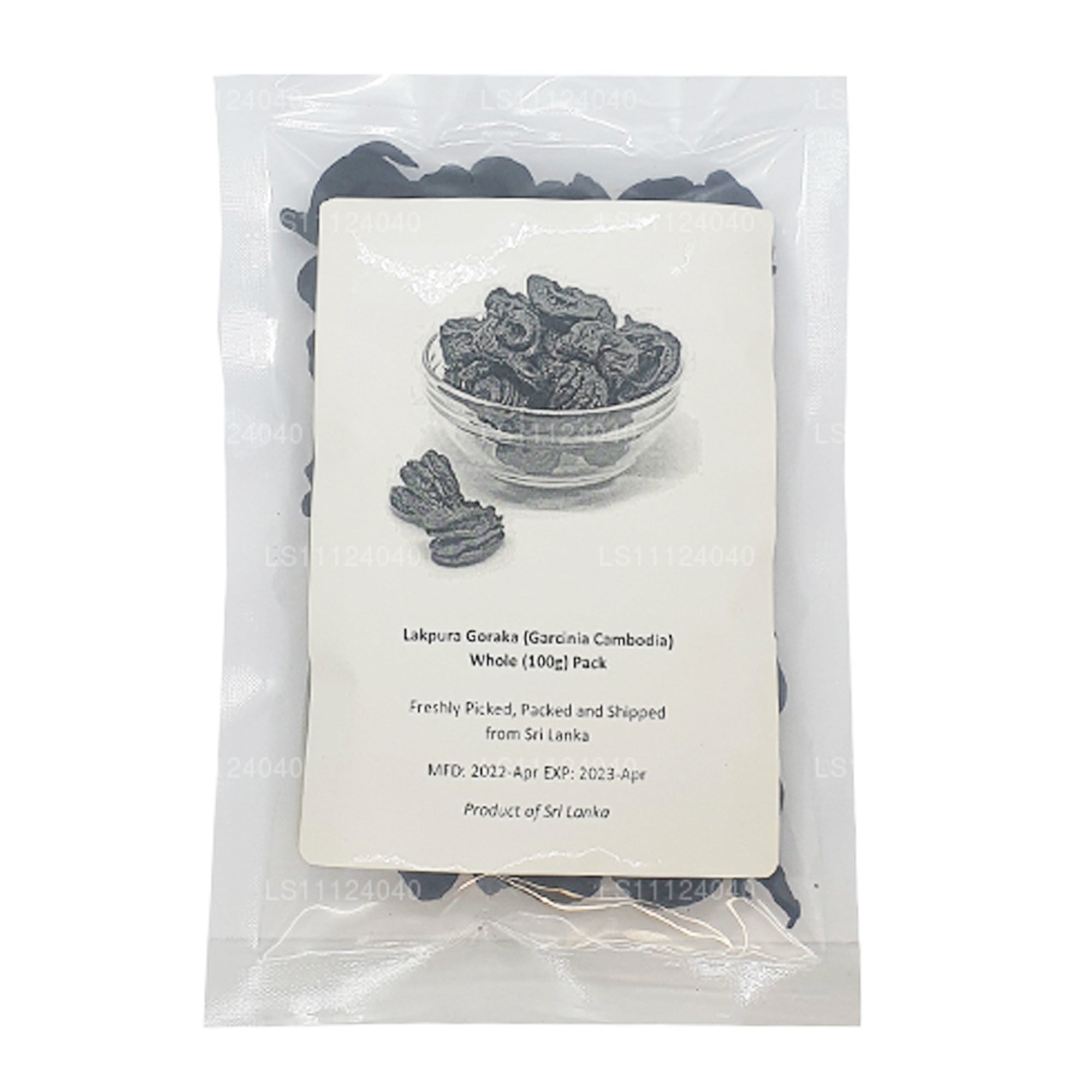




Garcinia zeylanica — known locally as Goraka — is a small, evergreen tree native to the humid lowland forests of Sri Lanka. Long before it gained international attention as a dietary supplement ingredient, it held a firm place in the island's kitchens and traditional healing practices. The dried, sun-cured rind of its fruit is tart, resinous, and unmistakably Sri Lankan: a flavour that defines fish curries across the southern and western coastal villages.
What is Garcinia zeylanica?
Garcinia zeylanica belongs to the family Clusiaceae and is closely related to the better-known Garcinia cambogia. The two species share the same common name — Goraka — and very similar culinary and medicinal profiles, which is why the names are often used interchangeably in Sri Lankan trade and literature. The tree produces small, ribbed, pumpkin-shaped fruits that ripen to a yellow-orange. The flesh is intensely sour due to its high hydroxycitric acid (HCA) content. Segments of the rind are smoked or sun-dried to a dark, rust-brown colour and then stored for year-round use.
The species is catalogued as part of Sri Lanka's official list of ayurvedic medicinal plants, reflecting the government's recognition of its therapeutic significance alongside other native botanicals such as Acacia chundra and Pongamia pinnata.
How is Goraka used in Sri Lankan cooking?
In the Sri Lankan kitchen, Goraka functions similarly to tamarind or kokum — it adds acidity to balance rich, spiced dishes without overwhelming other flavours. A few dried segments dropped into a fish curry as it simmers are enough to lift the entire dish. It is particularly common in the preparation of ambul thiyal, the famous dry fish curry of the southern province, where Goraka is the defining ingredient.
- Ambul thiyal — dry sour fish curry, almost always made with tuna, seasoned heavily with Goraka and black pepper.
- Fish curries — fresh Goraka segments or paste replace tamarind as the souring agent in coastal village recipes.
- Meat dishes — occasionally used to tenderise and add tartness to slow-cooked pork or wild boar preparations.
- Pickles and preserves — the whole dried fruit is sometimes incorporated into spiced fruit preserves alongside Ceylon black pepper.
Goraka paste and dried whole pieces are both commercially available today, making it easier to use in home cooking without the traditional drying process.
What are the medicinal and ayurvedic properties of Garcinia zeylanica?
Traditional Ayurveda regards Goraka as having properties that support digestion, reduce excess kapha (one of the three doshas or bodily constitutions), and act as a mild antimicrobial agent. The fruit's high HCA content has attracted modern pharmaceutical and nutraceutical interest, particularly in relation to appetite regulation and lipid metabolism, though clinical evidence in humans remains an active area of research.
In classical Sri Lankan Ayurveda texts, the rind is described as deepaniya (digestive stimulant) and pachana (carminative). Practitioners have historically recommended it in formulations targeting sluggish digestion, intestinal parasites, and inflammatory skin conditions. Today, Goraka appears as an ingredient in a range of modern wellness products — from capsule supplements to herbal teas — that combine traditional knowledge with contemporary delivery formats.
Where does Garcinia zeylanica grow in Sri Lanka?
The tree is native to the wet and intermediate zones of Sri Lanka, typically found at elevations below 1,000 metres. It grows naturally in lowland rainforest edges and in home gardens across the southwestern coastal belt, the Sabaragamuwa province, and parts of the Southern province. The Sinharaja Forest Reserve — one of Sri Lanka's last viable lowland rainforest tracts — represents the kind of humid, shaded habitat where Garcinia species thrive in the wild.
Home cultivation is widespread. Smallholder farmers often grow one or two trees in mixed spice gardens alongside coconut, cloves, and cinnamon. The tree requires well-distributed rainfall, dislikes waterlogging, and begins fruiting after around four to five years from a grafted plant.
How is Goraka harvested and processed?
Harvest typically occurs when fruits ripen during the wetter months. Ripe fruits are halved, the seeds removed, and the rinds separated into individual segments. These are then either sun-dried over several days on woven mats or slowly smoked over low heat — the smoked variety develops a deeper, more complex flavour profile. Once dried, the segments harden and darken considerably and can be stored in airtight containers for many months without deterioration.
Commercial processing follows similar principles, with some producers standardising moisture content and packaging under food safety certifications for export markets. Sri Lanka exports dried Goraka and Goraka-based products to South Asian diaspora communities and to the growing global market for HCA-containing supplements.
Is Garcinia zeylanica the same as Garcinia cambogia?
The two species are distinct botanically but closely related, and in everyday Sri Lankan usage — in markets, recipes, and even some Ayurvedic texts — the names Goraka, Garcinia zeylanica, and Garcinia cambogia are often used interchangeably. Both contain HCA in their rinds and share culinary applications. Technically, Garcinia cambogia (also called Garcinia gummi-gutta) is more widely distributed across South and Southeast Asia, while Garcinia zeylanica is more specifically associated with Sri Lanka. For practical culinary and Ayurvedic purposes, products labelled with either name perform comparably.
How can travellers experience Goraka in Sri Lanka?
Visiting Sri Lanka offers multiple ways to encounter Goraka beyond simply buying a packet at a supermarket. Cooking classes in Galle, Kandy, or Colombo routinely feature authentic fish curry demonstrations where Goraka plays a central role. Spice garden tours — particularly around Matale in the Central Province and Galle in the South — often include live Garcinia trees among the tour stops. Village home-cooking experiences, available through curated itineraries, give a more grounded sense of how the ingredient is used day to day.
Dried Goraka and Goraka paste are readily available at local markets throughout the island and make compact, fragrant souvenirs that travel well. Those interested in the Ayurvedic dimension can visit traditional Ayurvedic wellness centres that incorporate Goraka into detox and weight management programmes alongside other classical formulations such as Yogaraja Guggulu.
Other species in this genus
5 more, sharing the same genus.
Related reading
3 pages on closely related subjects.