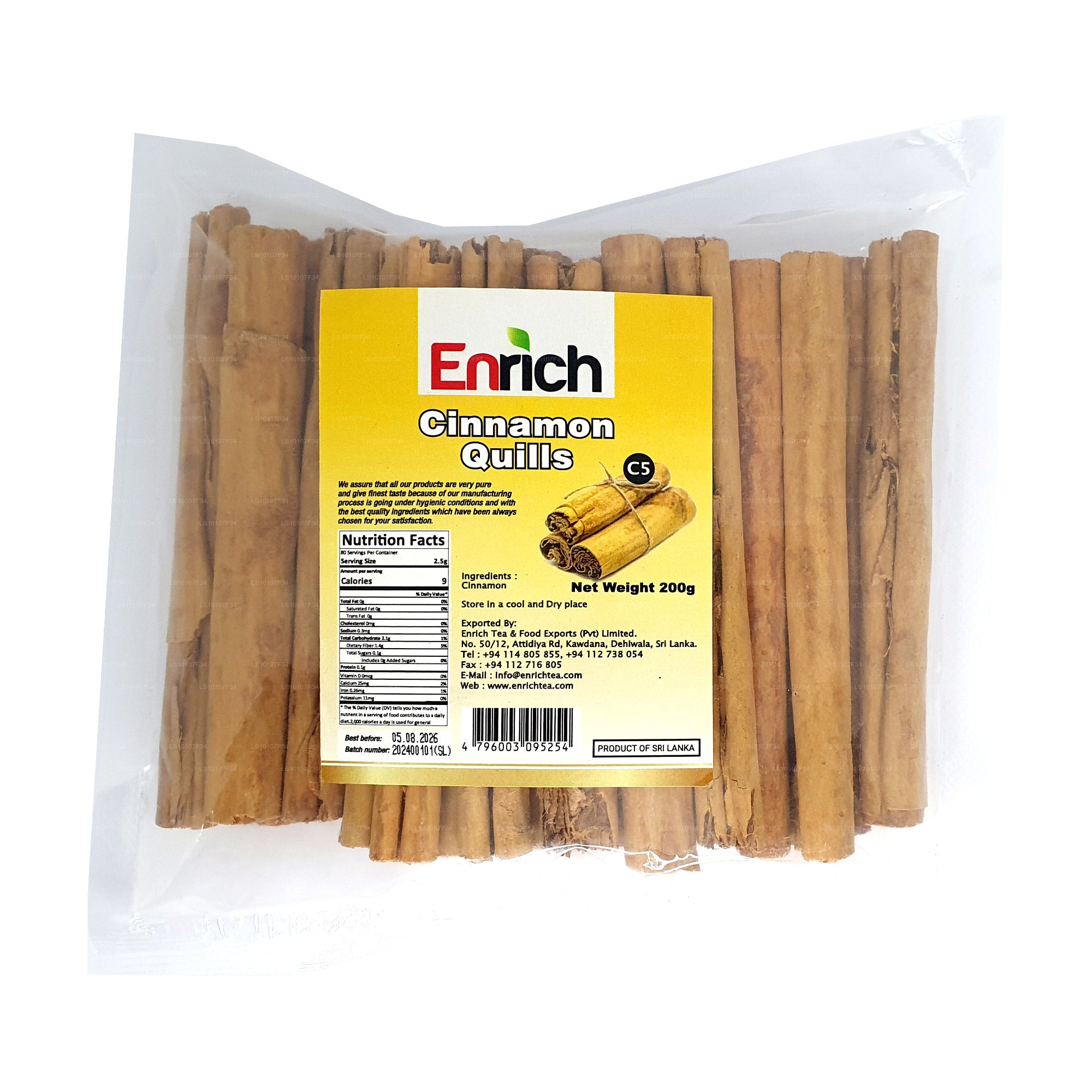
Ceylon cinnamon — Cinnamomum verum — is not simply a spice. It is a craft. Each stick is hand-rolled from the paper-thin inner bark of the cinnamon tree, producing a delicate, multi-layered quill quite unlike the hollow, single-layer tubes sold as cassia in most supermarkets worldwide. Understanding how these quills are graded helps buyers, cooks, and traders choose the right product for the right purpose.
What makes Ceylon cinnamon different from other cinnamon?
True Ceylon cinnamon originates almost entirely from Sri Lanka's southwestern lowlands, particularly the districts of Galle, Matara, and Kalutara. The bark is harvested from young shoots of the cinnamon plant, allowed to dry briefly, then peeled and hand-rolled into characteristic cigar-shaped sticks. As the strips dry they curl inward, and skilled peelers nest multiple thin layers together to form a single quill.
The result is a spice with a lighter, more nuanced flavour than cassia — less harsh on the palate, lower in coumarin (a naturally occurring compound of concern at high doses), and noticeably sweeter in aroma. Ayurvedic medicinal traditions have long valued true cinnamon for its therapeutic properties alongside its culinary ones.
How are Ceylon cinnamon sticks graded?
The International Standards Organisation and Sri Lanka's own export regulations recognise a formal grading system. Graders assess each quill against six primary criteria:
- Colour — premium grades display an even pale-tan to golden-brown tone; darker or uneven colouration indicates lower quality or improper drying.
- Diameter — thinner quills are generally valued more highly; diameter is measured at the widest point of the roll.
- Texture and density — tightly rolled, multi-layered quills hold together without gaps or loose flaking.
- Length — standard export quills are cut to around 42 inches (approximately 106 cm) before being trimmed for retail; the cut length affects the sub-grade designation.
- Blemishes — insect damage, discolouration, or rough bark patches lower the grade.
- Essential oil content — higher-grade quills retain more volatile oils, translating directly into more intense aroma and flavour.
What are the main Ceylon cinnamon quill grades?
Sri Lanka's cinnamon export trade uses an alphanumeric grading system. The primary categories for whole quills are set out below.
| Grade | Diameter | Key characteristics | Typical use |
|---|---|---|---|
| Alba | Under 6 mm | Finest grade; very thin, tightly rolled, even golden colour, minimal blemishes | Premium retail, gift packaging, high-end culinary use |
| 00000 (5 zero) | 6–7 mm | Near-Alba quality; excellent colour and density | Specialty food retail, export to premium markets |
| 0000 (4 zero) | 7–8 mm | High quality; slight variations in colour permissible | Mainstream export, spice blends |
| 000 (3 zero) | 8–9 mm | Good colour; minor blemishes acceptable | General food industry, commercial kitchens |
| 00 (2 zero) | 9–10 mm | Standard export quality; some colour variation | Bulk export, grinding into powder |
| 0 (single zero) | 10–11 mm | Acceptable blemishes; broader colour range | Industrial processing |
| 1 (M5) | 11–16 mm | Thicker quills; heavier bark allowed | Essential oil extraction, powder manufacture |
| 2 (M4) | 16–19 mm | Commercial processing grade | Oleoresin and oil distillation |
| 3 (M3) | 19 mm and above | Thickest permissible quills in the formal grading scale | Industrial extraction |
Explore each Ceylon cinnamon grade in detail
Every grade below has its own guide, covering diameter, colour, aroma and the uses it suits best.
- Alba grade
- C5-Special grade
- C5 grade
- C4 grade
- M5 grade
- M4 grade
- H1 grade
- H2 grade
- H2 FAQ grade
- No. 1 Quillings grade
For common questions on buying, storing and using true cinnamon, see the Ceylon true cinnamon FAQ.
What are cinnamon quillings and featherings?
Not all cinnamon bark can be rolled into perfect quills. The offcuts, broken pieces, and curled fragments produced during rolling are classified separately:
- Quillings — the trimmed ends of quills and smaller rolled pieces that are structurally similar to full quills but shorter. They are sold in two sub-grades (Grade 1 and Grade 2 quillings) based on the proportion of fine roll present. Quillings are an economical source of the same true cinnamon flavour and are popular for home cooking and tea infusions.
- Featherings — the inner bark from smaller branches and leaf mid-ribs. Thinner and less uniform, featherings have a slightly different texture but retain the characteristic Ceylon cinnamon flavour.
- Chips — the rough outer bark trimmed away during peeling. Lower in essential oil content, chips are primarily used in industrial extraction of cinnamon oil and oleoresin.
How is cinnamon powder graded?
Ground cinnamon powder is assessed primarily by its volatile oil content, fineness of grind, and freedom from adulteration. Sri Lankan export regulations require powder to meet minimum essential-oil thresholds. The best powders are ground from higher-grade quills or quillings, giving a more fragrant, complex product. When buying Ceylon cinnamon powder, look for origin certification — a product labelled Cinnamomum verum guarantees you are purchasing true Ceylon cinnamon rather than the more common cassia species.
Where is Ceylon cinnamon grown in Sri Lanka?
The cinnamon belt stretches through the wet-zone lowlands of the Southern Province and the western coast. Matara and Galle districts account for the largest share of production, with smaller growing areas in Kalutara and Colombo districts. Cinnamon cultivation is deeply woven into village life along this coastline, with many smallholder families maintaining gardens passed down through generations.
Cinnamon peeling is a hereditary trade carried out by skilled artisans known as chalias. Their technique — using a short, curved brass rod to loosen the bark from the cut shoot — has remained essentially unchanged for centuries.
How should I store Ceylon cinnamon quills?
Whole quills retain their essential oils far longer than powder. Store quills in an airtight glass container, away from direct sunlight and heat. Under these conditions, premium quills remain fragrant for up to two years. Ground powder begins to lose potency within six months of milling, so buying whole quills and grinding as needed gives significantly better results in cooking and brewing.
How does cinnamon connect to Sri Lanka's broader food culture?
Cinnamon has been central to Sri Lankan food and trade for well over a thousand years. Portuguese, Dutch, and British colonial powers each sought to control the island's cinnamon monopoly — a fact reflected in the spice gardens still found around Galle and the colonial-era trading infrastructure that once exported cinnamon across the known world. Today, Sri Lanka remains the dominant global supplier of true Ceylon cinnamon, producing roughly 80–90% of the world's supply. Alongside Ceylon tea and coconut products, cinnamon defines the island's agricultural identity.
Related reading
9 pages on closely related subjects.