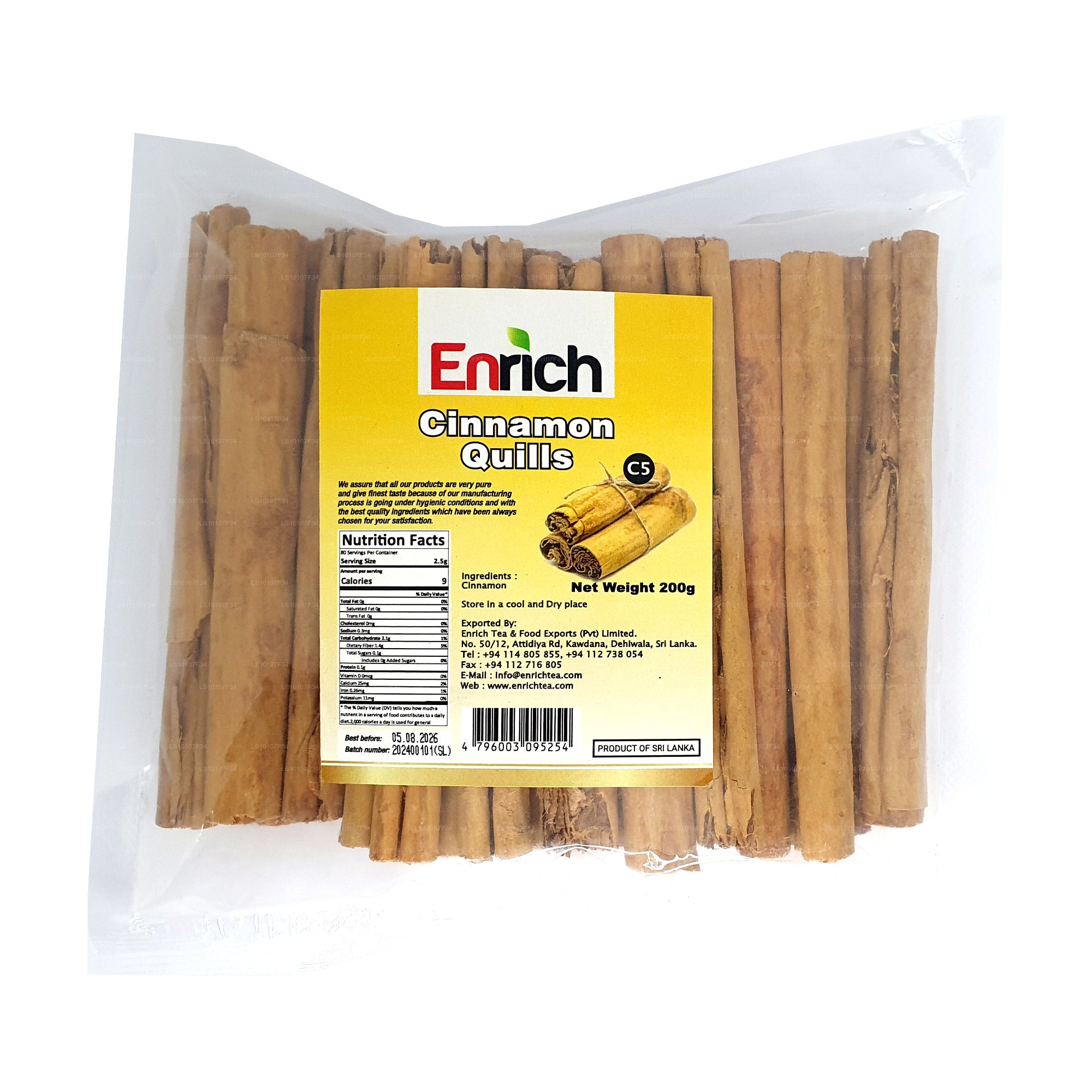
Ceylon cinnamon — Cinnamomum verum — is one of the world's most prized spices, and Sri Lanka supplies the vast majority of true cinnamon traded globally. Behind every pale, papery quill sold in a spice market is a cinnamon peeler: a skilled artisan who has typically inherited the craft across generations. Understanding what peelers actually do — and why it matters — changes the way you think about this everyday spice.
What makes Ceylon cinnamon different from cassia?
Most cinnamon sold outside Sri Lanka is cassia, a coarser bark from related species grown in China, Vietnam, and Indonesia. Ceylon cinnamon, by contrast, is mild, finely layered, and complex. Its quills are built up from many thin sheets of inner bark rather than rolled from a single thick layer, which gives them a softer, almost flaky texture. The distinction matters not only for flavour but also for the chemistry: Ceylon cinnamon contains far lower levels of coumarin, a compound that can be harmful in large quantities.
True Ceylon cinnamon originates from the central hills — Kandy, Matale, Belihuloya, Haputale — and the Sinharaja Forest Reserve range. Today, commercial cultivation stretches along the coastal belt from Kalutara to Matara, where the climate and sandy soils suit the plant particularly well.
How do peelers harvest cinnamon shoots?
A cinnamon plant is not a tree but a managed shrub, cut back repeatedly to encourage fresh lateral growth. Each shrub can send up many stems, but peelers select only the tallest two or three shoots per plant for harvest, using a purpose-made curved knife. This selective cutting is deliberate: leaving the remaining stems undisturbed preserves the plant's vigour and allows it to yield again roughly twice a year. Any careless damage to the base of the plant directly reduces the next harvest.
Harvested stems — long, yellowish, and still flexible — are bundled and carried to a covered work shed. The shade is important: bark that dries prematurely before processing becomes brittle and impossible to peel cleanly.
What is the step-by-step cinnamon peeling process?
The peeling process unfolds in several precise stages, each requiring a different tool and a different movement:
- Scraping the outer skin. The peeler uses a small oval-bladed knife to scrape away the rough outer tissue of the stem. This exposes the smooth green-brown inner bark beneath without cutting into it.
- Loosening the bark with a brass rod. The peeler rubs a polished brass rod firmly along the scraped stem in a rhythmic rolling action. This bruises and loosens the bond between the bark and the hardwood core, separating them without tearing. The sound of this step — a soft, papery thump — is distinctive in any cinnamon shed.
- Slitting and lifting the bark. A fine knife is used to slit the loosened bark lengthwise, and the peeler lifts it away from the wood in long sections. Experience is needed to keep the sheets intact; a novice often tears them.
- Building the quill. Individual bark sections are laid end to end, overlapping slightly, and smaller offcuts are tucked inside the hollow to fill gaps. The result is a single firm quill around three and a half feet long. This layered construction is precisely what gives Ceylon cinnamon its characteristic feathery cross-section.
How are cinnamon quills dried and finished?
Freshly rolled quills are draped over a string mesh inside the shed and left to dry for approximately one day — always in shade, never under direct sun. Sunlight at this stage would cause uneven drying and cracking. After the initial set, peelers roll each quill on a hard flat surface to smooth the outer crust and compress the layers evenly. The quills then return to the drying mesh for another three to four days until fully cured.
Once dry, hundreds of quills are graded by diameter and length, then tied into compact bundles for export or sale. Offcuts and broken pieces are collected separately and ground into cinnamon powder or processed into oil — very little is wasted.
Where is cinnamon peeling practiced in Sri Lanka?
The Kalutara and Galle districts on the southwestern coast are the heartland of commercial cinnamon cultivation and peeling today. Visitors to the region can often watch the process firsthand at small family operations — the work is usually done in open-sided sheds adjacent to the plantations, and peelers are generally willing to demonstrate each step.
Further inland, cinnamon grows more sporadically alongside other spices. Ceylon black pepper, cloves, and nutmeg are often cultivated on the same smallholdings, making a visit to a working spice garden a practical introduction to the full range of Sri Lankan spices.
Is cinnamon peeling a sustainable practice?
When done correctly, cinnamon cultivation is notably low-impact. The shrub is never uprooted — only selected shoots are cut, and the root system remains intact indefinitely. A single cinnamon plant, properly managed, can remain productive for decades. The tools involved are simple hand instruments, requiring no power. The drying process uses ambient shade rather than kilns. These characteristics make hand-peeled Ceylon cinnamon one of the more environmentally benign agricultural products exported from Sri Lanka.
The craft also sustains rural livelihoods in the southwestern coastal belt, where cinnamon peeling has been the primary income source for many families for several generations. The Spice Council of Sri Lanka works to maintain quality standards and support smallholder growers who form the backbone of the industry.
How is cinnamon used beyond cooking?
Ceylon cinnamon enters far more products than the kitchen spice rack. In Sri Lanka, it is used in Ceylon green tea blends, Ayurvedic preparations, soaps, and skincare. Cinnamon oil, distilled from offcut bark and leaves, is an ingredient in cosmetics and aromatherapy products. Even the dried quill finds non-culinary uses as incense and as a natural air freshener — a use that draws on the bark's naturally volatile aromatic oils.
What should you buy when visiting a cinnamon region?
Buying directly from a peeler or a licensed cooperative ensures authenticity and supports the producer fairly. Look for quills that are tightly rolled, pale tan to buff in colour, and thin-walled — thick, dark, hard sticks are almost certainly cassia. Genuine Ceylon cinnamon powder should be a warm, light brown and smell delicate rather than sharp. Graded quills — C5, C4, C3 and upward — follow a classification system where a higher number indicates a larger quill diameter.
Related reading
3 pages on closely related subjects.