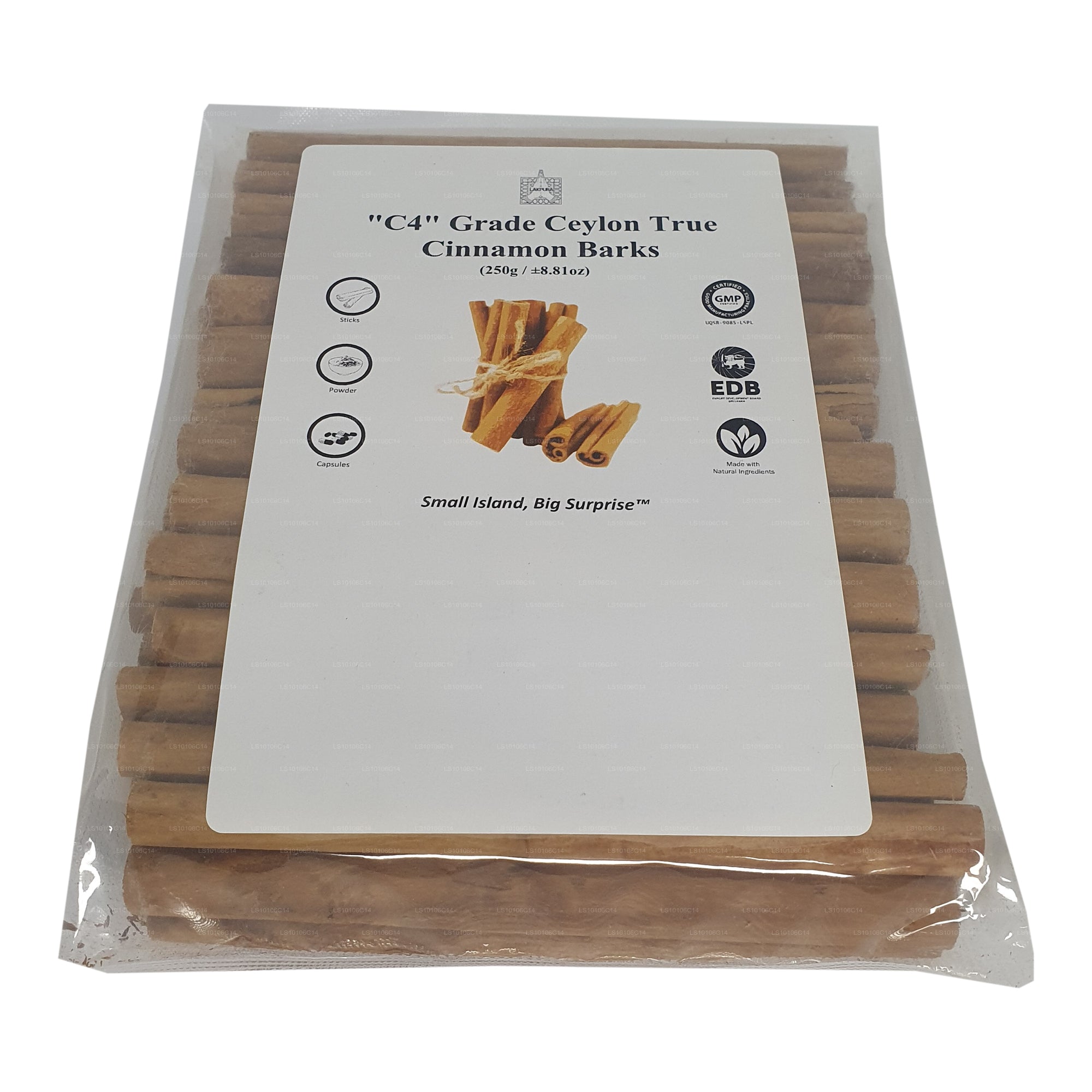
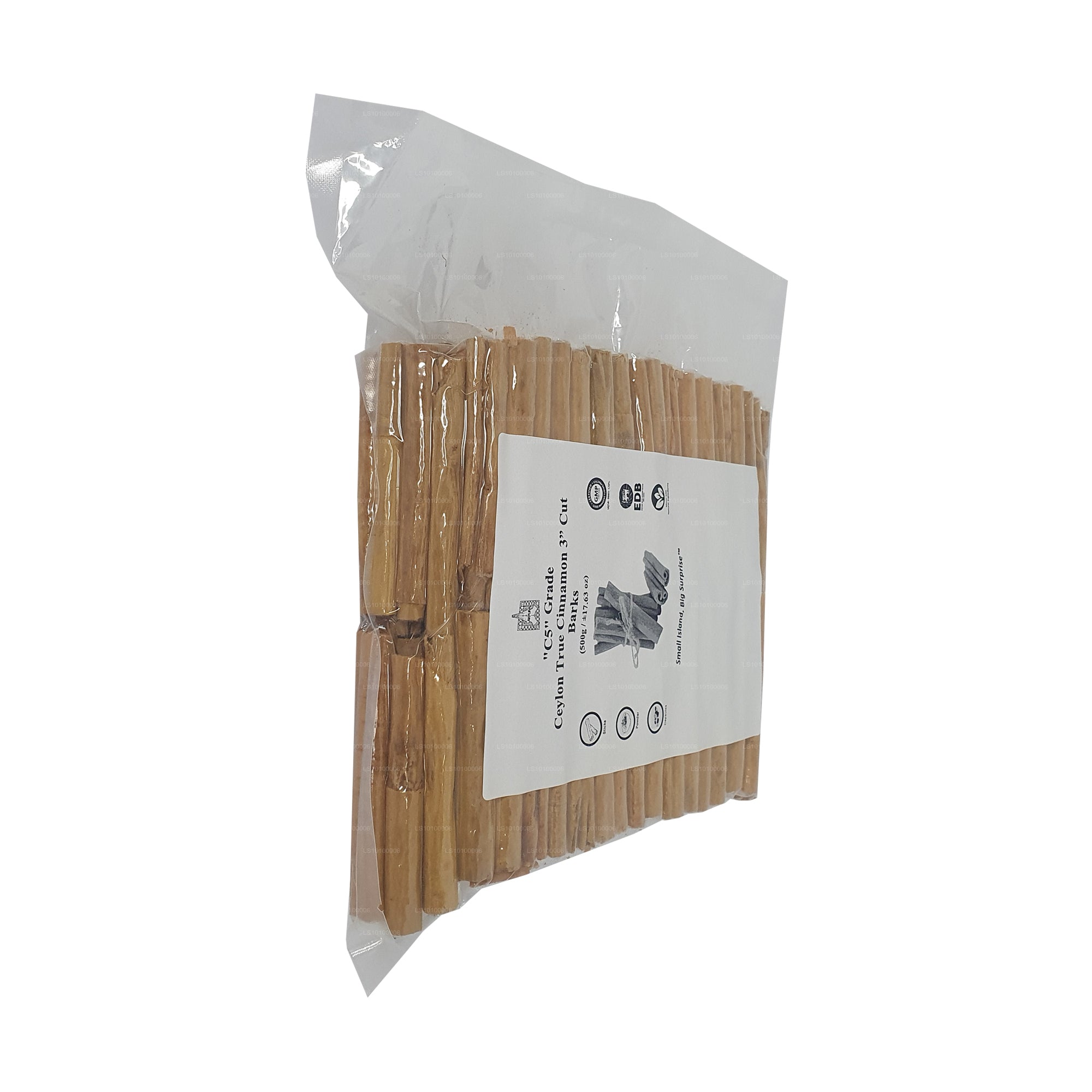
Ceylon True Cinnamon — Cinnamomum verum — is graded into two broad families: Continental and Hamburg. The C4 grade sits within the Continental category, positioned below C5 and C5 Special in terms of quality, yet it remains a commercially important grade that finds consistent demand across spice markets in Europe, the Middle East, and Asia.
What is the Continental grading system for Ceylon cinnamon?
Sri Lanka classifies true cinnamon quills (barks) using a standardised grading system administered by the Sri Lanka Cinnamon Industry. The Continental grades — which include Alba, C5 Extra Special, C5 Special, C5, C4, C3, M5 Special, M5, M4, H1, H2 Special, H2, and H3 — are defined primarily by the outer diameter of the finished quill. As the grade number decreases (moving from C5 toward C3), the quill diameter increases, which is generally associated with slightly lower refinement.
Alba is the finest grade, with the thinnest quills and the most delicate profile. C4 falls toward the mid-to-lower end of the Continental scale, making it accessible for buyers who want genuine Ceylon cinnamon without paying premium-tier prices. You can explore how Ceylon black pepper is similarly graded for export quality to understand how Sri Lanka structures its spice standards broadly.
What are the defining characteristics of C4 cinnamon?
C4 quills have an outer diameter ranging from approximately 13 mm to 14 mm. Because the bark is rolled into slightly thicker quills than higher Continental grades, the texture is somewhat coarser — though the quills remain smooth to the touch and hold together well during shipping and storage.
- Colour: Pale yellow to light tan, characteristic of genuine Ceylon cinnamon rather than the darker Cassia varieties sold in many markets.
- Aroma: Warm, sweet, and faintly floral — milder than C5 grades but noticeably more refined than Hamburg-category grades.
- Taste: Mildly sweet with very low coumarin content, which is a defining advantage of Ceylon cinnamon over Cassia regardless of grade.
- Diameter: 13–14 mm outer diameter per quill.
The low coumarin content matters particularly for health-conscious consumers and nutritional supplement manufacturers, since high coumarin intake is associated with liver concerns — a risk largely absent with Ceylon cinnamon at any grade.
How does C4 compare with neighbouring grades?
| Grade | Outer Diameter | Quality Tier | Typical Use |
|---|---|---|---|
| C5 Special | Up to 10 mm | High | Retail, gifting, premium foodservice |
| C5 | 10–11 mm | Medium-high | Retail, culinary blending |
| C4 | 13–14 mm | Medium | Food industry, bulk spice blends |
| C3 | Above 14 mm | Medium-low | Industrial extraction, oleoresin |
C4 occupies a practical middle ground. It is frequently used by food manufacturers, bakeries, and spice blenders who require authentic Ceylon cinnamon character — particularly its pale colour and low coumarin profile — at a price point more sustainable for bulk purchasing.
Where is C4 cinnamon grown in Sri Lanka?
The majority of Ceylon cinnamon, across all grades, originates from the Galle, Matara, and Kalutara districts in the Southern and Western Provinces. The town of Negombo and the broader low-country coastal belt also produce notable quantities. Small-holder farmers peel and roll the inner bark by hand, a skill passed down through generations, which is why Sri Lanka has no real competitor for true cinnamon at any grade level.
After peeling, the quills are dried, graded by certified graders, and bundled in uniform lengths — typically 42 inches (roughly 107 cm) before cutting to the 5-inch export packs common in retail. The Sinharaja Forest Reserve buffer zone communities in the south also cultivate cinnamon as an agroforestry crop alongside native forest species.
What is C4 cinnamon used for?
Because C4 carries the fundamental flavour signature of Ceylon cinnamon — sweet, warm, and low in harshness — it is valued across several applications:
- Spice blending: Incorporated into curry powders, mulling spice mixes, and chai masala blends where the cinnamon note must be present but not dominant.
- Bakery and confectionery: Used in cinnamon rolls, biscuits, and pastry fillings where the visual appeal of pale golden cinnamon is desirable.
- Herbal and Ayurvedic preparations: The low coumarin content makes Ceylon cinnamon at any grade suitable for wellness formulations taken regularly.
- Infusions and beverages: Simmered in teas, mulled wines, and spiced syrups, where it releases a gentle, sweet flavour without the astringency of Cassia.
- Essential oil and oleoresin production: Thicker-quill grades like C4 are sometimes directed toward extraction processes, though leaf oil is the more common industrial source.
How should C4 cinnamon barks be stored?
Store quills in an airtight container away from direct sunlight, heat, and moisture. A cool, dark pantry shelf is ideal. Whole quills retain their volatile oils significantly longer than ground cinnamon — typically around two to three years when stored correctly. Avoid refrigerating unless the packaging is completely sealed, as moisture cycling can dull the aroma over time.
When purchasing in bulk, consider repackaging into smaller airtight jars to minimise repeated exposure to air. Whole C4 quills are robust enough to withstand gentle breaking for use in slow-cooked dishes and braises, or they can be ground at the point of use for the freshest flavour.
Is Ceylon True Cinnamon C4 grade certified for export?
Yes. All Ceylon cinnamon exported from Sri Lanka, including C4 grade, must comply with the standards set by the Sri Lanka Standards Institution (SLSI) and the Sri Lanka Export Development Board. Reputable exporters obtain phytosanitary certificates for each shipment, and organic-certified batches are additionally verified by accredited third-party bodies. When purchasing through an established Sri Lankan supplier, request the certificate of origin, which confirms the product is Cinnamomum verum and not a Cassia substitute.
Related reading
1 pages on closely related subjects.