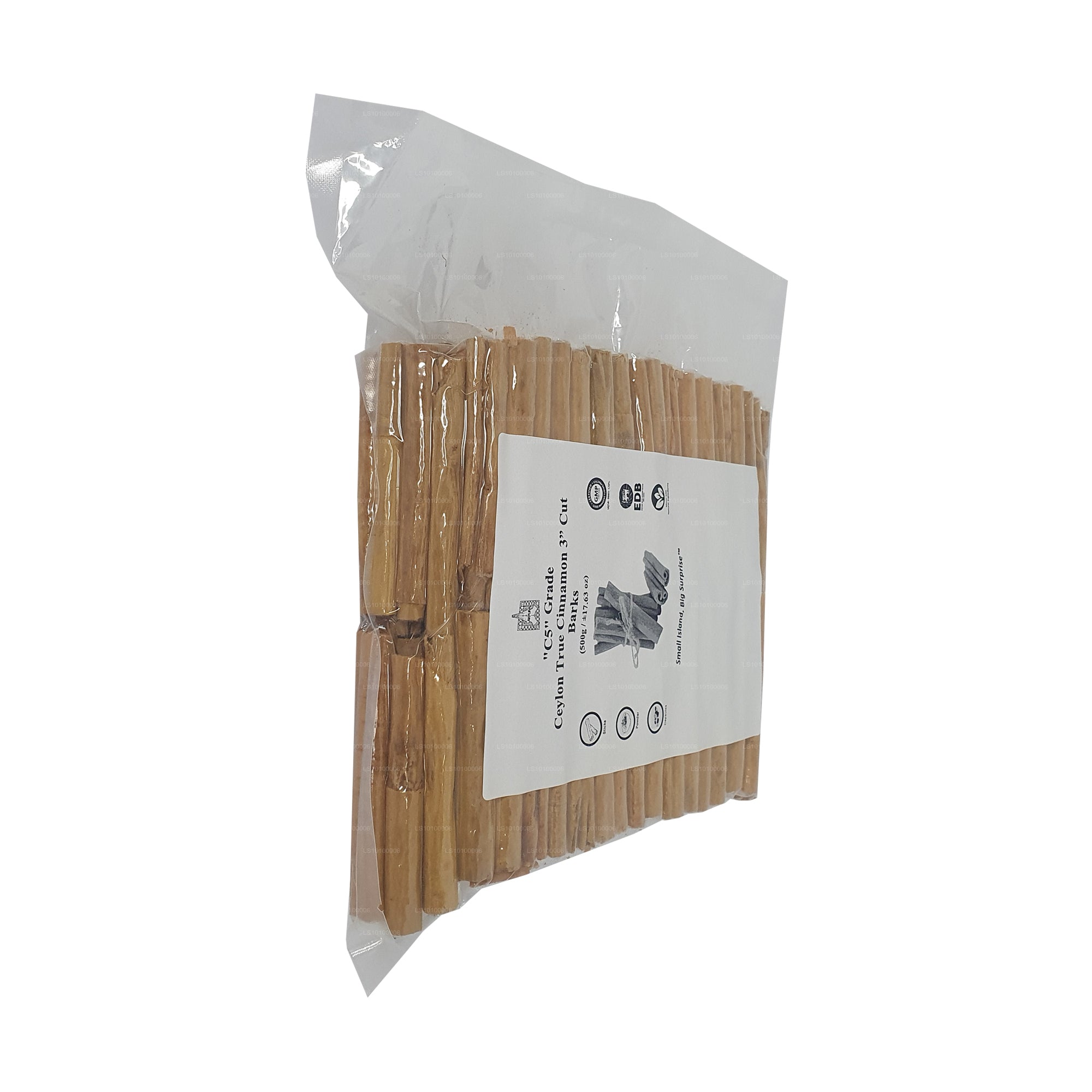
Ceylon True Cinnamon is graded according to the diameter and quality of its rolled bark quills. Within that grading system, C5 sits at the third position from the top of the Continental grade range — a reliable, mid-premium bark that balances quality with accessibility for both culinary and commercial use.
What Makes C5 Grade Ceylon Cinnamon Different?
The Continental grades — running from C5 Special at the top down through C5 Extra Special, C5, and further — are defined primarily by quill diameter and the smoothness of the roll. C5 quills measure between 10 mm and 12 mm in diameter, making them noticeably slender compared to lower grades such as M-series or H-series barks. The rolled surface is smooth and even, the colour is a warm, deep yellow-ochre, and the flavour profile leans sweet with the characteristic delicate, slightly floral note that distinguishes genuine Cinnamomum verum from its cassia counterpart.
Because C5 is sourced from mature cinnamon gardens — predominantly in Sri Lanka's Southern and Sabaragamuwa regions — the quills tend to be tightly rolled with multiple layers, releasing their essential oils slowly when used in cooking or infusions.
How Does the Ceylon Cinnamon Grading System Work?
Sri Lanka's cinnamon grading follows a system set by the Sri Lanka Standards Institution (SLSI) and the Sri Lanka Cinnamon Exporters Association. Grades are broadly divided into three families:
- Continental grades (C-series): the finest rolled barks, graded by quill diameter from Alba (the thinnest, under 6 mm) through C5 Special, C5 Extra Special, C5, C4, and C3.
- Hamburg grades (H-series): slightly wider diameter quills, commonly used in European markets for culinary and processing applications.
- Mexican grades (M-series): broader quills with a more robust presentation, suited to industrial processing and spice blends.
Within the Continental family specifically, C5 occupies a practical middle ground. Alba and C5 Special demand the most precise peeling skill and command the highest prices; C5 offers comparable smoothness at a broader diameter that many buyers find easier to handle and portion.
What Are the Physical Characteristics of C5 Cinnamon Bark?
| Attribute | C5 Grade |
|---|---|
| Quill diameter | 10 mm – 12 mm |
| Colour | Deep yellow (ochre-tan) |
| Surface texture | Smooth, tightly rolled |
| Flavour | Sweet, delicate, lightly floral |
| Rank in Continental series | Third (below C5 Extra Special, above C4) |
The colour of C5 bark is one of its most recognisable features. The deep yellow hue indicates careful post-harvest drying — too much direct sun can bleach the quills and diminish the volatile oil content, so skilled peelers dry Ceylon cinnamon in the shade over several days.
Where Is C5 Grade Cinnamon Grown and Processed?
True Ceylon Cinnamon (Cinnamomum verum, also known as Cinnamomum zeylanicum) grows almost exclusively in Sri Lanka's low-country wet zone. The main cultivation belt runs through Matara, Galle, Kalutara, and Ratnapura districts. Villages along the Madu Ganga estuary have maintained cinnamon peeling as a traditional livelihood for generations, and the same hand-peeling technique used centuries ago is still the standard today.
After the young branches are harvested, outer bark is scraped away, and the inner bark is peeled in long strips that are then rolled by hand and fitted inside one another to form the characteristic multi-layer quill. The diameter of the resulting quill — determined partly by the branch age and the peeler's technique — decides the grade it receives at the processing shed.
How Is C5 Cinnamon Used in Cooking?
Because Ceylon cinnamon contains lower coumarin levels than cassia, it is generally considered safer for regular dietary use. The sweet, nuanced flavour of C5 quills makes them well-suited for:
- Infusing into milk-based desserts, rice puddings, and custards where a clean cinnamon note is preferred.
- Simmering in poaching liquids for fruit or adding to braised meat dishes.
- Steeping in teas or mulled drinks — the tight roll releases flavour gradually, so a single quill can steep several times.
- Grinding into powder for baking when a milder, less pungent cinnamon flavour is desired.
Pairing it with other Sri Lankan spices is traditional at home. Ceylon black pepper and cinnamon together appear in classic curry blends that have been exported from the island for over five centuries.
How Does C5 Compare with C5 Special and C5 Extra Special?
The three grades are closely related but differ in quill diameter and the precision of the roll. C5 Special has a narrower diameter (typically below 10 mm) and represents the most skilled peeling work within the C5 family. C5 Extra Special sits between C5 Special and C5, offering a marginally wider quill with the same smooth finish. C5 itself — the subject of this page — is the most widely available of the three, making it a practical choice for buyers who want genuine Continental-grade quality without paying the premium commanded by the tighter sub-grades.
If you are deciding between grades, the rule of thumb is simple: the smaller the diameter, the thinner and more papery the layers, and the more delicate the flavour release. For everyday cooking, C5 performs very well. For gifting or specialty culinary use where presentation matters, C5 Special or Alba may be worth the additional cost.
What Should I Look for When Buying C5 Cinnamon?
Authenticity is the primary concern. Cassia bark — sourced mainly from China, Vietnam, and Indonesia — is often sold as cinnamon in mass-market retail, but its coumarin content is significantly higher and the flavour far more pungent. Genuine Ceylon cinnamon can be identified by:
- A multi-layer quill that feels almost papery when broken — cassia quills are single-layer and woody.
- A pale to mid-yellow-brown colour rather than the dark reddish-brown of cassia.
- A subtle, sweet aroma without the harsh edge of cassia.
- Country of origin clearly stated as Sri Lanka.
Sri Lanka's cinnamon export industry is regulated, and reputable exporters can supply documentation including phytosanitary certificates and certificates of origin. When purchasing C5 grade through Lakpura, all consignments are sourced from licensed exporters operating under SLSI standards.
Related reading
3 pages on closely related subjects.