
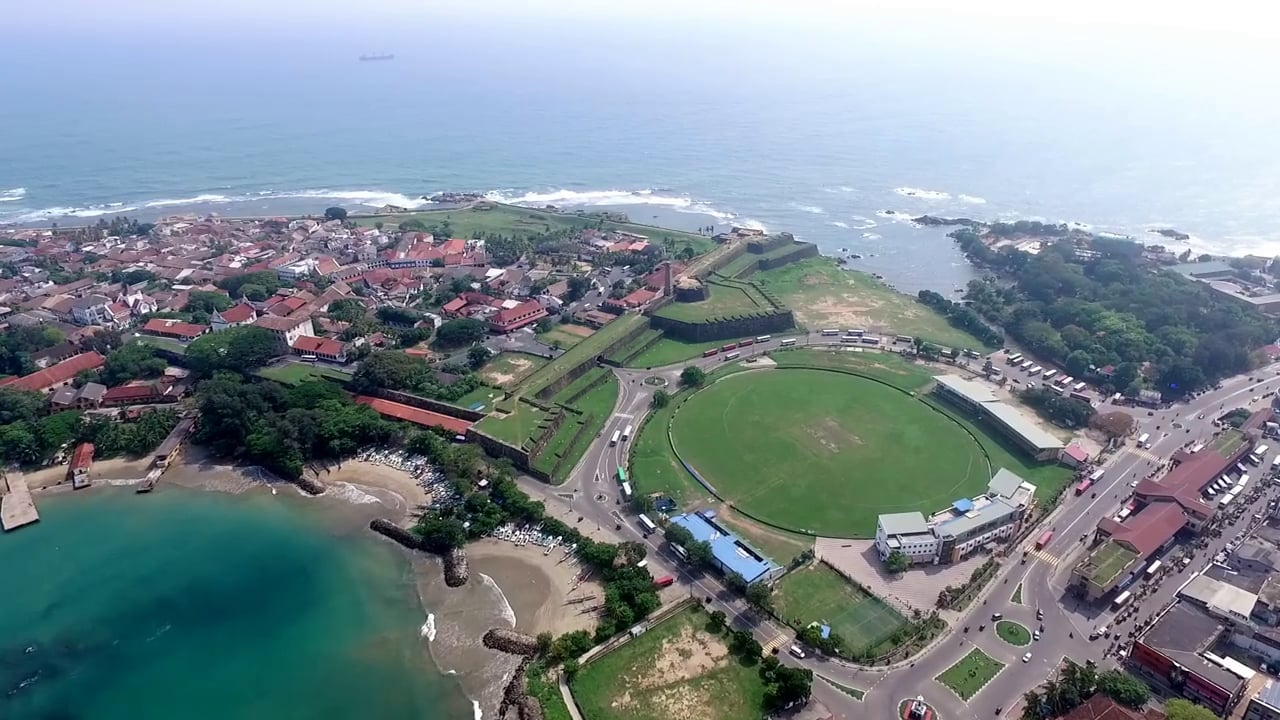
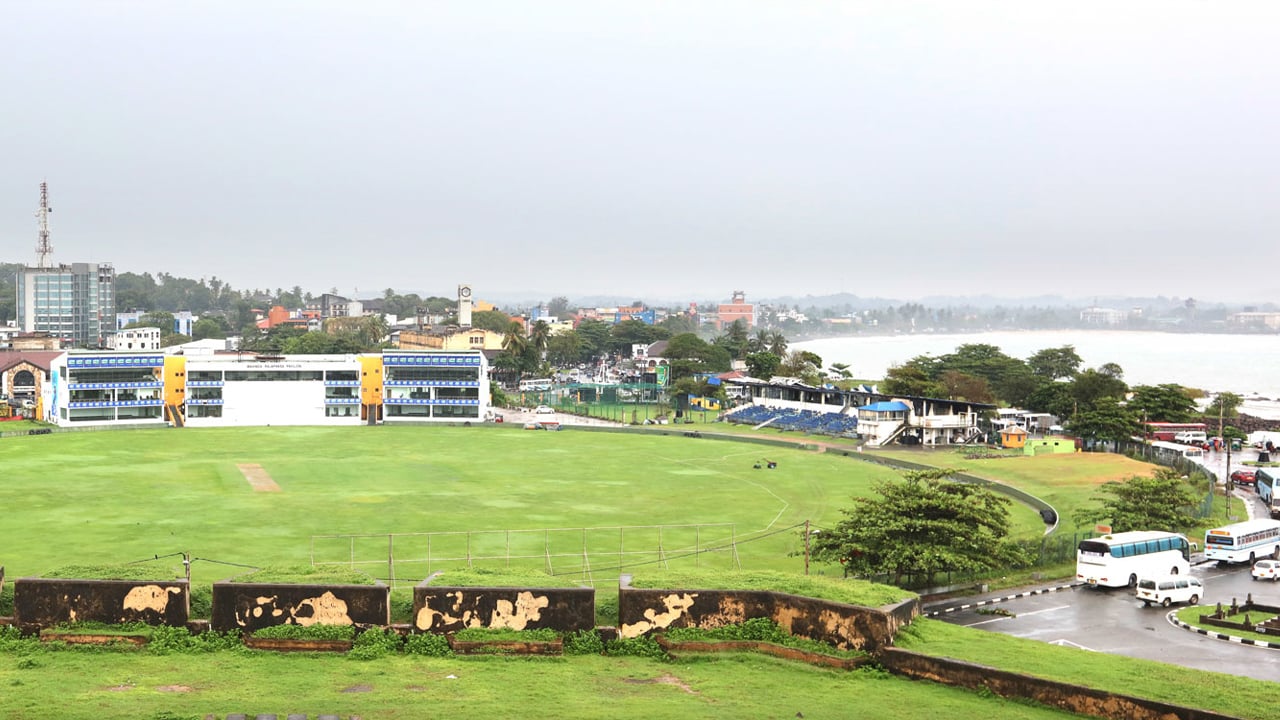
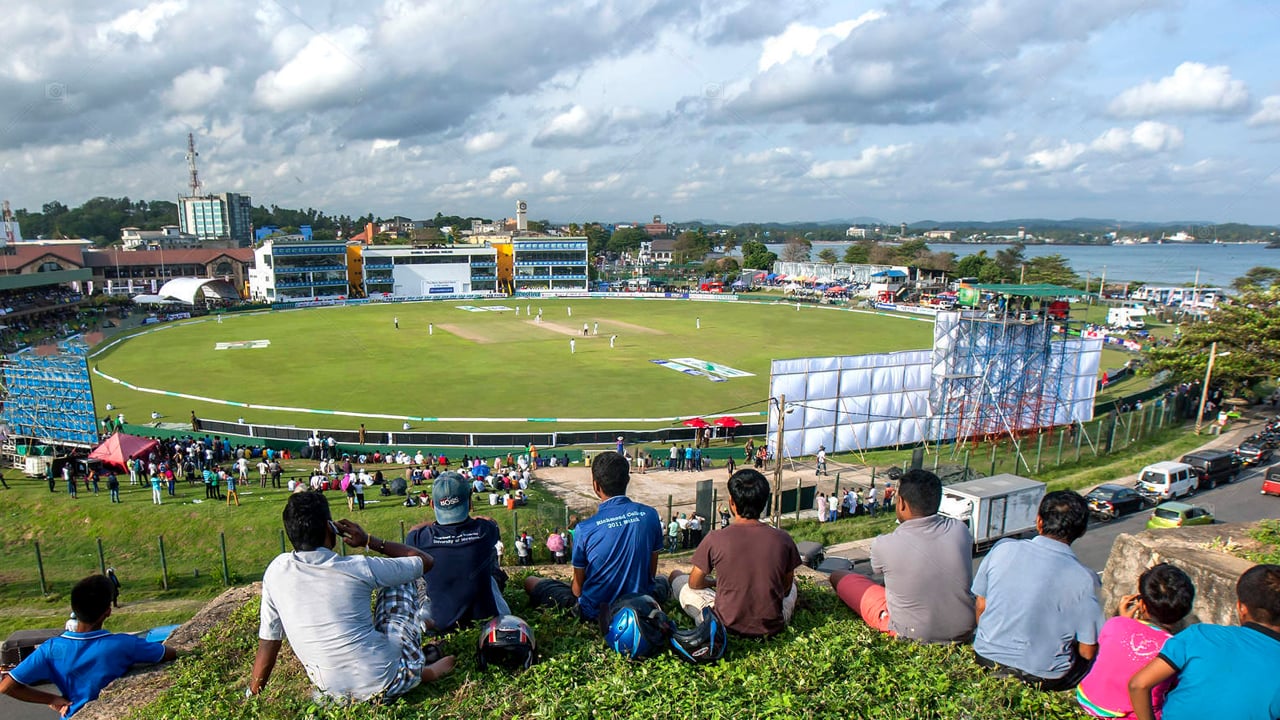
Perched on a narrow peninsula where the Indian Ocean wraps around two sides of the boundary rope, Galle International Cricket Stadium is widely regarded as one of the most atmospheric Test venues in the world. The sight of Galle Fort's 17th-century ramparts rising beyond the sightscreen has become one of cricket's defining images — a backdrop that no architect could have designed better.
What is the history of Galle International Cricket Stadium?
The ground's origins have nothing to do with cricket. Laid out in 1876 as a racecourse on land then called The Esplanade, it served the colonial leisure circuit until racing gradually gave way to bat and ball. A permanent grandstand followed in 1892, built on the recommendation of P.A. Templer, then Secretary of the Galle Municipal Council. By 1927 the site was formally declared a cricket stadium, and the Galle Cricket Club made it their home ground.
The modern playing surface took shape in 1945 when a turf wicket was introduced under the guidance of Dhanapala Lorensu Hewa, then secretary of the Galle Cricket Ground, with technical assistance drawn from the Colombo Cricket Club. The first first-class match followed on 29 February 1984.
When did Galle host its first Test match?
After being upgraded to international standards — becoming Sri Lanka's seventh Test venue — the ground staged its inaugural Test on 3 June 1998, between Sri Lanka and New Zealand. Sri Lanka won by an innings and 16 runs, setting an auspicious tone for what would become one of the team's most productive home venues. A first ODI was scheduled for 25 June 1998 against India, but the match was abandoned after overnight rain left the ground waterlogged.
How did the 2004 tsunami affect the stadium?
On 26 December 2004, the Indian Ocean tsunami struck with devastating force along Sri Lanka's southern coast. The stadium was badly damaged — most buildings were destroyed or rendered unusable. In the weeks that followed, the ground served a very different purpose: it became a temporary shelter and logistics hub for hundreds of people displaced by the disaster, with a camp and helipad constructed on site to support relief operations.
Renovation began on 8 May 2006 and was comprehensive. A new pavilion, media centre, and additional seating were constructed, and the ground was rebuilt to modern international standards. President Mahinda Rajapaksa officially reopened the stadium on 17 December 2007. The very same day, Sri Lanka and England began a Test match there — which ended in a draw, but marked the ground's return to the international stage.
What makes Galle Stadium special as a cricket venue?
Beyond the view, the pitch at Galle has historically offered significant assistance to spin bowlers as a match progresses, making it a strategically fascinating venue for Test cricket. Sri Lanka's record at this ground is among their strongest of any home venue, and visiting sides have often found the combination of turning conditions and a partisan crowd challenging to overcome.
The fort backdrop also means that spectators enjoy an experience that blends sport with heritage tourism in a way that few grounds anywhere in the world can match. Watching a day's Test play here — ideally from the fort walls themselves during breaks — is a genuinely distinctive travel experience, not simply a sporting one.
Where is Galle International Cricket Stadium located?
The stadium sits at the southern tip of Galle city, immediately adjacent to Galle Fort, a UNESCO World Heritage Site. The Indian Ocean borders the ground on two sides, and on clear days the horizon stretches unbroken to Antarctica. Galle is approximately 116 kilometres south of Colombo along the Southern Expressway, making it accessible in roughly 90 minutes by road from the capital.
What else can visitors do near the stadium?
The area around the stadium rewards exploration well beyond match days. Galle Fort's Dutch colonial streets, galleries, boutique cafes, and rampart walks can fill an entire day. The Madu River Safari — a boat journey through a protected mangrove lagoon — is roughly 30 kilometres north near Balapitiya and pairs well with a Galle visit. Further along the coast, the Koggala Sea Turtle Conservation Project offers a chance to learn about marine conservation efforts on the southern shoreline.
For those combining a match with a longer southern itinerary, Sinharaja Forest Reserve — Sri Lanka's primary lowland rainforest and a UNESCO World Heritage Site — lies around 50 kilometres inland and makes for a rewarding day trip.
When is the best time to attend a match at Galle?
Sri Lanka's cricket calendar typically schedules home Tests and limited-overs matches between January and April, and again around July and August — periods that avoid the heaviest monsoon rainfall on the south coast. The southwest monsoon, active from roughly May to July, brings heavy rain to Galle and can disrupt play. If your travel dates are flexible, January through March offers the most reliable weather for attending cricket in the south.
How do I get to Galle Cricket Stadium from Colombo?
The most comfortable option is to travel via the Southern Expressway (E01), which reduces the Colombo-to-Galle journey to around 90 minutes in normal traffic. Trains from Colombo Fort station to Galle run several times daily and take roughly two to two-and-a-half hours; the coastal rail route is scenic in its own right. From Galle town centre or bus stand, the stadium is within easy walking distance or a short three-wheeler ride.
| Route | Approximate Journey Time | Notes |
|---|---|---|
| Colombo by expressway | Around 90 minutes | Private vehicle or intercity bus |
| Colombo by train | Around 2–2.5 hours | Coastal route; book reserved seats in advance on match days |
| Galle town centre | 5–10 minutes on foot | Stadium is adjacent to the Fort |
On international match days, transport links fill quickly. Booking a private transfer in advance is advisable, particularly for early morning starts when public options are limited.
Nearby places
15 places within about 25 km, nearest first.
- Galle Dutch Fortunder 1 km
- National Maritime Museum Galleunder 1 km
- All Saints' Church Galle Fortunder 1 km
- Buddhist temple Galle Fortunder 1 km
- Galle Beachunder 1 km
- Meeran Mosqueunder 1 km
- Old Dutch Hospital Galle Fortunder 1 km
- Zwart Bastion (Black Fort)under 1 km
- Neptune Bastionunder 1 km
- Galle ancient Dutch fort old gateunder 1 km
- Dutch Reformed Church Galleunder 1 km
- Galle Harbourunder 1 km
- Galle Literary Festivalunder 1 km
- Mahamodara beachunder 1 km
- Middle Rampartunder 1 km
Related reading
1 pages on closely related subjects.


