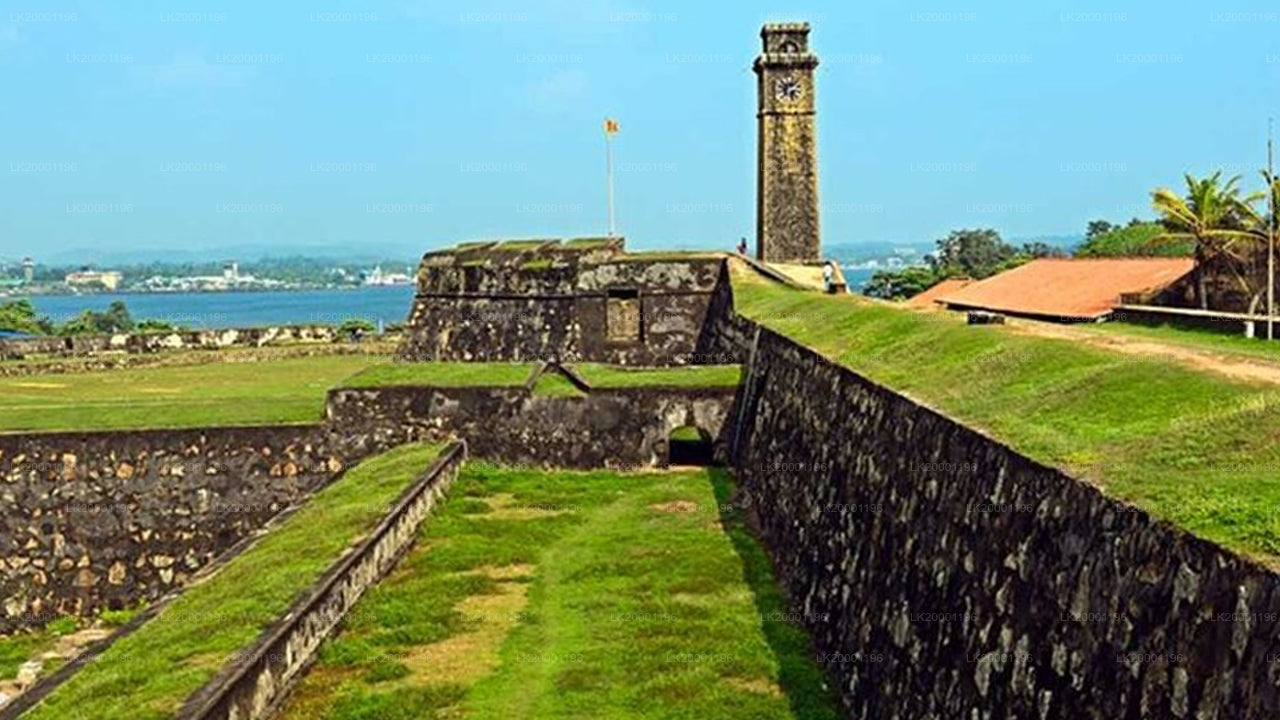
Inside the thick ramparts of Galle Fort — a UNESCO World Heritage Site and one of the best-preserved colonial fortifications in Asia — a small Buddhist temple quietly holds its own. It is not the largest or oldest shrine in Sri Lanka, but its position within a landscape shaped by Portuguese, Dutch, and British rule makes it genuinely distinctive. The temple is an active place of worship, not a museum exhibit, and the daily rhythms of Buddhist practice continue here much as they have for generations.
What makes the Buddhist Temple in Galle Fort significant?
Galle Fort is most commonly associated with its Dutch colonial architecture, coral-stone walls, and 17th-century grid of streets. The presence of a Buddhist temple within these walls is a quiet reminder that Sinhalese communities lived and worshipped inside the fort even during the colonial period. The temple coexists with mosques, churches, and secular heritage buildings in a compact area where multiple religious traditions have occupied the same neighbourhood for centuries.
Architecturally, the temple follows conventions familiar across Sri Lanka: a stupa or dagoba form, whitewashed shrines, seated and standing Buddha images, and decorative elements drawn from traditional Kandyan and southern Sri Lankan craftsmanship. The scale is modest, which actually suits the fort's dense urban fabric. Nothing here is monumental, and that restraint gives the place a contemplative quality that larger pilgrimage sites sometimes lack.
What can visitors see and do at the temple?
The main shrine room houses Buddha statues dressed in saffron-coloured robes, flanked by oil lamps and offerings of lotus flowers. Murals depicting scenes from the Jataka tales — stories of the Buddha's previous lives — typically decorate the interior walls, though the exact condition of murals can vary with ongoing renovation work. Visitors are welcome to observe, provided they remove footwear before entering any shrine space and dress modestly (shoulders and knees covered).
- Observe morning or evening puja (devotional offerings) if timing allows.
- Note the interplay between the temple's traditional design and the surrounding Dutch-era streetscape.
- Look for the bodhi tree, a common feature of Sri Lankan temple compounds, which often anchors the outdoor area.
- Spend a few minutes in the courtyard, which tends to be quieter than the fort's main commercial streets even during busy tourist seasons.
Photography is generally permitted in the courtyard and exterior areas; seek permission before photographing worshippers or the inner shrine room, and always act with discretion.
How does this temple fit into a broader Galle Fort visit?
The fort covers roughly 36 hectares and is very walkable. Most visitors combine the Buddhist temple with the Dutch Reformed Church, the Galle Fort Lighthouse, the National Museum housed in a former Dutch building, and the well-preserved rampart walk along the southern and western walls. The Galle City Tour offered by Lakpura covers the fort's main landmarks in a structured half-day, which can be a practical way to make sure nothing important is missed on a first visit.
For travellers interested specifically in religious heritage, the fort's temple sits naturally alongside other southern Sri Lanka sites: the Madu River estuary to the north is fringed by mangroves and small island temples, accessible by Madu River Safari. Moving slightly inland or along the coast opens up a surprisingly rich landscape of working shrines, pilgrimage sites, and conservation areas.
When is the best time to visit the Buddhist Temple in Galle Fort?
Early morning, roughly between 6 a.m. and 8 a.m., is widely considered the best window. Temperatures are cooler, the light across the fort's stone walls is softer, and local worshippers conducting their morning puja create an atmosphere that daytime tourist crowds rarely produce. Late afternoon, from around 4 p.m. until dusk, is the next best option for similar reasons.
Poya days — full-moon days in the Buddhist calendar — bring heightened activity to all Sri Lankan temples, including this one. The temple will be busier, but the devotional atmosphere is also more intense. If you want to observe rather than participate, poya days are worth timing a visit around. Avoid mid-morning to early afternoon on weekdays and weekends during peak tourist season (December to March and July to August) if you prefer a quieter experience.
How do I get to the Buddhist Temple from Colombo or other areas?
Galle is approximately 115 km south of Colombo along the Southern Expressway. By private car or a Lakpura transfer, the journey typically takes around 90 minutes to two hours depending on traffic at the Colombo end. The Coastal Railway from Colombo Fort station to Galle is slower (around three hours) but offers sea views and is a popular option for independent travellers.
Once inside the fort, the temple is easily reached on foot. The fort's street grid is compact — most points within the walls are no more than a ten-minute walk from the main gate. Tuk-tuks can enter the fort but are largely unnecessary given the distances involved.
What should visitors know before going?
- Dress code: Shoulders and knees must be covered. Lightweight cotton scarves or a longyi are practical in the southern heat.
- Footwear: Remove shoes before entering the temple precinct. Clean socks are helpful on hot paving stones.
- Offerings: White lotus flowers are the traditional offering at Buddhist shrines. Small vendors near the fort often sell them.
- Entry: There is no entrance fee to enter the temple itself. Entry fees apply to certain museums and specific heritage sites within the fort.
- Respectful behaviour: Keep voices low, avoid turning your back on Buddha images when leaving a shrine room, and do not point feet toward altars.
Is the Galle Fort Buddhist Temple worth visiting alongside other Sri Lankan religious sites?
It depends on what you are looking for. This temple rewards travellers who appreciate context and layered history rather than those seeking a grand pilgrimage site. If you are planning a broader cultural itinerary, the temple pairs well with a visit to the Observe Sil practice at a local temple on a poya day, or with exploring the ancient monastic city of Polonnaruwa in the north-central province, which represents Sri Lanka's Buddhist heritage at an entirely different scale.
Within the south, the temple sits neatly within a half-day walking exploration of the fort, and that is probably its most natural context — not a standalone destination, but a genuine cultural anchor within one of Sri Lanka's most visited heritage areas.
Nearby places
16 places within about 25 km, nearest first.
- Galle Dutch Fortunder 1 km
- Galle International Cricket Stadiumunder 1 km
- National Maritime Museum Galleunder 1 km
- Zwart Bastion (Black Fort)under 1 km
- Galle ancient Dutch fort old gateunder 1 km
- Galle Beachunder 1 km
- Meeran Mosqueunder 1 km
- Neptune Bastionunder 1 km
- Dutch Reformed Church Galleunder 1 km
- Galle Harbourunder 1 km
- Galle Literary Festivalunder 1 km
- Mahamodara beachunder 1 km
- Middle Rampartunder 1 km
- Galle Marvels (Galle Titans)under 1 km
- Moon Bastionunder 1 km
- Trion Bastionunder 1 km
Other species in this genus
2 more, sharing the same genus.
Related reading
6 pages on closely related subjects.