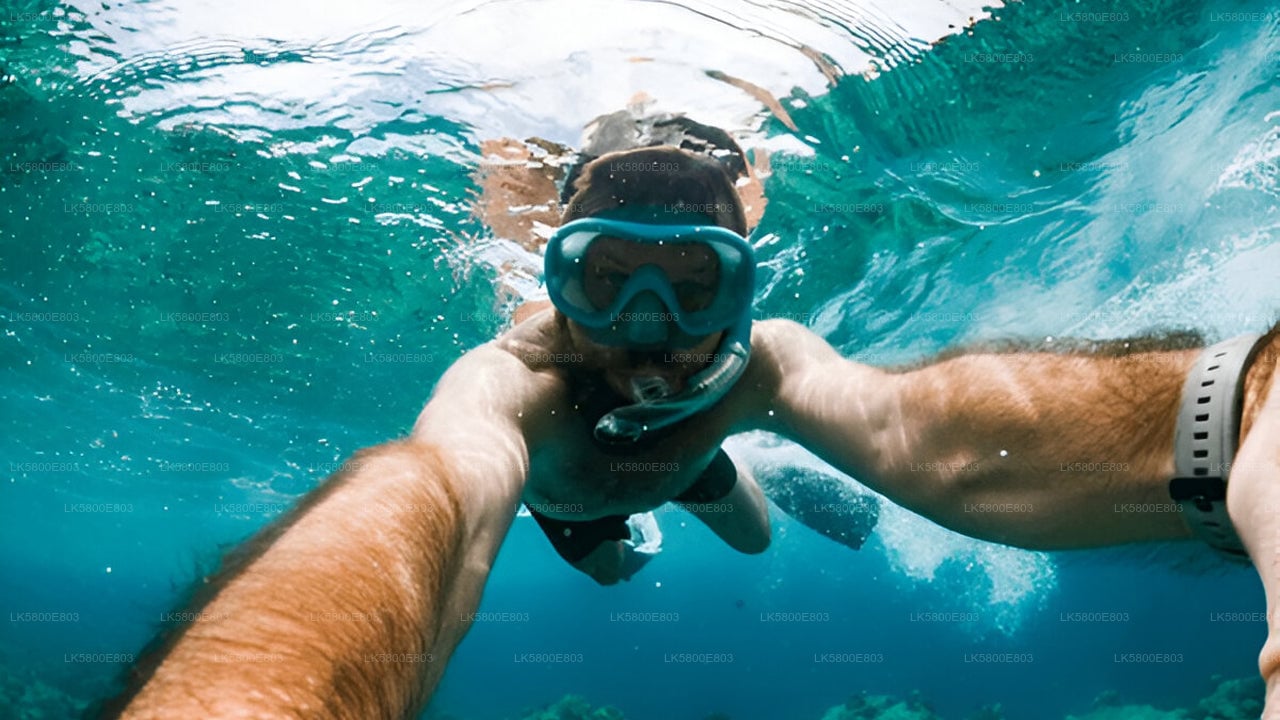
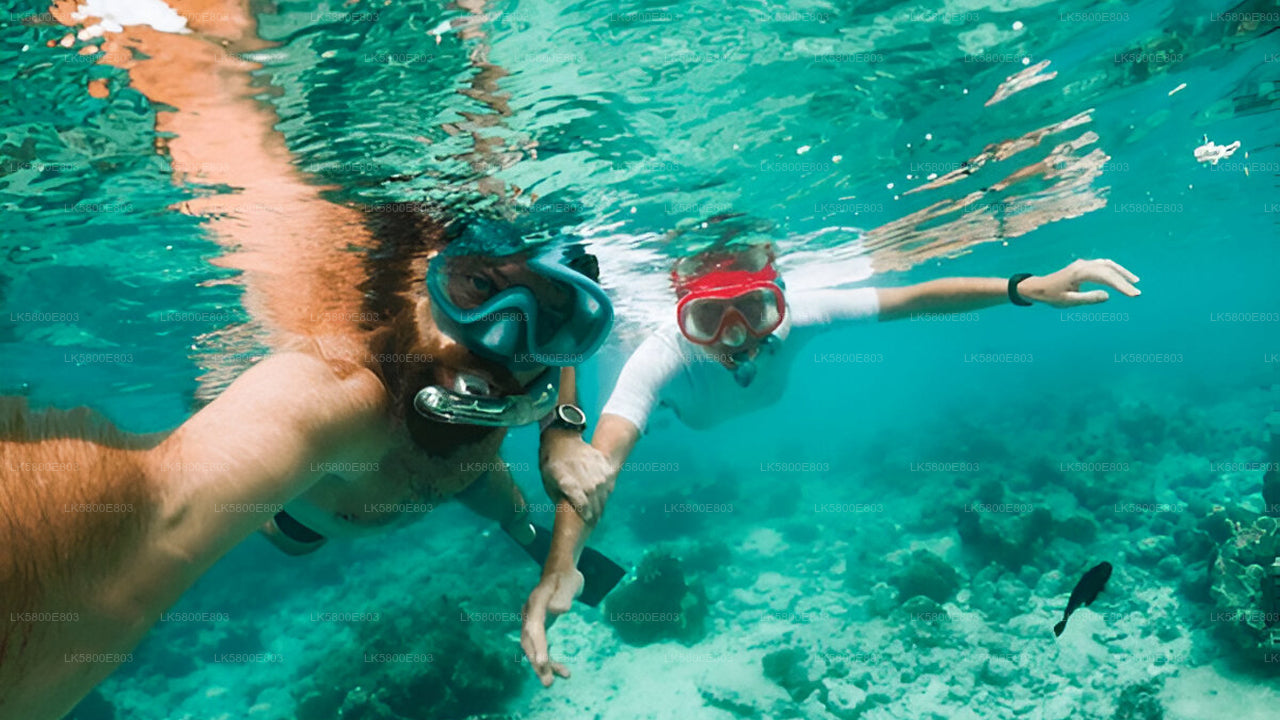
Pigeon Island National Park sits roughly a kilometre off the northeast coast of Sri Lanka, and the snorkelling experience offered here is one of the most accessible introductions to a living coral reef that the country has to offer. Governed by Sri Lanka's Department of Wildlife Conservation, the park was first designated a sanctuary in 1963 and re-designated a national park in 2003. The reef surrounding Large Pigeon Island is among the best-preserved in Sri Lanka, hosting over a hundred species of coral — both hard formations such as branching and plate corals, and soft corals that sway with the current.
The experience begins with a boat transfer from the Trincomalee area out to the island, a short ride across water that shifts from pale turquoise near the shore to a deeper blue as you cross open sea. On arrival, the group receives a safety briefing and is fitted with a snorkelling mask, snorkel tube, and fins before entering the shallows. The reef lies in shallow water, making it manageable for first-time snorkellers as well as those with more time in the water. All snorkelling equipment is provided, and park entrance fees are included in the booking.
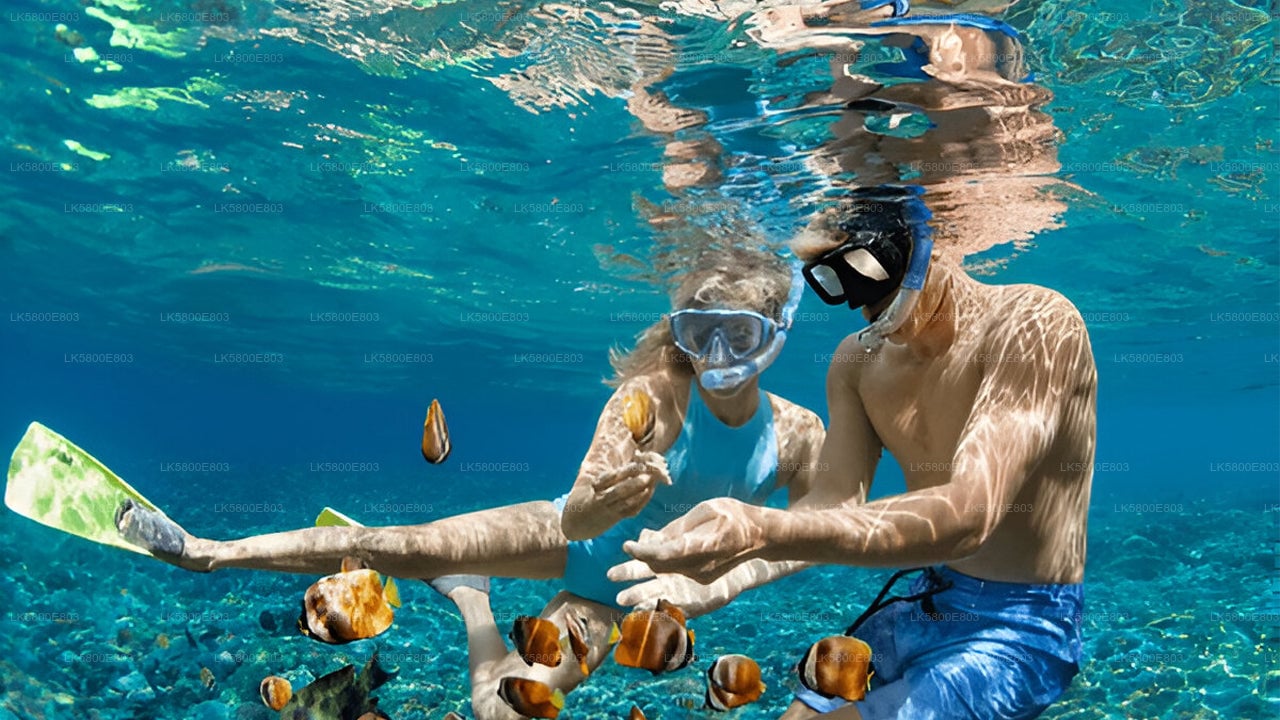
Below the surface, the reef is home to around 300 species of fish recorded by the Wildlife Department. Schools of butterflyfish move across the coral, and parrotfish, angelfish, and moray eels tucked into crevices are all commonly seen. Blacktip reef sharks inhabit these waters and have been recorded here in notable numbers — the park is designated an Important Shark and Ray Area — though any sighting depends entirely on the day. Sea turtles also frequent the reef, and spotting one is possible, though equally not something that can be promised.
The park operates under clear conservation rules. Walking on the reef is prohibited, and designated no-go zones have been established to allow coral recovery — visitors are expected to stay within the permitted snorkelling areas. These measures reflect the care needed to protect a reef that, like much of Sri Lanka's northeast coast, was affected by the 2004 Indian Ocean tsunami and continues to recover. Snorkelling here asks something of its visitors: a degree of care in how they move through the water.
The best time to visit is during the dry season on Sri Lanka's east coast, broadly from May to September, when the sea is calm and visibility is at its clearest. Hotel pick-up and drop-off from within the Trincomalee area is available as an optional addition. Those with serious medical conditions are advised not to participate. An underwater camera, if you have one, is worth bringing — the light through these waters in the morning hours rewards the effort.