Hedyotis pumila is a small herbaceous plant native to Sri Lanka, belonging to the Rubiaceae family, the same botanical family that includes coffee and many other tropical shrubs and herbs. Known locally as Wel kawdudala (වැල් කවුඩුදල), it is a slender annual or perennial growing from a woody tap root. It has no recorded edible uses.
What does Wel kawdudala look like?
Hedyotis pumila is an annual or perennial herb arising from a woody tap root. Its leaves are elliptic to elliptic-oblong or elliptic-lanceolate in shape, measuring roughly 3 to 20 mm long and 1 to 6 mm wide. The leaf margins are often recurved, with the upper surface smooth (glabrous) and the underside rough (scabrous), particularly along the margin and midrib. Leaf tips and bases are both acute.
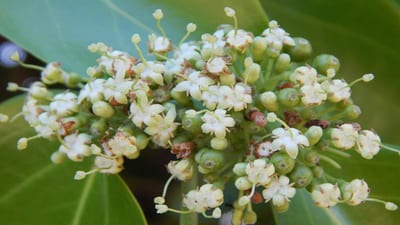
The plant produces its flowers in axillary cymes, clusters arising from the point where leaves meet the stem. The flowers are isostylous, meaning their reproductive structures are of a uniform style length rather than the heterostylous arrangement seen in some related Rubiaceae species. The fruit is a small capsule, ellipsoidal to ovoid in shape and measuring about 2 to 3 mm by 2.5 to 3 mm.
Where does Wel kawdudala grow in Sri Lanka?
Hedyotis pumila is classified as native to Sri Lanka, meaning it occurs naturally on the island as part of its indigenous flora, though it is not recorded as endemic.
What is its conservation status and edibility?
No formal conservation status is recorded for Hedyotis pumila. The species has no recorded edible parts, and no food use should be assumed or attempted based on this profile.
What is it called in Sinhala?
In Sinhala, Hedyotis pumila is known as Wel kawdudala (වැල් කවුඩුදල), the name recorded for this species in Sri Lanka's indigenous plant register.
| Attribute | Detail |
|---|---|
| Scientific name | Hedyotis pumila |
| Family | Rubiaceae |
| Sinhala / local name | Wel kawdudala (වැල් කවුඩුදල) |
| Status in Sri Lanka | Native |
| Edible parts | None |
| Life form | Annual or perennial herb, woody tap root |
| Leaves | Elliptic to elliptic-oblong/lanceolate, 3–20 x 1–6 mm, margins often recurved, apex and base acute |
| Inflorescence | Axillary cymes, flowers isostylous |
| Fruit | Capsule, ellipsoidal to ovoid, 2–3 x 2.5–3 mm |
Other species in this genus
2 more, sharing the same genus.