Clerodendrum serratum var. serratum, known locally as Kanhenda (කන්හැන්ද), is a woody shrub with deep roots in the traditional medicine systems of South and Southeast Asia. Found growing across tropical and warm-temperate forests in Africa, Southern Asia, Malaysia, India, and Sri Lanka, this plant has been valued for centuries by Ayurvedic and indigenous practitioners for its wide-ranging therapeutic properties.
What is Clerodendrum serratum var. serratum?
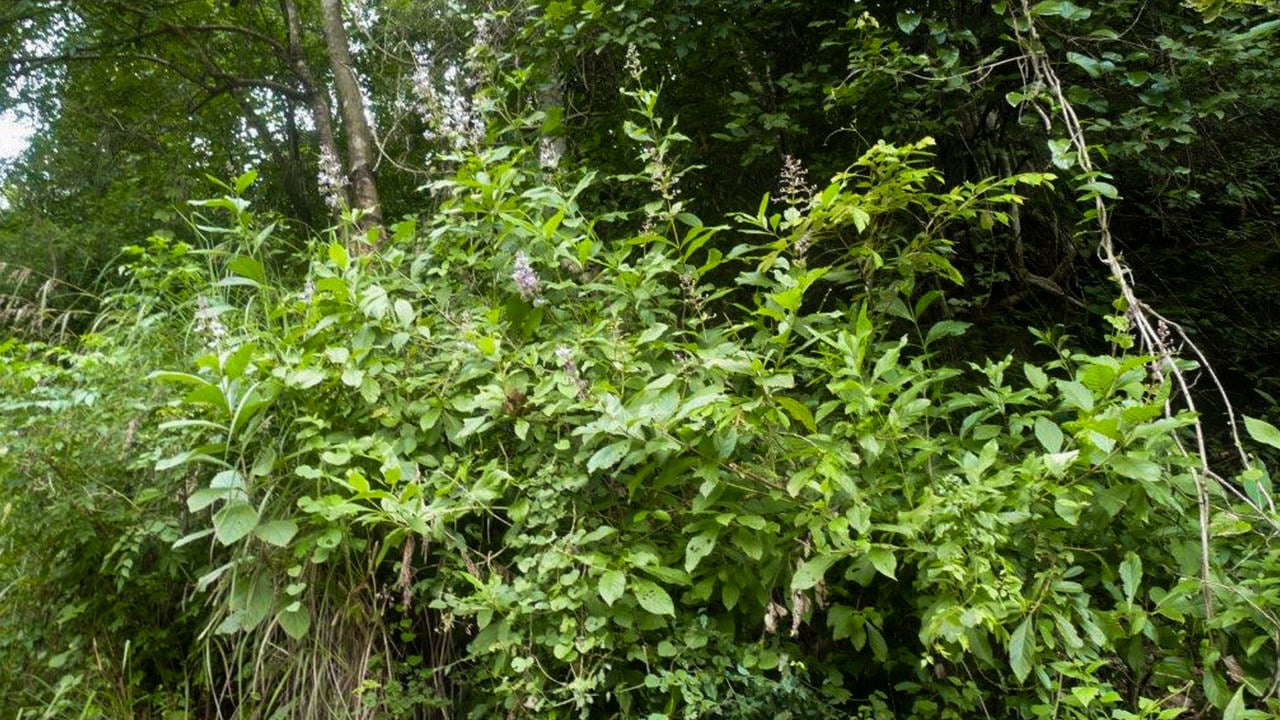
Clerodendrum serratum var. serratum belongs to the family Lamiaceae (formerly Verbenaceae). It typically grows as a subshrub, shrub, or small treelet, reaching heights of up to around four metres under suitable conditions. The plant is widely cultivated in home gardens and sometimes escapes cultivation to grow semi-wild at forest margins and disturbed areas across Sri Lanka.
The leaves are a particularly distinctive feature. The leaf blade is thin-chartaceous to submembranous in texture — meaning it has a papery but slightly fleshy quality — and is dark green on the upper surface with a noticeably lighter underside. In shape, leaves range from elliptic to elliptic-obovate, obovate-oblong, or almost oblong, giving the plant a variable but recognisable appearance throughout its range.
What are the traditional medicinal uses of Kanhenda?
In Sri Lankan and Indian Ayurvedic tradition, Kanhenda is regarded as one of the more versatile medicinal plants available in the tropical forest understorey. Various parts of the plant — including roots, leaves, and stem bark — are used in classical formulations to address respiratory conditions, fevers, and inflammatory disorders.
The plant features prominently in classical texts on herbal medicine and continues to be used in compound preparations produced by Ayurvedic pharmacies across the island. Its anti-inflammatory and analgesic properties have attracted growing scientific interest in recent decades, with researchers investigating its phytochemical constituents such as flavonoids, alkaloids, and terpenoids.
Among the well-known classical compounds that may incorporate plant materials from this genus are preparations used for joint and musculoskeletal conditions — a tradition shared across Sri Lanka, India, and parts of Southeast Asia. Formulations such as Yogaraja Guggulu illustrate how plants from diverse forest ecosystems contribute to compound Ayurvedic medicines still in active use.
Where does Kanhenda grow in Sri Lanka?
Within Sri Lanka, Clerodendrum serratum var. serratum is distributed across the low-country and mid-country wet and intermediate zones, typically found in secondary forests, forest edges, and scrubland habitats. It thrives in the warm, humid conditions characteristic of Sri Lanka's southwestern lowlands and the foothills leading up to the central highlands.
The plant tolerates both partial shade and open conditions, which makes it a practical candidate for home garden cultivation. In village settings, it is often grown alongside other medicinal species as part of a household herbal garden, a tradition with strong cultural roots across rural Sri Lanka.
Forests such as the Sinharaja Forest Reserve in the wet zone represent the kind of rich, layered habitat where related medicinal flora flourishes under the canopy. While Kanhenda itself favours more disturbed or edge environments, the broader forest ecosystems of Sri Lanka support an extraordinary density of medicinal plant diversity.
What does the plant look like — key botanical features?
- Growth form: Subshrub, shrub, or small treelet
- Height: Typically up to around 4 metres
- Leaves: Elliptic to obovate, thin-chartaceous; dark green above, lighter beneath
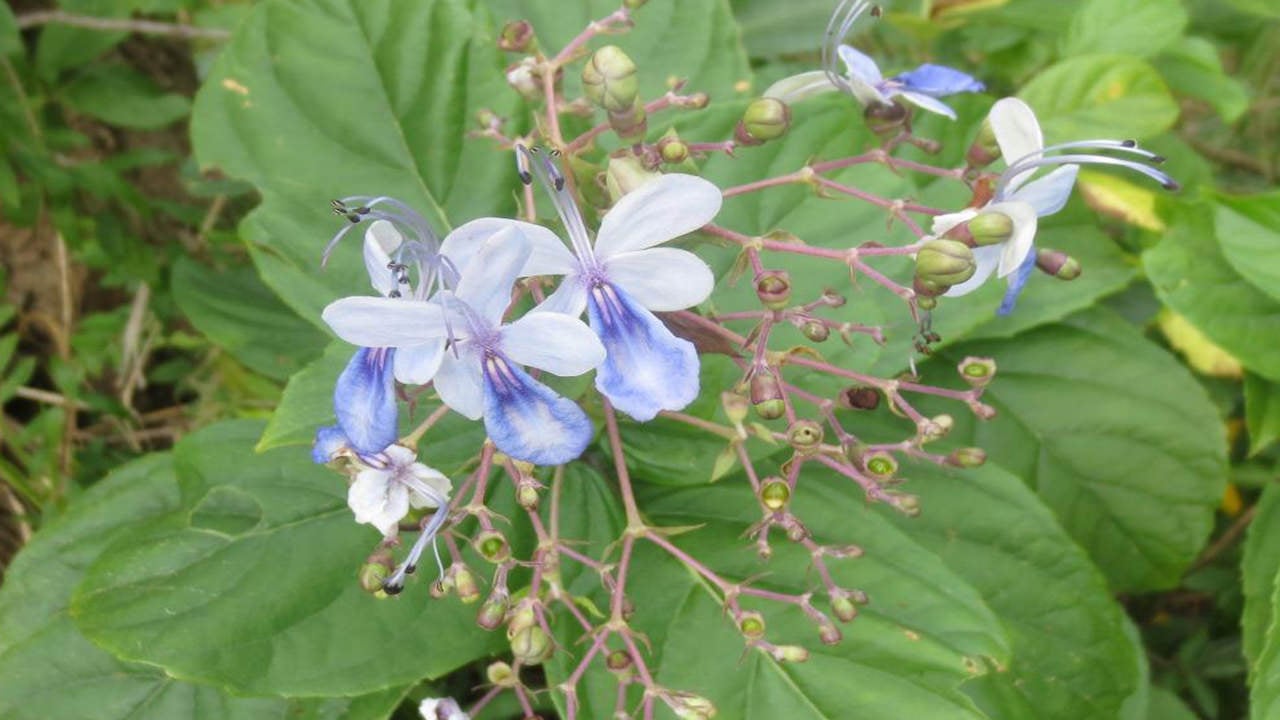
- Flowers: Borne in terminal panicles; flowers are typically blue to violet-blue, tubular, and arranged in showy clusters
- Fruit: A drupe, partially enclosed by the persistent calyx, turning blue-black at maturity
- Stem: Quadrangular when young, becoming more rounded with age
How does Kanhenda relate to Sri Lanka's broader medicinal plant heritage?
Sri Lanka's forests and home gardens harbour hundreds of plants with documented medicinal applications, many of them shared with neighbouring India but adapted through centuries of local practice into a distinctly Sri Lankan pharmacopoeia. Kanhenda sits within this tradition as a plant known to village herbalists, Ayurvedic physicians, and increasingly to researchers interested in natural product pharmacology.
Other notable medicinal trees and shrubs found in similar habitats include Acacia chundra and Pongamia pinnata, both of which share the characteristic of being useful across multiple systems of traditional medicine while also playing ecological roles in forest and agroforestry systems.
The growing international interest in botanical medicine has renewed attention to plants like Clerodendrum serratum var. serratum, whose traditional use records stretch back through Sanskrit, Pali, and Sinhala texts. Sri Lanka's position as a biodiversity hotspot, combined with its living tradition of Ayurveda and Deshiya Chikitsa (indigenous medicine), makes it a significant source of ethnobotanical knowledge for the wider world.
Is Clerodendrum serratum var. serratum cultivated or wild in Sri Lanka?
The plant exists in both cultivated and wild-growing states across the island. It is widely cultivated in home gardens and Ayurvedic herb gardens, and it also naturalises readily in disturbed forest margins and roadsides, particularly in the wet and intermediate zones. It does not require highly specialised growing conditions and adapts well to ordinary tropical garden soils with reasonable moisture.
Propagation is typically achieved through stem cuttings or seeds, both of which are relatively straightforward. In areas where traditional herbal cultivation remains active, Kanhenda is often grown alongside other commonly used medicinal species as part of small-scale polyculture plots.
Quick reference: Clerodendrum serratum var. serratum
| Attribute | Detail |
|---|---|
| Common name (Sinhala) | Kanhenda (කන්හැන්ද) |
| Scientific name | Clerodendrum serratum var. serratum |
| Family | Lamiaceae |
| Growth form | Subshrub, shrub, or small treelet |
| Average height | Up to approximately 4 metres |
| Distribution | Africa, Southern Asia, Malaysia, India, Sri Lanka |
| Habitat in Sri Lanka | Forest margins, secondary growth, home gardens |
| Primary traditional use | Anti-inflammatory, antipyretic, respiratory conditions |
Other species in this genus
3 more, sharing the same genus.