


Paramignya monophylla is a woody climbing plant belonging to the family Rutaceae. Native to Sri Lanka and parts of South and Southeast Asia, it occupies a modest but distinct place in the island's forest flora and has long been catalogued among the plants used in Sri Lankan Ayurvedic medicine. Though rarely the centrepiece of a nature walk, it rewards the botanically curious traveller who looks carefully at the forest understorey.
What does Paramignya monophylla look like?
The plant grows as a woody climber, using surrounding vegetation for support as it extends through the canopy edge and forest margins. Its leaves are mostly 5–10 cm long — sometimes larger — and typically oblong-ovate to broadly lanceolate in shape. The leaf base is rounded, while the apex ranges from obtuse to acute and is occasionally emarginated (notched at the tip). The upper surface is glabrous or nearly so, but the midrib on the underside retains a noticeable covering of fine hairs (pubescence), a useful identification feature in the field.
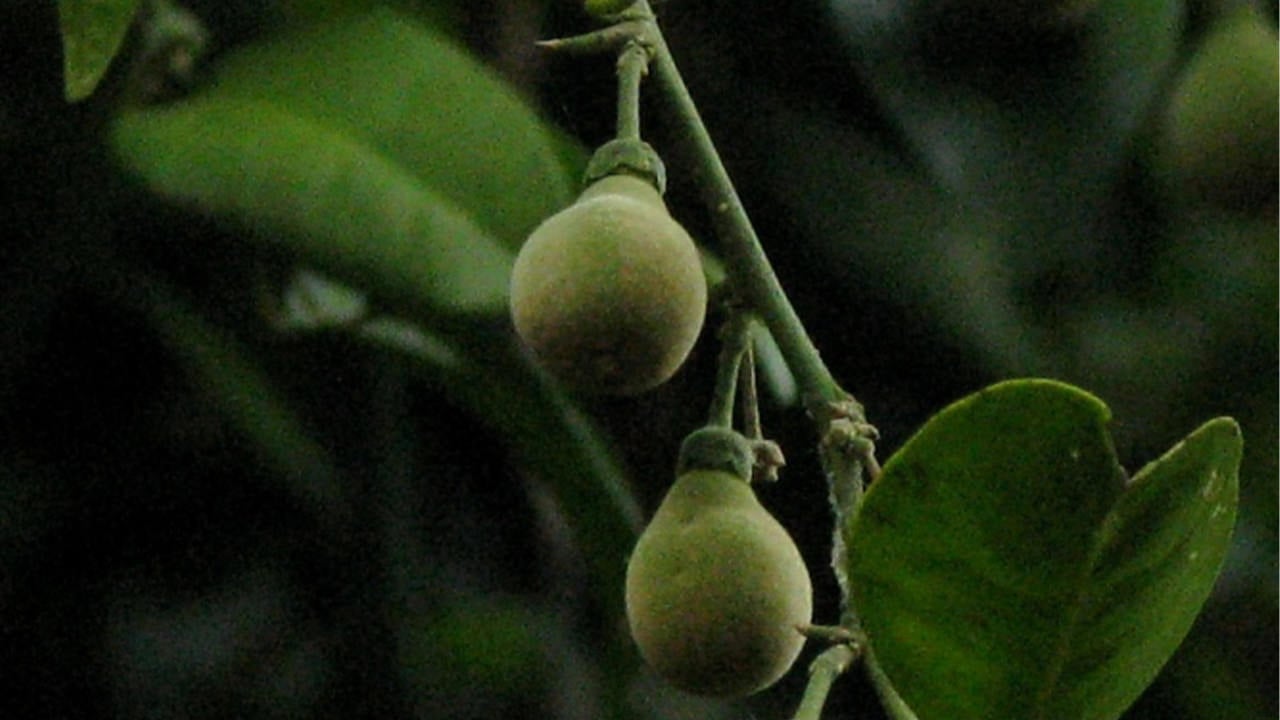
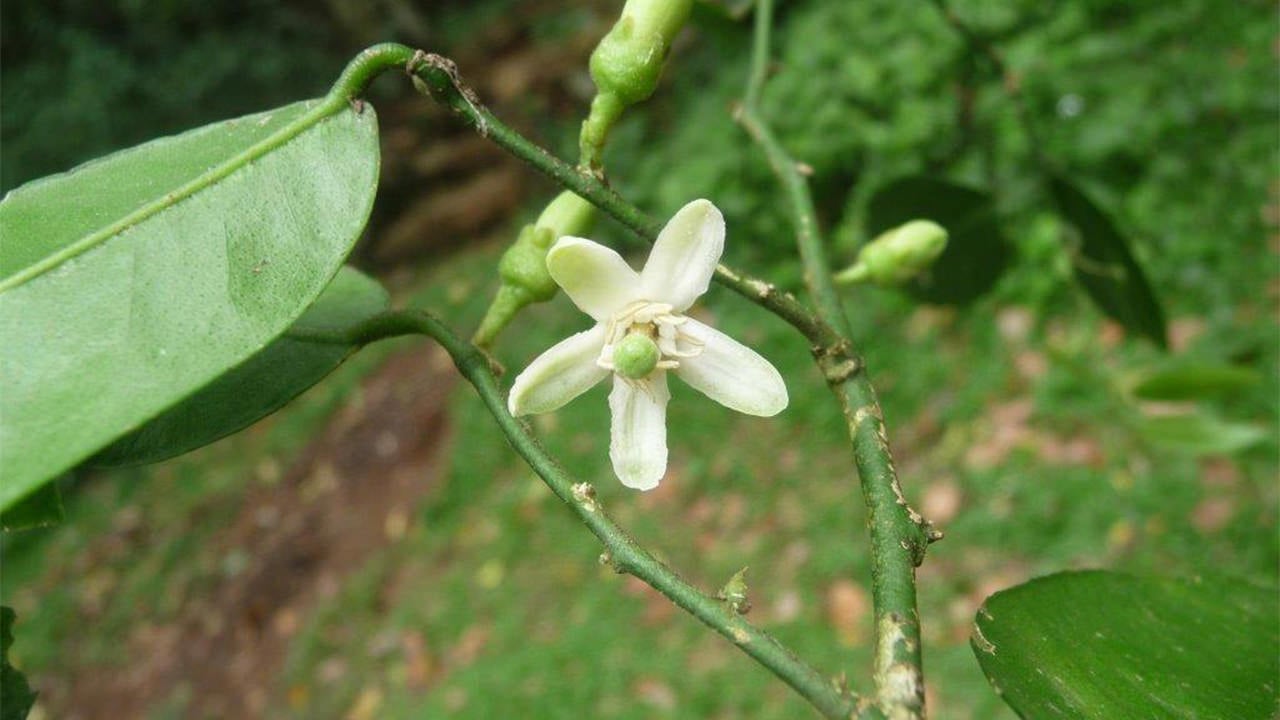
Flowers are small and appear singly or in groups of one to three in the leaf axils, arranged in a short cyme or fascicle that extends only slightly beyond the petiole. The fruit is globose to obovoid or pyriform (pear-shaped), sometimes angular or furrowed, and covered with fine pubescence. Each fruit contains several large, compressed seeds — a characteristic that distinguishes it from closely related genera.
Where does Paramignya monophylla grow in Sri Lanka?
This species favours the low-country and mid-elevation forests of Sri Lanka, where it climbs through secondary and primary forest edges. It is associated with moist and intermediate zones across the island. Botanists and naturalists have recorded it in forested habitats near wetland margins and riverine areas, as well as in drier scrub woodland in parts of the north and northwest.
Visitors exploring places such as Sinharaja Forest Reserve — a UNESCO-listed rainforest in the island's wet zone — are among the best placed to encounter members of the Rutaceae family in their natural habitat, though a knowledgeable local guide is essential for identification.
What is the Ayurvedic significance of Paramignya monophylla?
Paramignya monophylla is formally recognised in the catalogue of Ayurvedic medicinal plants of Sri Lanka, a government-maintained register that documents species with documented or traditional therapeutic application. The Rutaceae family to which it belongs contains numerous plants with established medicinal properties — including compounds with antimicrobial, anti-inflammatory, and antioxidant activity — and research interest in lesser-known genera such as Paramignya has grown accordingly.
In Sri Lanka's traditional medicine system, woody climbers from forest habitats have historically been sourced for bark, root, and leaf preparations used in compound formulations. Formal clinical evidence specifically for Paramignya monophylla remains limited in published literature, and the species is best understood as part of the broader ethnobotanical heritage of the island rather than a widely traded medicinal commodity.
For context on how individual plants fit into Sri Lanka's Ayurvedic tradition, the Acacia chundra and Pongamia pinnata pages on this site offer parallel examples of forest species with documented traditional uses.
How does Paramignya monophylla relate to other Rutaceae plants?
The Rutaceae — commonly called the citrus family — is one of the more economically significant plant families in the tropics. It includes not only commercial citrus fruits but also a wide range of aromatic shrubs and climbers used in traditional medicine across South and Southeast Asia. Paramignya is a smaller genus within this family, characterised by its climbing habit, spiny stems in most species, and fleshy fruits with large seeds.
Paramignya monophylla is distinguished by its typically unifoliolate (single-leaflet) leaves — as the species name monophylla indicates — setting it apart from the compound leaves found across most of the citrus family. This single-leaf form, combined with the persistent midrib pubescence and the short-stalked axillary flowers, makes it identifiable to a trained botanist even without fruit.
Can travellers observe this plant in Sri Lanka?
Direct observation of Paramignya monophylla in the wild requires entering forested habitats with a guide who has specialist botanical knowledge. The plant does not grow in manicured botanical gardens in the same abundance as ornamental or commercial species, so encounters tend to be incidental during forest treks rather than planned.
Several of Sri Lanka's national parks and reserves provide access to the forest types where this and related species occur. The Horton Plains National Park in the central highlands, for instance, supports a rich understorey flora, while the Makandawa Rainforest near Kegalle offers guided walks through dense wet-zone forest. Neither site specifically features Paramignya monophylla as a highlight, but both give a genuine sense of the forest ecology from which this plant comes.
Travellers with a deeper interest in Sri Lanka's medicinal plant heritage may also find value in visiting an Ayurvedic practitioner or a traditional herbal garden, several of which are found in the Kandy and Matale regions.
What is the conservation status of Paramignya monophylla?
Detailed global conservation assessments for Paramignya monophylla are not prominently listed in the IUCN Red List as of current available data, which is common for many narrowly distributed or under-studied tropical climbers. However, like most forest-dependent species in Sri Lanka, its long-term wellbeing is tied to the health of the island's remaining natural forests. Deforestation, agricultural encroachment, and the degradation of low-country wet-zone habitats represent ongoing pressures on forest floor and edge species of this kind.
Sri Lanka's network of protected areas, combined with community conservation efforts in forest buffer zones, provides the primary safeguard for plants such as this. Supporting responsible, nature-based tourism is one way visitors can contribute to the economic case for keeping these habitats intact.