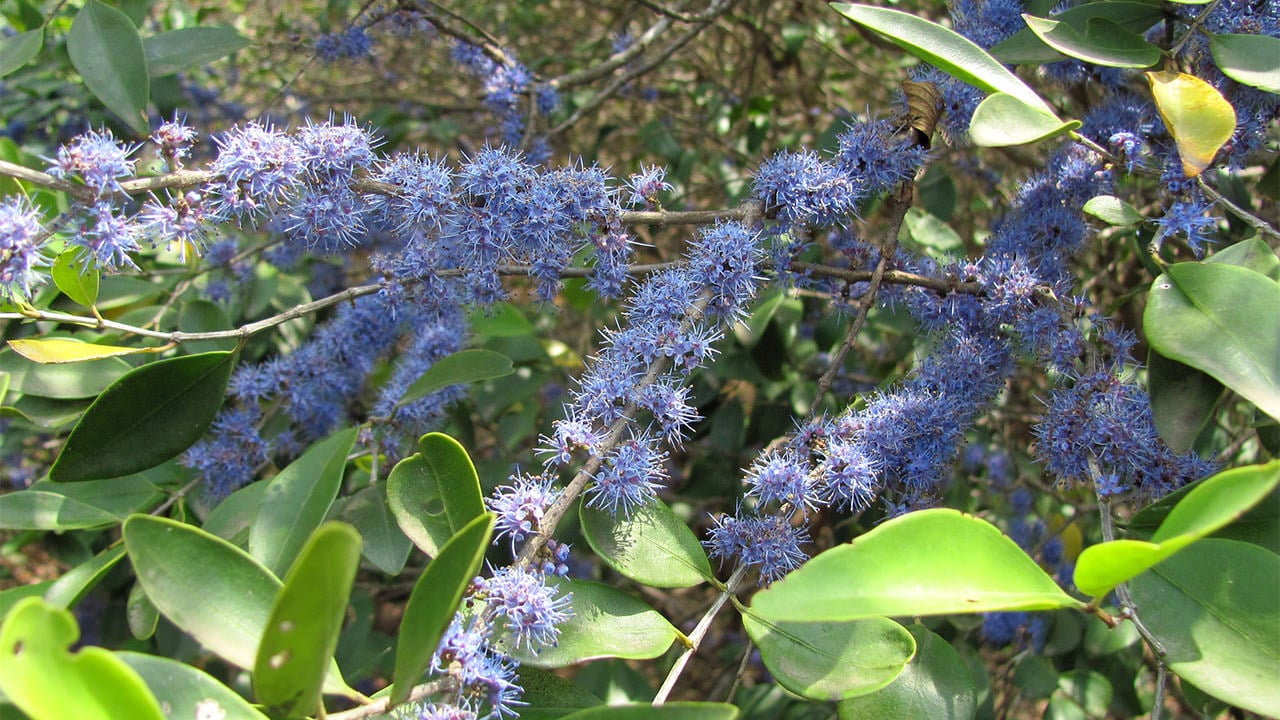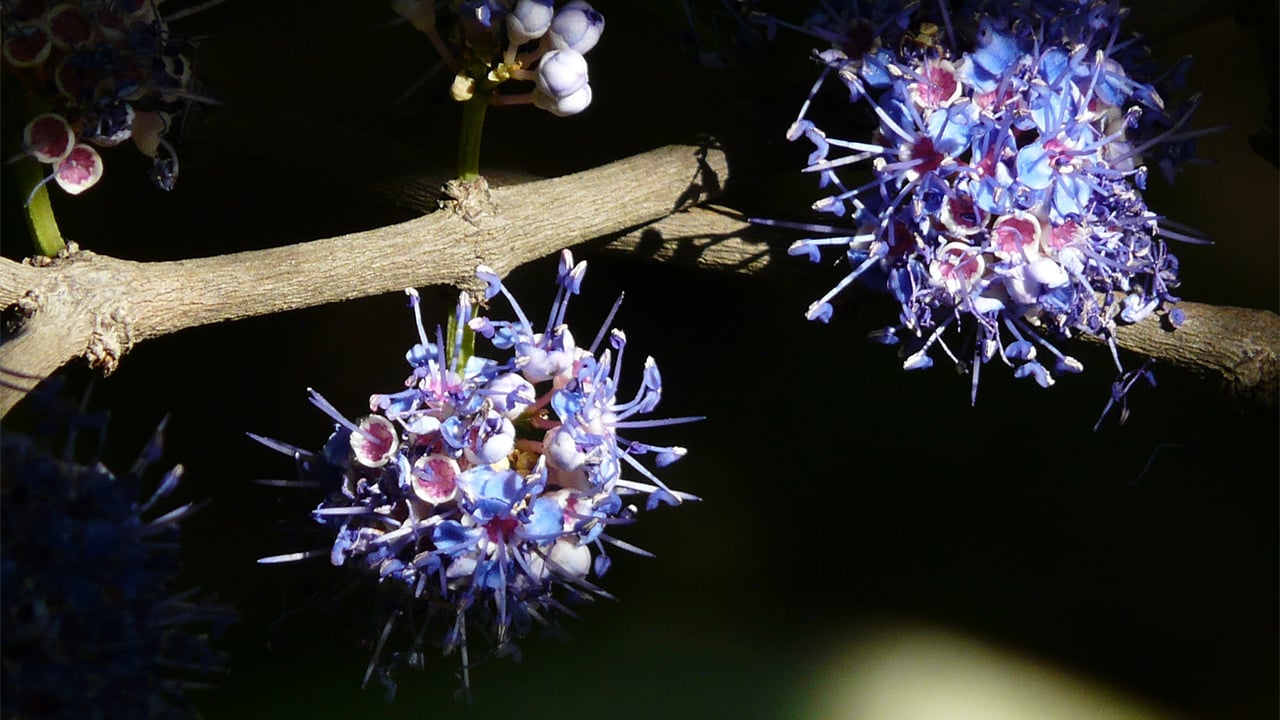
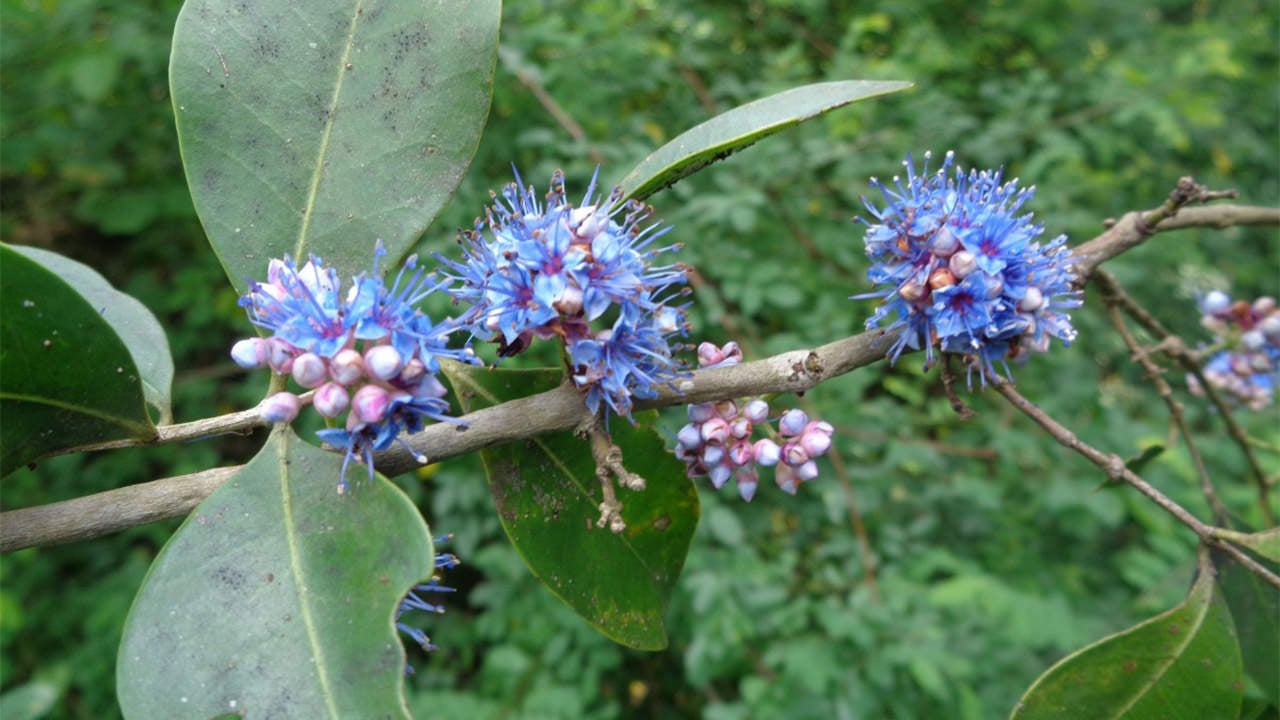
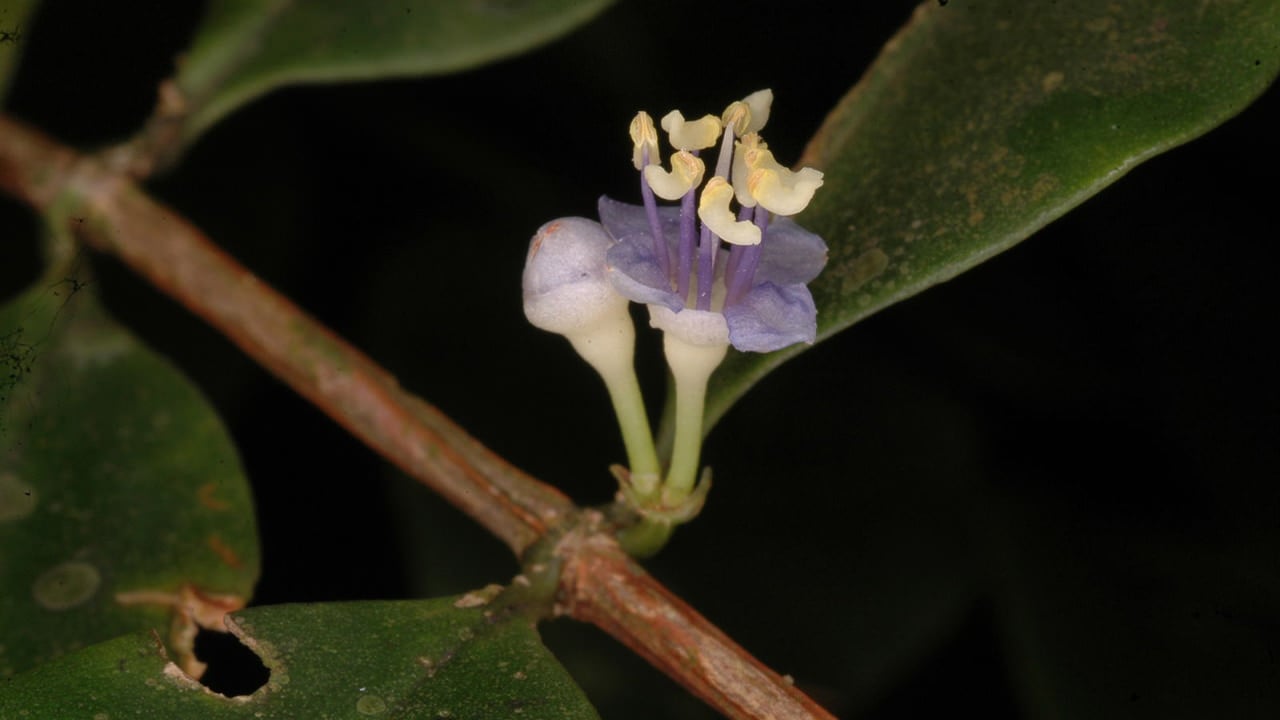
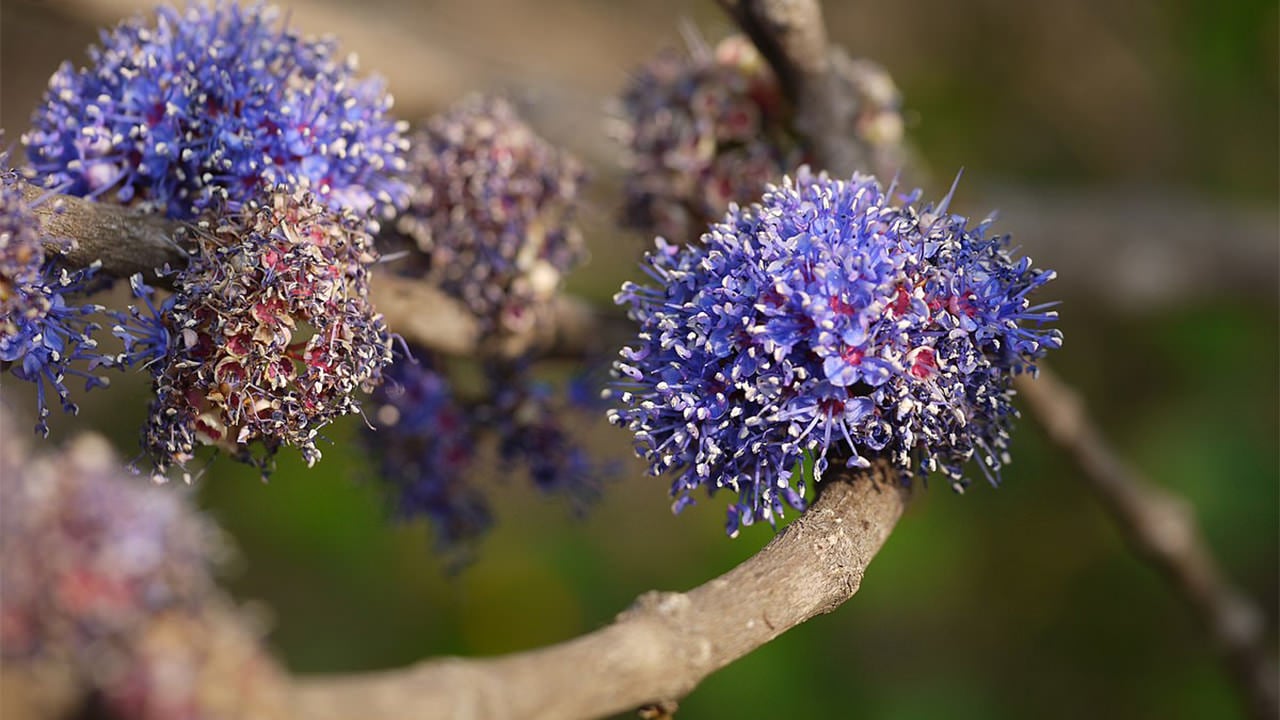

Memecylon capitellatum, known in Sinhala as Weli Kaha (වැලි කහ), is a flowering plant species belonging to the family Melastomataceae. It is endemic to Sri Lanka, meaning it grows nowhere else on Earth, making it a notable part of the island's rich native flora.
What does Memecylon capitellatum look like?
Memecylon capitellatum grows as a large shrub or small tree, typically reaching up to around 5 metres in height. Its branches are subterete — nearly cylindrical in cross-section — giving the plant a compact, woody character.
- Leaves: Elliptic to oblong, measuring approximately 2.5–10 cm long and 1.5–5 cm wide, with a short petiole of about 5 mm. Leaves generally dry to a yellowish-green colour, a feature that helps botanists identify preserved specimens.
- Flowers: Borne in condensed heads of 3–15 flowers, each head roughly 4–15 mm in diameter and carried on peduncles of 2–25 mm. The petals are notably blue — an uncommon colour in Sri Lankan native flora.
- Fruit: Globose (spherical) in shape, around 9 mm in diameter. Immature fruit is yellowish-green; ripe fruit turns bluish-black.
Where does Weli Kaha grow in Sri Lanka?
As an endemic species, Memecylon capitellatum is found in natural and semi-natural habitats across Sri Lanka. It favours the island's lowland and mid-elevation zones, often occurring in scrub forests and along forest margins. Sri Lanka's protected areas — including the Sinharaja Forest Reserve, a UNESCO World Heritage Site — harbour diverse endemic plants like Weli Kaha within their understorey communities.
The plant is part of a broader genus (Memecylon) that is well represented in Sri Lanka, with the island hosting several endemic species in this group. Its persistence depends on the conservation of remaining native forest patches throughout the wet and intermediate zones.
What are the traditional medicinal uses of Weli Kaha?
In Sri Lanka's traditional Ayurvedic and folk medicine systems, Memecylon capitellatum has a documented place as a therapeutic plant. Practitioners have historically used parts of the plant to treat:
- Ulcers
- Swellings and inflammation
- Sores and skin lesions
These uses reflect a broader pattern seen across Sri Lanka's endemic flora, where plants with specific phytochemical profiles are incorporated into village-level remedies. While formal clinical studies on Memecylon capitellatum remain limited in published literature, the ethnobotanical record is consistent and longstanding. For context on related traditional uses, Sri Lanka's Department of Ayurveda maintains oversight of plant-based medicine practice on the island.
How does Memecylon capitellatum relate to Sri Lanka's botanical heritage?
Sri Lanka has one of the highest rates of plant endemism relative to land area in South Asia. A significant proportion of the island's flowering plant species are found nowhere else, and endemic genera like Memecylon are central to understanding the evolutionary history of the Indian Ocean's flora.
Plants such as Weli Kaha coexist with other well-known endemic and native species — among them Acacia chundra, another native species with documented traditional uses in Sri Lanka. Together, these plants form the ecological fabric of habitats ranging from coastal scrubland to montane forest.
Visiting areas where such endemic plants thrive — particularly protected forests and natural reserves — offers travellers a window into Sri Lanka's ecological identity that goes well beyond the iconic landscapes of tea estates and ancient ruins.
Is Memecylon capitellatum considered threatened?
As with many narrowly distributed endemic plants, Memecylon capitellatum faces pressures from habitat loss, agricultural expansion, and degradation of lowland forest. Sri Lanka's endemic flora is monitored by the IUCN and national conservation bodies, and several Memecylon species on the island carry threatened or near-threatened designations. The conservation status of individual species can shift as survey data is updated, and M. capitellatum warrants continued monitoring within its native range.
Conservation-minded visitors to Sri Lanka can support endemic plant survival by choosing experiences within established protected areas and respecting guidelines on plant collection — particularly in reserves such as Horton Plains National Park, where native vegetation is strictly protected.
Can travellers see Weli Kaha growing in the wild?
Spotting Memecylon capitellatum in the wild is most likely when exploring Sri Lanka's native scrub and secondary forests with a knowledgeable local guide. The plant's distinctive blue flowers, which appear seasonally, make it identifiable even for non-specialist visitors once the search image is established.
Guided nature walks in biodiversity-rich areas give travellers the best opportunity to encounter endemic shrubs like Weli Kaha alongside other native species. Sri Lanka's network of protected reserves and conservation forests provides the most reliable habitat for such encounters.
Other species in this genus
5 more, sharing the same genus.