
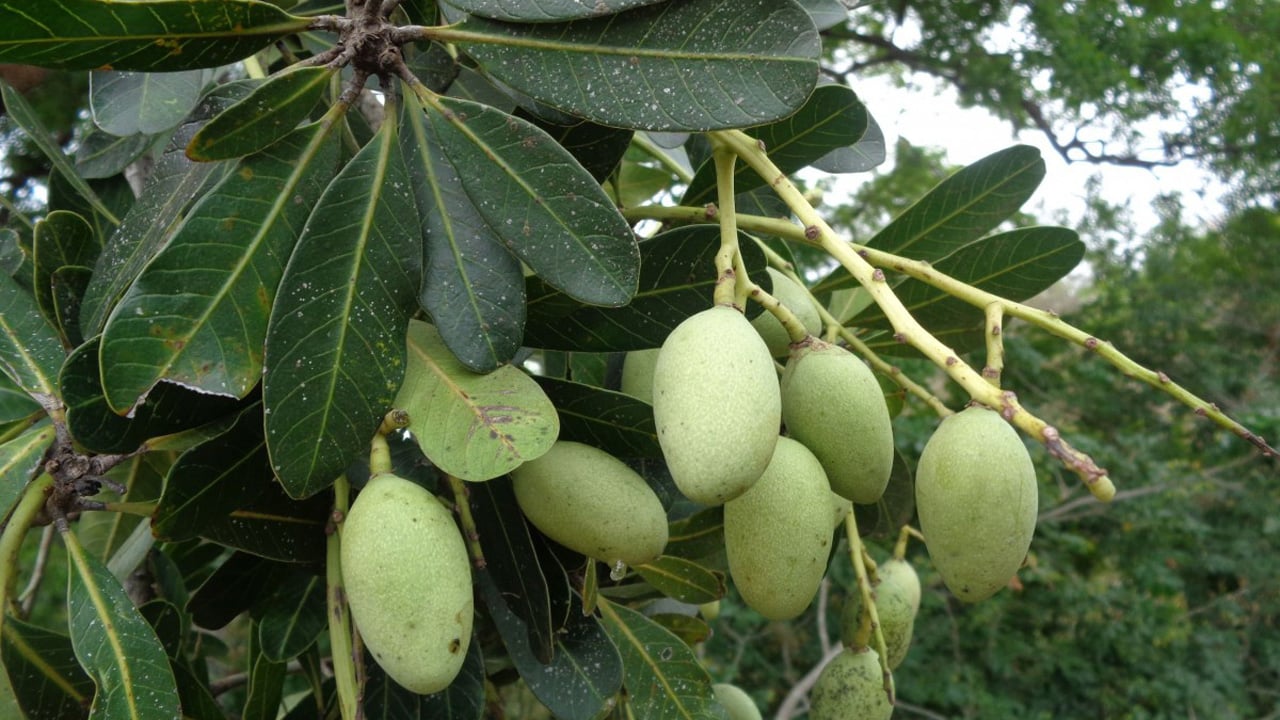


Mangifera zeylanica, commonly known as the Sri Lanka wild mango, is one of the island's most distinctive endemic tree species. First formally described by the British botanist Joseph Dalton Hooker in 1876, this remarkable tree holds the distinction of being the tallest member of the genus Mangifera — and one of the tallest trees in the entire family Anacardiaceae. Found nowhere else on Earth, it occupies a quiet but significant place in Sri Lanka's botanical heritage.
What makes Mangifera zeylanica different from a common mango tree?
Most people are familiar with the cultivated mango, Mangifera indica, which appears on plantations across tropical Asia. Mangifera zeylanica is a different species altogether — wild, uncultivated, and untamed by agriculture. It can reach a height of around 35 metres, dwarfing the orchard varieties most people recognise. The tree is known locally as aetamba or wal amba in Sinhala, and kaddu-ma in Tamil.
Unlike its cultivated relatives, this species is not grown on plantations. The fruits consumed by villagers in Sri Lanka are harvested directly from wild trees — a practice that underscores both the tree's cultural value and the vulnerability of its natural populations.
What do the fruits taste like, and when are they ripe?
The fruits of Mangifera zeylanica are notably smaller than cultivated mangoes, typically growing to around 7 centimetres in length. When immature, they are green and carry little of the flavour associated with the species. As they ripen, the skin transitions from green to a yellow-red hue, and the flesh becomes deliciously juicy and sweet. It is only at full ripeness that the fruit reveals its excellent taste — patience is essential when harvesting or foraging for them.
The soft, fibrous flesh has earned genuine appreciation among communities living near the forests where the trees grow wild. The fruits are not commercially traded at any scale, which makes encountering them a somewhat rare experience even within Sri Lanka itself.
Where does Mangifera zeylanica grow in Sri Lanka?
This species is endemic to Sri Lanka, meaning it occurs naturally nowhere else in the world. Its natural populations are small and scattered, concentrated in lowland and intermediate-zone forests across the island. The Sinharaja Forest Reserve, a UNESCO World Heritage Site and one of Sri Lanka's last remaining patches of primary rainforest, represents the kind of habitat this tree depends upon.
Unfortunately, its forest habitat has come under sustained pressure from logging and land conversion. Natural regeneration is limited, and the species is considered rare. No large-scale planting programmes currently exist to stabilise its wild populations, making conservation-minded forest management critical to its survival.
What are the traditional and economic uses of this tree?
Beyond its edible fruit, Mangifera zeylanica has been valued for its timber, though the wood is notably soft. Historically, it was used to manufacture tea chests and similar lightweight wooden containers — a fitting association given Sri Lanka's deep connection to the tea industry.
The species also features in Sri Lanka's catalogue of Ayurvedic medicinal plants, where various parts of the tree have been used in traditional preparations. Ayurveda in Sri Lanka draws on an extraordinarily rich pool of endemic and native flora, and Mangifera zeylanica is one of many trees that contribute to this living pharmacopoeia.
From a scientific and horticultural perspective, the tree is considered potentially valuable as breeding material. Its genetic traits — including exceptional height, disease resistance adapted to local conditions, and flavour characteristics — make it an interesting candidate for crossing with commercial mango varieties and for use as a rootstock in mango cultivation programmes.
Can Mangifera zeylanica be grown as a cultivated or potted plant?
Despite its imposing stature in the wild, Mangifera zeylanica can be maintained as a container or tub plant when regular pruning keeps its size manageable. Growers report that it prefers temperatures consistently above 10°C, though brief cooler nights are generally tolerated without serious harm. The species requires well-drained soil, regular watering during dry spells, and a position that receives strong, direct sunlight for most of the day.
One notable characteristic is that the tree is self-pollinating, which simplifies cultivation. However, whether a container-grown specimen will fruit reliably remains an open question — the conditions needed to trigger flowering and fruit set in a pot are not yet fully documented. Enthusiast growers in tropical and subtropical climates have experimented with the species, but large-scale horticultural production has not emerged.
What is the conservation status of Mangifera zeylanica?
The species is considered rare and threatened in the wild. Its restricted range — confined entirely to Sri Lanka — and the ongoing degradation of lowland and intermediate forests mean that existing wild populations receive little natural protection beyond what is afforded by forest reserves. Logging of mature specimens removes not only individual trees but also critical seed sources needed for natural regeneration.
Conservation botanists have called for the inclusion of Mangifera zeylanica in ex-situ collections and botanical gardens as a safeguard against local extinction. Greater awareness of its ecological and cultural value is an important first step toward more active protection measures.
How does Mangifera zeylanica fit into Sri Lanka's broader biodiversity?
Sri Lanka's small land area conceals an extraordinary density of endemic species — a product of the island's long geographic isolation and varied climatic zones. Mangifera zeylanica sits alongside other remarkable endemics as a reminder that the island's forests hold biological treasures found nowhere else. Trees such as Pongamia pinnata and Acacia chundra share this landscape, each filling a distinct ecological niche and contributing to the complex web of forest life.
Understanding and protecting species like the Sri Lanka wild mango is inseparable from the broader goal of preserving the island's forest ecosystems — habitats that support wildlife, regulate water catchments, and underpin the rural communities that have lived alongside them for generations.
Other species in this genus
1 more, sharing the same genus.
