Memecylon sylvaticum is a shrub or small tree belonging to the family Melastomataceae, recorded as endemic to Sri Lanka. In Sinhala it is known as Kayam or Yakada maram. No part of the plant is recorded as edible.
What does Memecylon sylvaticum look like?
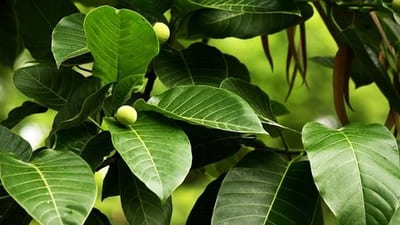
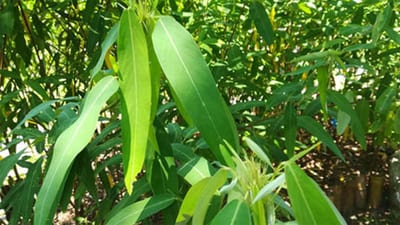
The plant grows as a shrub or small tree with subterete (rounded) young branchlets. Its leaves are elliptic to elliptic-ovate, measuring 5 to 10 cm long and 2 to 5 cm wide. Each leaf narrows at the base into a petiole up to 5 mm long, while the tip is acuminate to shortly caudate, becoming obtuse to rounded right at the very apex.
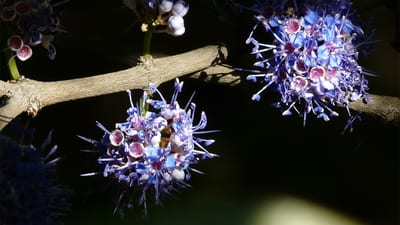
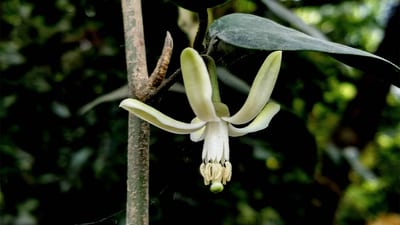
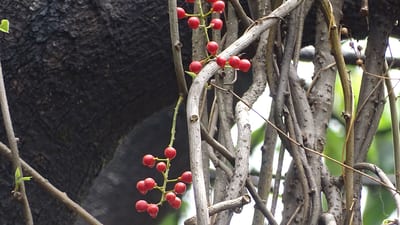
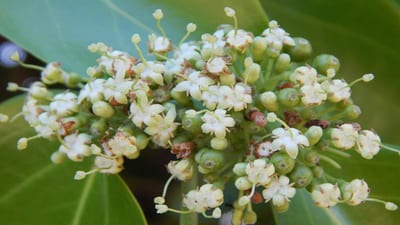
Flowers are blue and arranged in condensed or thyrsoid to umbel-shaped inflorescences, 5 to 12 mm in diameter. These clusters are either sessile or borne on short primary axes up to 4 mm long, appearing in the leaf axils and at nodes on the branches below the leaves. The fruit is globose in shape.
Where does Memecylon sylvaticum grow?
As an endemic species, Memecylon sylvaticum occurs naturally only in Sri Lanka and is not found growing wild anywhere else in the world. Many members of the genus Memecylon and the wider family Melastomataceae across South and Southeast Asia favour forested, humid environments, consistent with this species' life form as a woody shrub or small tree.
What is its conservation status?
The species is classified as endemic to Sri Lanka, meaning its entire natural population is restricted to the island. This status underscores its value within the island's native plant diversity, which includes numerous other endemic trees and shrubs found nowhere else.
What is it called in Sinhala?
The species carries two recorded Sinhala names: Kayam and Yakada maram. These local names are used alongside the scientific binomial Memecylon sylvaticum in botanical and indigenous plant records covering Sri Lanka's nature and native flora.
| Attribute | Recorded detail |
|---|---|
| Scientific name | Memecylon sylvaticum |
| Family | Melastomataceae |
| Sinhala / local name | Kayam / Yakada maram |
| Status in Sri Lanka | Endemic |
| Edible parts | None |
| Life form | Shrub or small tree |
| Branchlets | Subterete |
| Leaves | Elliptic or elliptic-ovate, 5-10 x 2-5 cm, cuneate base, petiole up to 5 mm, acuminate to shortly caudate, apex obtuse to rounded |
| Inflorescence | Condensed or thyrsoid to umbel-shaped, 5-12 mm diameter, sessile or with primary axes up to 4 mm long, in leaf axils and at nodes below leaves |
| Flower colour | Blue |
| Fruit | Globose |
Other species in this genus
6 more, sharing the same genus.