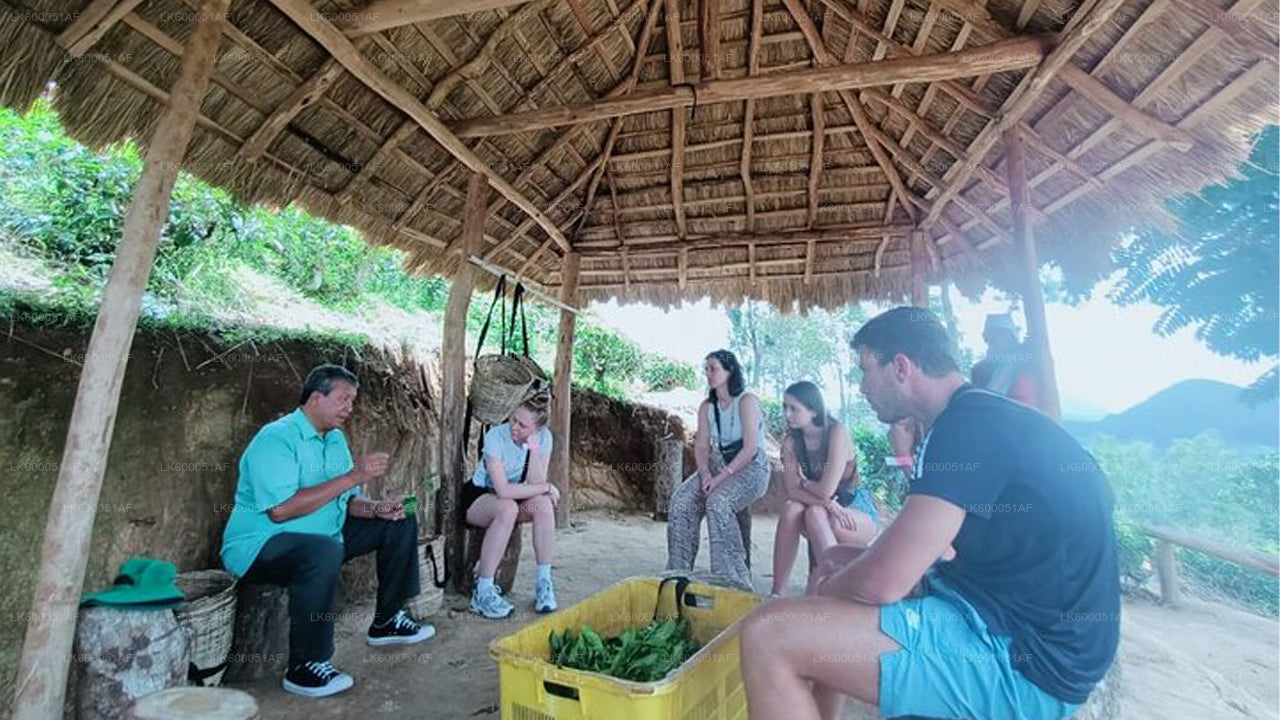
Tucked into the emerald hillsides of Kandy district, Embilmeegama Tea Factory is one of Sri Lanka's quietly enduring tea institutions. Founded in 1940 as a family enterprise, the factory has spent more than eight decades perfecting a single discipline: producing pure, high-quality Ceylon tea from leaves grown in its own surrounding plantations. The house brand, Embillian Tea, is today exported to markets around the world and is recognised for its consistent character — richly aromatic, full-bodied, and unmistakably of the hill country.
What is the history of Embilmeegama Tea Factory?
The factory was established in 1940 by a Sri Lankan family with a clear ambition: to produce factory-fresh Ceylon tea without the long supply chains that dilute quality. Over the following decades the Embillian brand grew steadily, built on the kind of consistency that only comes from direct estate-to-factory control. Unlike many factories that source leaf from independent smallholders alone, Embilmeegama maintains a close relationship between its own land and its processing floor, allowing quality to be managed at every stage.
The factory sits within the broader tea belt of Kandy district — a mid-elevation growing region that yields teas prized for their balance of strength and aroma, distinct from the brisk high-grown teas of Nuwara Eliya or the bold low-grown teas of Ratnapura. Over time, the Embillian range has expanded beyond black tea to include a variety of pure teas, and the business has broadened into complementary Sri Lankan produce including spices, cashew, and coconut products.
How is Ceylon tea processed at Embilmeegama?
The journey from freshly plucked leaf to finished tea follows a sequence that has changed little in its fundamentals since the nineteenth century, though modern equipment now supports each stage.
- Withering: Freshly harvested leaves are spread on long troughs and exposed to moving air for many hours, reducing moisture content and making the leaf pliable for rolling.
- Rolling: The withered leaf is fed through rollers that break cell walls, releasing the natural enzymes and oils responsible for flavour development.
- Fermentation (oxidation): The rolled leaf is spread in a cool, humid environment and allowed to oxidise — turning from green to a coppery brown and developing the characteristic colour and taste of black tea.
- Drying (firing): Hot air is passed through the leaf in dryers, halting oxidation and reducing moisture to a level safe for storage and shipping.
- Sorting and grading: The dried tea passes through a series of sieves and sorters that separate it by leaf size into grades — from whole leaf to broken, fannings, and dust — each suited to a different brewing style or market.
For those curious about how Ceylon green tea is made, the same leaf is processed differently: the oxidation step is skipped entirely, preserving the leaf's natural colour and lighter, more delicate flavour profile.
What can visitors experience at Embilmeegama Tea Factory?
Guided factory tours are the centrepiece of a visitor's time here. Walking the production floor with a knowledgeable guide, guests can follow the leaf through every stage of processing — withering lofts, rolling machinery, dryers, and sorting lines — while the warm, toasty smell of firing tea fills the air. It is a sensory experience that no amount of reading can replicate.
Tours typically conclude with a cupping session, giving visitors the chance to taste freshly produced teas side by side and develop an informed palate. Staff can explain the differences between grades and growing elevations, and the factory shop offers Embillian teas for purchase directly at source — the closest thing to guaranteed freshness.
The surrounding landscape is worth lingering in. The Kandy hill country offers views across terraced tea gardens, and the Kandy city tour pairs naturally with a factory visit, covering the Temple of the Tooth, Peradeniya Botanical Gardens, and the cultural heritage of Sri Lanka's last royal capital.
What other products does Embilmeegama produce?
While Ceylon tea remains the core of the business, the factory has diversified into a portfolio of authentic Sri Lankan produce. Visitors and online buyers can find spices — including pepper, cinnamon, and cloves — alongside cashew products and a range of coconut-derived goods. This expansion reflects both consumer demand for curated Sri Lankan pantry staples and the factory's ambition to represent the full range of what the island's smallholder agriculture produces.
Sri Lanka's spice heritage is as deep as its tea tradition. Ceylon black pepper, for example, has been traded from this island for centuries, and purchasing it alongside estate tea makes for a genuinely meaningful souvenir.
How does the factory contribute to the local community?
Tea factories are engines of rural employment in Sri Lanka's hill country. Embilmeegama provides livelihoods for pluckers, factory workers, sorters, and logistics staff — roles that have supported families in the surrounding villages for generations. The continuity of a single family's ownership over more than eighty years has created a relatively stable employment environment, which is not always the case in an industry sensitive to global commodity price swings.
Beyond direct employment, the factory contributes to Sri Lanka's export earnings. Ceylon tea remains one of the country's largest foreign exchange earners, and factories like Embilmeegama — producing branded, traceable tea rather than anonymous commodity grades — add margin and reputational value to the national industry.
When is the best time to visit Embilmeegama Tea Factory?
The factory operates year-round, and tea processing can be observed on most working days. The Kandy district receives two monsoon seasons — the southwest monsoon from around May to August, and the northeast monsoon from October to January — but neither shuts down factory operations. If your priority is seeing the full production line in action, mid-week visits during daylight hours tend to offer the most active floor.
The hill country is at its most scenic between January and April, when clear skies follow the retreating northeast monsoon and the tea gardens are a deep, saturated green. The Esala Perahera Festival in Kandy, held annually in July or August, is a compelling reason to time a broader visit to the region during that period, though accommodation books up quickly.
How do I get to Embilmeegama Tea Factory from Colombo?
Embilmeegama is located in the Kandy district, making it reachable from Colombo in roughly two to three hours by road depending on traffic and route. The most comfortable option is a private car or taxi, which allows stops at viewpoints along the way. The scenic train journey from Colombo Fort to Kandy is a worthwhile alternative if you are not on a tight schedule, with a short onward road transfer to the factory.
For travellers combining the visit with a broader hill country itinerary — taking in Horton Plains National Park or the tea country around Ella — a private driver provides the most flexibility across mountain roads that can be narrow and winding.
Nearby places
13 places within about 25 km, nearest first.
- Katugastota Railway Stationunder 1 km
- Mahaiyawa Railway Stationunder 1 km
- Medawala Raja maha viharayaunder 1 km
- polgolla reservoir airport1 km
- Asgiriya Chapter2 km
- Asgiri Viharaya - Adahana Maluwa Gedige Viharaya2 km
- Asgiriya Maha Viharaya2 km
- Bahirawakanda Vihara Buddha Statue2 km
- Katugastota City3 km
- Madawala City4 km
- Kandy Falcons (B-Love Kandy)4 km
- Pallekele International Cricket Stadium (Kandy)4 km
- Jambugahapitiya City5 km
Related reading
9 pages on closely related subjects.