Sri Lanka produces some of the world's most celebrated black teas, and the orthodox manufacturing method sits at the heart of that reputation. Around 95% of all Ceylon tea is made this way — a process that preserves the leaf's natural complexity and yields the bright, brisk liquor that buyers around the world seek. Understanding how orthodox tea is made, and what distinguishes it from other methods, helps you choose better and appreciate each cup more fully.
What does "orthodox" mean in tea production?
The term orthodox refers to a traditional, multi-step manufacturing process in which the tea leaf is handled gently enough to remain largely intact throughout. This contrasts with the CTC (Cut-Tear-Curl) method, which shreds the leaf into uniform granules suited for tea bags. Orthodox processing is slower and more labour-intensive, but it allows the full range of flavour compounds — floral, fruity, malty, spicy — to develop in the finished tea.
Ceylon orthodox tea is almost exclusively black tea, though the same gentle approach is applied to a smaller volume of Ceylon green tea as well. For an overview of Sri Lanka's wider tea culture and history, the Ceylon Tea page provides useful context.
How is Ceylon orthodox black tea manufactured?
The Sri Lanka Tea Board's Tea Promotion Division describes the process in six main stages. Each stage is carefully controlled to achieve consistent quality.
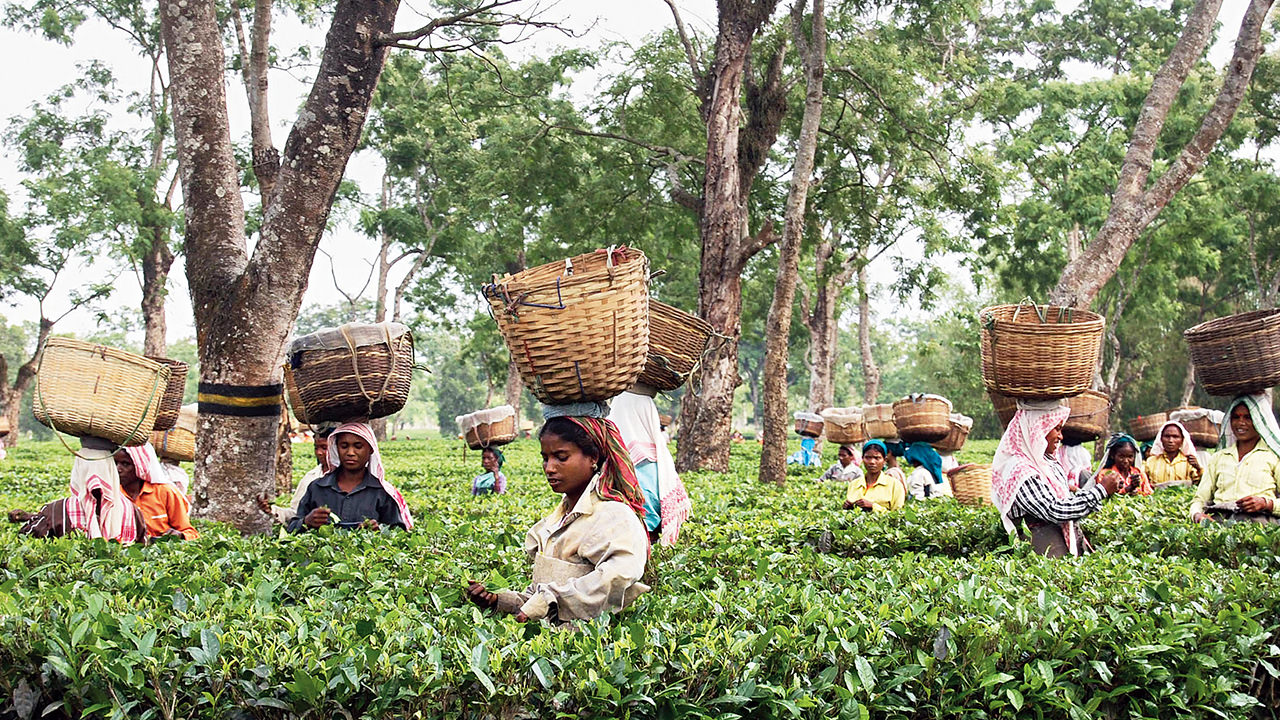
- Plucking. Only the top two leaves and a bud are harvested by hand. This selective plucking is the foundation of quality; coarser leaves picked lower on the bush produce inferior tea.
- Withering. Freshly plucked leaf is spread on long wire-mesh troughs and exposed to moving air for 12–18 hours. This reduces the leaf's moisture content from around 75–80% down to roughly 55–65%, making it pliable enough to roll without shattering.
- Rolling. Withered leaf is fed into cylindrical rolling machines that apply gentle pressure, twisting the leaf and breaking down cell walls. This releases the leaf's essential oils and enzymes, initiating the chemical reactions that create flavour and aroma.
- Roll-breaking and sifting. Rolled leaf passes through rotary sieves that separate it by particle size. Coarser particles return to the rollers for additional treatment; finer particles — which will become the smaller orthodox grades — move forward to fermentation.
- Fermentation (oxidation). Sifted leaf is spread in a cool, humid room and left to oxidise. During this stage the leaf turns from green to coppery-brown as polyphenols react with oxygen. Timing — typically 45 minutes to three hours depending on the grade and ambient conditions — is critical: under-fermented tea tastes raw and grassy, while over-fermented tea loses brightness and becomes flat.
- Firing (drying). Oxidised leaf passes through a conveyor dryer at high heat, arresting fermentation and reducing moisture to around 3%. The result is a stable, shelf-ready black tea that retains its character for months when stored correctly.
What are the main orthodox tea grades?
After firing, the dried tea is sorted again by size and appearance into internationally recognised grades. Grade names can appear cryptic, but they follow a consistent logic.
| Grade | Full name | Typical character |
|---|---|---|
| OP | Orange Pekoe | Long, wiry leaf; light, delicate liquor |
| Pekoe | Pekoe | Shorter, bolder leaf; medium body |
| BOP | Broken Orange Pekoe | Broken leaf; stronger, quicker brew |
| FBOP | Flowery Broken Orange Pekoe | Broken leaf with golden tips; aromatic |
| BOP1 | Broken Orange Pekoe One | Uniform broken leaf; bright, full cup |
| BOPF | Broken Orange Pekoe Fannings | Fine particles; very quick infusion, strong liquor |
| PF1 | Pekoe Fannings One | Fine fannings; deep colour, assertive flavour |
Whole-leaf grades (OP and Pekoe) generally yield a more nuanced cup and command higher prices at auction. Broken grades brew faster and stronger — qualities valued in blending and in markets that drink tea with milk.
How does growing elevation affect orthodox Ceylon tea?
Sri Lanka's tea-growing regions are typically divided into three elevation bands, each producing a distinct style.
- High-grown (above 1,200 m). Estates in Nuwara Eliya, Dimbula, and Uva produce teas with delicate fragrance, light copper liquor, and a clean, brisk finish. Cooler temperatures slow leaf growth, concentrating flavour compounds.
- Mid-grown (600–1,200 m). Regions such as Kandy and Dimbula's lower reaches yield teas with fuller body and a pleasant astringency — well suited to blending.
- Low-grown (below 600 m). Estates in Ruhuna and Sabaragamuwa produce a bold, deeply coloured liquor with earthy, chocolatey notes. These teas are robust and hold up well to milk.
The terrain around Ella and the Uva highlands is among the most celebrated high-grown areas, where the seasonal Uva winds strip humidity from the leaves and create an unmistakable flavour known as the "Uva character."
What is a single-estate orthodox tea?
Most commercially sold Ceylon tea is a blend drawn from multiple estates. Single-estate tea, by contrast, comes from one named plantation and reflects the specific soil, microclimate, and harvesting practices of that property. Tasting a single-estate tea is the clearest way to experience what orthodox manufacturing can achieve at its finest — no blending masks the terroir.
Estates such as Lover's Leap in Nuwara Eliya, Aislaby in Rathnapura district, and Halpewatte in the mid-country have each built reputations for producing consistently high-scoring lots at the Colombo Tea Auction, one of the world's major tea trading centres.
Where can I visit a working tea estate in Sri Lanka?
Most of the country's highland estates welcome visitors. A typical factory tour shows withering troughs, rolling machines, and dryers in operation — most estates process leaf in the afternoon, so visiting between 13:00 and 16:00 generally offers the best chance of seeing the full production line running.
The hill-country town of Nuwara Eliya is the natural base for estate visits, and the surrounding area includes some of Sri Lanka's best-known high-grown gardens. The Bluefield Tea Gardens outside Hatton offer guided factory tours combined with a tea-tasting session overlooking the plantations. The Horton Plains National Park is within easy reach of the same region, making a combined nature and tea itinerary straightforward to arrange.
How should orthodox Ceylon black tea be brewed?
The leaf grade determines the ideal brewing approach. Whole-leaf grades such as OP reward a slightly longer steep — around three to four minutes in water just off the boil (around 90–95 °C). Broken grades like BOP and BOPF release their strength quickly; two to three minutes is usually sufficient. Use freshly drawn water and warm the pot or cup beforehand. Adding milk, if desired, is a matter of personal preference rather than a rule — many whole-leaf orthodox teas are best appreciated without it, so they can be judged on their own character.
Related reading
6 pages on closely related subjects.