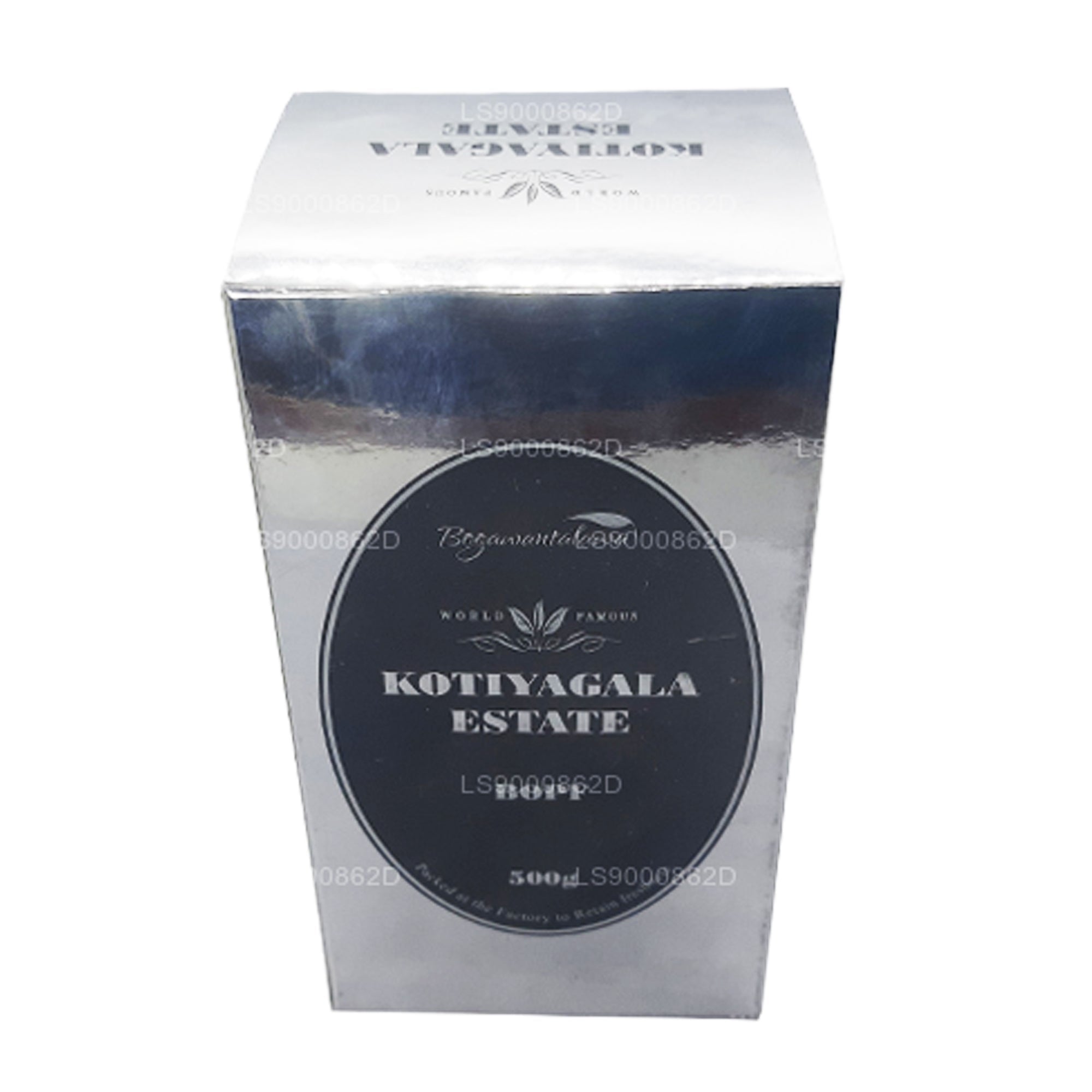
Kotiyagala Estate sits at elevation in the Bogawantalawa Valley, one of Sri Lanka's most respected tea-growing regions in the central highlands. Here, cool temperatures, consistent cloud cover, and well-drained hillside soils create growing conditions that have made Ceylon tea famous across the world. The estate operates as a fully working plantation and welcomes visitors who want to move beyond simply drinking tea and understand how it is actually made.
What makes Kotiyagala Estate worth visiting?
Most visitors to Sri Lanka's hill country arrive at a large, tourist-oriented factory. Kotiyagala offers something closer to an authentic working environment. The estate produces BOPF-grade black tea — Broken Orange Pekoe Fannings — a fine-cut grade prized for its strong, quick-infusing brew. Walking through the fields at picking time, you can watch experienced pluckers work with practiced speed, selecting the two leaves and a bud that define quality Ceylon tea.
The surrounding landscape rewards anyone willing to spend a quiet morning here. Rolling green rows of Camellia sinensis extend across the hillsides, broken by shade trees and patches of mist that drift through in the early hours. The Bogawantalawa Valley sits adjacent to highland areas that include Horton Plains National Park, so the broader scenery is genuinely impressive without any embellishment.
How does the tea-making process work at Kotiyagala?
After plucking, freshly harvested leaves are brought to the factory for processing. The Orthodox and CTC (Cut, Tear, Curl) methods are both used across Sri Lanka's highland estates, and a visit to the factory floor gives a clear picture of why tea grade names — OP, PEKOE, BOP, BOPF — refer to the physical size and cut of the processed leaf rather than its quality rank alone.
The main stages — withering, rolling, fermentation (oxidation), firing, and sorting — happen in sequence and usually within a single day of picking. The fired tea is then graded by passing it through a series of sieves. Kotiyagala's BOPF output is a fine, uniform grade that brews a rich, amber cup with brisk flavour, characteristics associated with high-grown Bogawantalawa teas.
What is the Bogawantalawa Valley known for in tea production?
The Bogawantalawa Valley, sometimes called the Golden Valley of Tea, is one of the highest tea-growing areas in Sri Lanka. Elevations above roughly 1,200 metres produce slow-growing leaves with concentrated flavour compounds. The region's teas are typically lighter in body than low-grown varieties but carry a refined aroma and bright liquor that commands a premium at the Colombo Tea Auction. Kotiyagala Estate is one of several well-regarded estates operating within this valley, contributing to a collective reputation for consistent quality.
How does Kotiyagala Estate approach sustainability and community?
Responsible estate management in Sri Lanka's tea sector now extends well beyond the field. Kotiyagala's operations support employment for workers from surrounding villages, many of whom are part of estate communities with generational ties to the land. Social initiatives — covering education, healthcare access, and housing — form part of the broader estate structure, following a model common among ethical plantation operators in the region.
On the agricultural side, sustainable practices include careful management of soil health, water use, and agrochemical inputs. For visitors interested in Ceylon green tea and other specialty grades produced under responsible conditions, understanding how an individual estate operates offers meaningful context to a product most people encounter only as a supermarket box.
When is the best time to visit Kotiyagala Estate?
The central highlands experience two distinct monsoon seasons. The southwestern monsoon (roughly May to August) brings heavy rain to this side of the island, which can affect road conditions and reduce visibility across the valley. The inter-monsoon periods — particularly January to April and September to November — generally offer more settled weather for a plantation visit.
That said, the mist and low cloud that sweep through the estate in early mornings are part of what makes a visit atmospheric. Many tea lovers find that arriving at dawn, before the factory warms up and the pickers disperse, gives the most complete picture of how the estate functions on a working day.
How do I get to Kotiyagala Estate from Colombo or Ella?
The Bogawantalawa Valley is typically approached via Hatton or Dickoya, accessible from Colombo along the A7 highway through Kandy, or from Ella along highland roads through Haputale and Norwood. Road distances from Colombo are around 170–180 km, but mountain driving means journey times are longer than the distance suggests. A private driver familiar with the hill-country roads is the most practical option. The scenic train route from Colombo or Kandy to Hatton remains one of the most enjoyable approaches, putting visitors within a short vehicle transfer of the valley.
What should I bring and expect on a visit?
- Wear comfortable, closed shoes — plantation paths between rows can be uneven and damp.
- Bring a light waterproof layer; temperatures at elevation are noticeably cooler than coastal Sri Lanka.
- Early morning visits (before 9 a.m.) offer the best chance to observe active plucking.
- Factory tours typically take 45–90 minutes, depending on which processes are running that day.
- Photography of the landscape and factory is generally welcomed, though it is courteous to ask before photographing estate workers.
Can I buy Kotiyagala Estate tea directly?
Estate teas sold at source are often fresher than stock that has passed through multiple distribution stages. Kotiyagala's BOPF grade is available for purchase, and buying directly from or through the estate gives you a direct connection between the cup in your hand and the specific hillside where the leaves were grown. For those interested in comparing high-grown Ceylon estates, the Bogawantalawa region is a logical starting point for any serious exploration of Sri Lanka's tea geography.
Nearby places
9 places within about 25 km, nearest first.
- Bogawantalawa Tea Estate5 km
- Norwood5 km
- Thondaman Stadium7 km
- Peaks8 km
- Saptha Kanya Mountain Range8 km
- Pettiagalla Estate9 km
- Somerset Estate9 km
- Dimbula Tea10 km
- Dethanagala mountain11 km
Related reading
6 pages on closely related subjects.