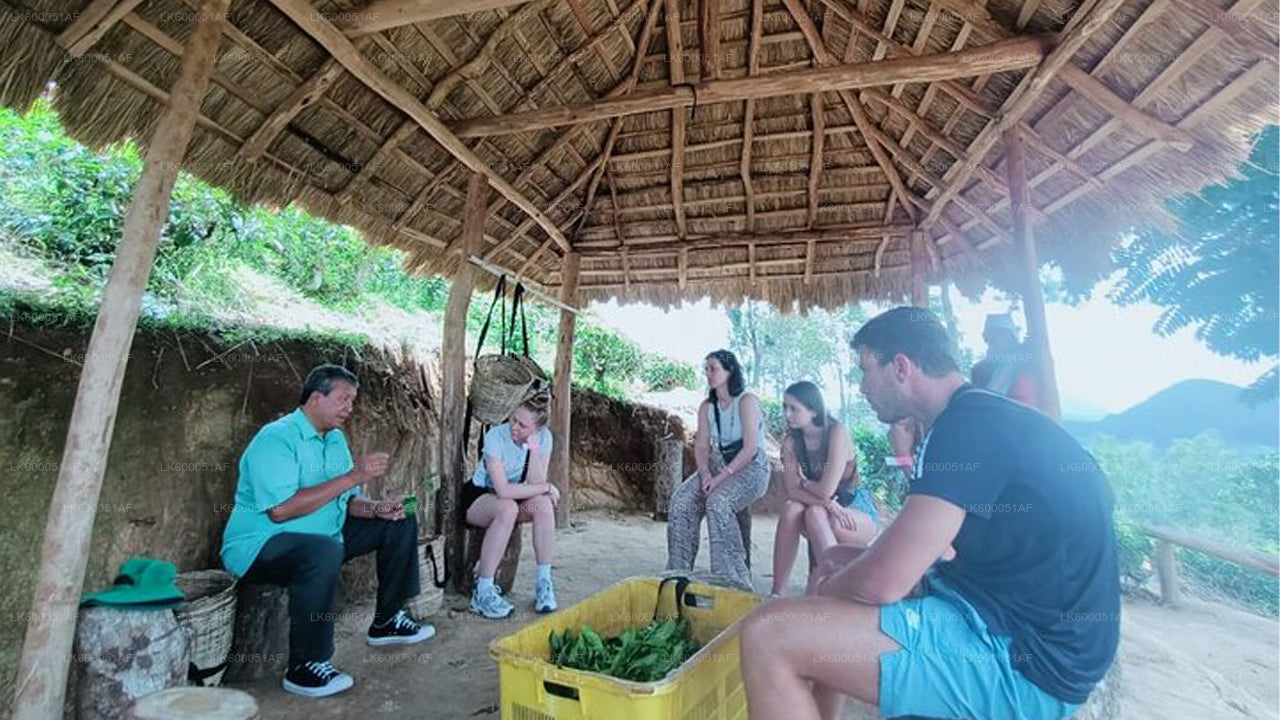
Tucked into the rolling hills of Morawaka in Sri Lanka's Southern Province, Kalubowitiyana Tea Factory is one of the island's most significant government-owned tea processing facilities. Operated by Kalubowitiyana Tea Factory Limited (KTFL), it specialises in low-grown Cut, Tear, and Curl (CTC) tea — a bold, full-bodied style that forms the backbone of countless everyday brews across Asia, the Middle East, and beyond. A visit here offers a window into the industrial scale and agricultural heritage behind Sri Lanka's most famous export.
What is the history of Kalubowitiyana Tea Factory?
KTFL was incorporated on 30 September 1992 under Sri Lanka's Ministry of Plantation Industries, making it one of the younger players in a tea industry that stretches back to the 1860s. The flagship Kalubowitiyana factory commenced commercial operations on 1 August 1994, when its first CTC processing line was inaugurated. From that starting point, the company has grown steadily, adding factories and expanding its reach across multiple tea-growing elevations.
The broader context is Sri Lanka's post-1992 smallholder economy. When the state restructured plantation management, thousands of independent smallholders needed reliable buyers and processors. KTFL positioned itself as that link — a state enterprise accountable both for quality output and for rural livelihoods. Today the company supports over 4,000 tea smallholders and provides direct employment to more than 350 people, with an estimated 10,000 individuals depending on its supply chain in some way.
What are the four KTFL factories and what do they produce?
KTFL operates four distinct factories, each matched to the agro-climatic conditions of its location and to a specific style of tea:
- Kalubowitiyana Tea Factory (Morawaka): The flagship plant. It produces low-grown CTC tea — grades such as PF1 (Pekoe Fannings 1) — which are prized for their strong colour, brisk flavour, and suitability for tea-bag blending. In July 2022, the factory's PF1 grade achieved a record auction price at the Colombo Tea Auctions, reflecting growing global demand for traceable single-estate teas from this region.
- Derangala Tea Factory (Derangala, Morawaka): After being rebuilt under KTFL management, Derangala switched to orthodox processing and began production in March 2000. Orthodox teas retain the leaf's natural oils and complexity, appealing to specialty and loose-leaf markets in Europe and Japan.
- Hiniduma Hills Tea Factory (Nattampitiya): Situated in the Galle District's hilly interior, Hiniduma Hills contributes low-grown teas with the characteristic richness associated with the Wet Zone foothills.
- Manikdiwela Tea Factory (Kandy): The company's only mid-country facility produces medium-grown teas — a style noted for a balance between the body of low-grown and the brightness of high-grown Ceylon tea.
Together, these four operations allow KTFL to offer buyers a portfolio that spans CTC and orthodox manufacture, low and medium elevations, and multiple grades — a versatility rare among government-owned tea companies.
What makes low-grown CTC tea from Morawaka distinctive?
Sri Lanka's tea-growing zones are classified by elevation: low-grown (below roughly 600 m), mid-country (600–1,200 m), and high-grown (above 1,200 m). Morawaka sits in the foothills of the Rakwana range in the Southern Province, receiving heavy rainfall from both monsoons. Those conditions — high humidity, warm temperatures, and fertile laterite soils — produce a leaf with naturally high colour yield and a robust, malty flavour profile.
The CTC method (Cut, Tear, Curl) was designed to maximise infusion speed and colour extraction, making it ideal for milk teas and tea bags. KTFL's low-grown CTC grades are in demand in markets such as the Middle East, Russia, and South and Southeast Asia, where a deep red liquor and bold taste are preferred. Understanding this geography is key to appreciating why the Kalubowitiyana factory is positioned where it is.
For a broader overview of how Sri Lanka's tea industry developed and how different growing zones compare, the Ceylon Tea guide covers the full picture.
How does KTFL compare to private-sector tea factories in Sri Lanka?
Most of Sri Lanka's roughly 700 registered tea factories are privately owned. KTFL is notable as a state-managed enterprise that was deliberately created to serve smallholder farmers who lacked access to large corporate processors. Where private factories are primarily accountable to shareholders, KTFL balances commercial performance with a rural development mandate.
In financial terms, the company has demonstrated that the two objectives are not incompatible. In the first quarter of 2022, KTFL reported revenue of approximately Rs. 583 million and a net profit of around Rs. 222 million — strong results by any measure in the Sri Lankan tea sector. The record auction prices achieved by the Kalubowitiyana PF1 grade in the same year underscored that government ownership need not mean lower quality.
Can visitors tour the Kalubowitiyana Tea Factory?
The Kalubowitiyana factory is a working industrial facility rather than a purpose-built visitor attraction, so access is typically by prior arrangement rather than walk-in. That said, the surrounding Morawaka area is genuinely scenic — the drive through tea and rubber smallholdings south of Deniyaya passes close to the buffer zone of the Sinharaja Forest Reserve, making a factory visit a natural addition to a rainforest itinerary in the Southern Province.
Visitors with a serious interest in orthodox tea processing may also want to combine a trip to Kalubowitiyana with a tour of the Derangala factory, which sits nearby and offers a contrasting look at traditional whole-leaf manufacture. The two facilities together illustrate how different methods applied to the same regional leaf produce very different results in the cup.
What should I know before visiting this part of Sri Lanka?
Morawaka is located roughly 50–60 km inland from Matara, the nearest large town on the southern coast. The roads through the hill country are winding and often narrow, so allow more travel time than map distances suggest. A private driver who knows the southern hill country is strongly recommended over self-drive for first-time visitors.
The area sits within Sri Lanka's wet zone: rain can arrive at any time of year, though the inter-monsoon periods (roughly March–April and October–November) can be particularly heavy. Light waterproof clothing and sturdy footwear are sensible if you plan to walk through smallholder gardens adjacent to the factory.
| Detail | Information |
|---|---|
| Factory location | Kalubowitiyana, Morawaka, Southern Province |
| Tea type produced | Low-grown CTC (flagship); orthodox at Derangala |
| Nearest major town | Matara (approx. 50–60 km south) |
| Nearest international airport | Bandaranaike International Airport, Colombo (approx. 3.5–4 hrs by road) |
| Visitor access | By prior arrangement; not a walk-in attraction |
| Smallholders supported | Over 4,000 |
How does the Kalubowitiyana estate tea compare with other Ceylon single estates?
Single-estate Ceylon teas have grown significantly in prestige since the early 2000s, as specialty buyers and home consumers have sought transparent sourcing and terroir-driven flavour. Kalubowitiyana's PF1 grade — a small-particle fannings grade suited to single-cup brewing and specialty tea bags — has attracted attention at the Colombo auctions for its consistently deep liquor and clean, brisk taste. This positions it alongside better-known low-grown estates from the Galle and Matara districts.
If you are interested in comparing single-estate profiles, Lakpura's own estate teas include offerings from several named Sri Lankan factories, giving you a side-by-side tasting baseline before you decide which estate to visit in person.
Nearby places
10 places within about 25 km, nearest first.
- Neluwa City5 km
- Thawalama Ambalama6 km
- Handapan Ella Falls8 km
- Homadola Estate10 km
- Patna Sliding Rock12 km
- Gal Oruwa Ella Falls12 km
- Pathan Oya Ella12 km
- Kekuna Ella12 km
- Brahakmana Ella13 km
- Devitura Estate13 km
Related reading
12 pages on closely related subjects.