Diospyros quaesita is a tree in the ebony family, Ebenaceae, known in Sinhala as Kalumediriya (කළුමැදිරිය). It is endemic to Sri Lanka, meaning it grows naturally nowhere else in the world.
What does Diospyros quaesita look like?
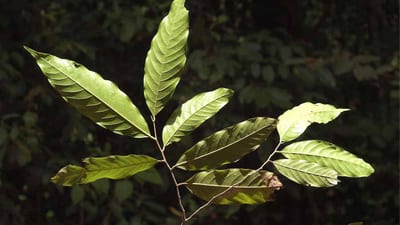
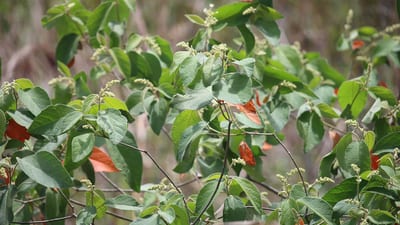
Kalumediriya is a deciduous tree reaching up to 35 m in height and 60 cm in diameter, with buttresses rising as high as 2 m at the base of the trunk. The bark is black and very rough, a trait typical of several ebony species in the genus Diospyros. Leaves are arranged alternately along the branches, hairless (glabrous), and elliptic-oblong to oblong-lanceolate in shape, tapering to a short, blunt point with an acute base. Both leaf surfaces show a finely raised network of veins, though the upper surface can appear smooth.
How does it flower?
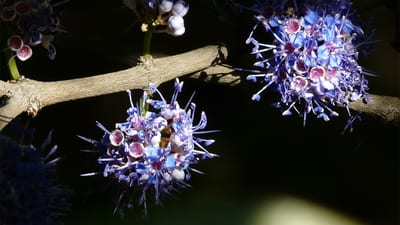
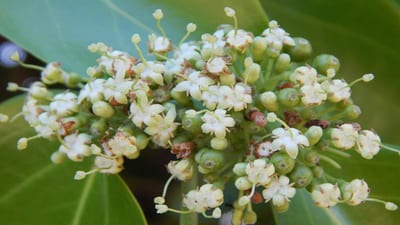
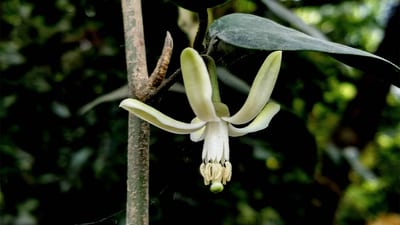
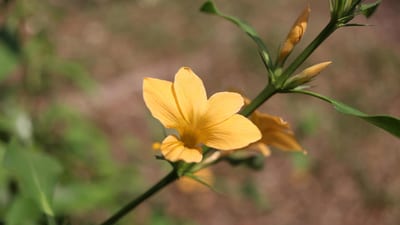
The species is dioecious in habit, producing separate male and female flowers. Male flowers form in raceme-like clusters of small branching (dichasial) cymes along short-lived side shoots, with a green calyx and yellow corolla. Female flowers appear singly, with a corolla that ranges from yellowish-white to white.
Where does Diospyros quaesita grow in Sri Lanka?
As an endemic species, Diospyros quaesita is found only within Sri Lanka, forming part of the island's broader native flora.
What is its conservation status?
Under the National Conservation Status list of Sri Lanka (2012), Kalumediriya is assessed as Endangered at the national level and Vulnerable in global conservation terms. These designations reflect pressure on the species' remaining populations and underline its value as part of Sri Lanka's native nature and tree cover.
What is it called in Sinhala, and can it be eaten?
The tree is known locally as Kalumediriya (කළුමැදිරිය). No edible parts are recorded for this species.
| Attribute | Detail |
|---|---|
| Scientific name | Diospyros quaesita |
| Family | Ebenaceae |
| Sinhala name | Kalumediriya (කළුමැදිරිය) |
| Status in Sri Lanka | Endemic |
| National conservation status (NCS, 2012) | Endangered |
| Global conservation status (2012) | Vulnerable |
| Edible parts | None |
| Habit | Deciduous tree, up to 35 m high, 60 cm diameter, buttresses to 2 m |
| Bark | Black, very rough |
| Leaves | Alternate, glabrous, elliptic-oblong to oblong-lanceolate |
| Male flowers | Raceme-like dichasial cymes, green calyx, yellow corolla |
| Female flowers | Solitary, corolla yellowish-white to white |
Other species in this genus
12 more, sharing the same genus.