Calophyllum calaba is a tree in the family Clusiaceae, recorded as endemic to Sri Lanka, meaning it occurs naturally nowhere else in the world. It is listed as of Least Concern in Sri Lanka's National Conservation Status list (2012), and its fruit is recorded as a wild edible.
What does Calophyllum calaba look like?
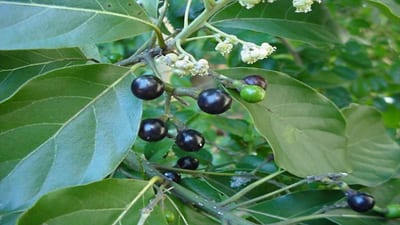
Calophyllum calaba grows as a tree reaching up to 10 metres in height. Its leaves are initially thin and papery (chartaceous) when young, maturing into a stiff, leathery (coriaceous) texture. The leaf shape ranges from elliptic to ovate or obovate-elliptic, with sizes roughly between 2 x 3 cm and 6 x 8 cm, or up to 5 x 9 cm. Leaf tips are rounded or bluntly and obscurely tapered, sometimes notched, while the base narrows abruptly into a short wedge shape.
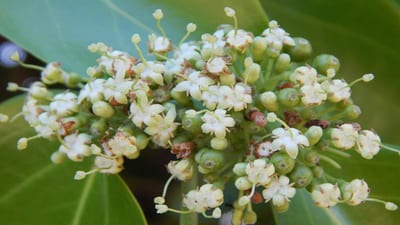
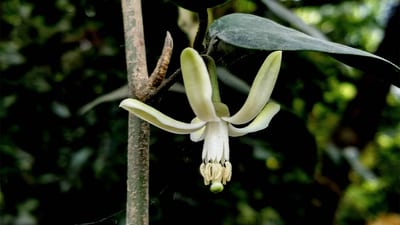
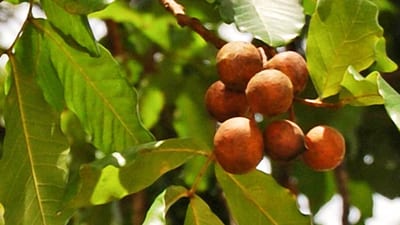
Flowers are borne in racemes arising from the axils of the upper leaves, with each raceme carrying three to six flowers. The fruit hangs downward (pendulous) from the branches. Inside, the seeds are ovoid to ellipsoid in shape, with a thin, pale brown seed coat (testa).
Where does Calophyllum calaba grow?
As an endemic species, Calophyllum calaba is native exclusively to Sri Lanka. Many trees in the Clusiaceae family are associated with warm, humid tropical conditions, consistent with this species' island distribution.
What is its conservation status?
Calophyllum calaba is classified as Least Concerned under Sri Lanka's National Conservation Status list of 2012. This designation indicates the species is not currently considered at elevated risk of extinction within the country.
Can you eat Calophyllum calaba?
The fruit of Calophyllum calaba is recorded as a wild edible part of the plant. No other parts are noted as food sources.
Recorded facts
| Attribute | Detail |
|---|---|
| Scientific name | Calophyllum calaba |
| Family | Clusiaceae |
| Status in Sri Lanka | Endemic |
| Conservation status | Least Concerned (NCS 2012) |
| Edible parts | Fruit (wild fruit) |
| Growth form | Tree, up to 10 m high |
| Leaf shape | Elliptic to ovate or obovate-elliptic, 2 x 3 - 6 x 8 cm (up to 5 x 9 cm) |
| Inflorescence | Axillary racemes, 3-6 flowered |
| Fruit | Pendulous |
| Seeds | Ovoid to ellipsoid, testa thin and pale brown |
Other species in this genus
3 more, sharing the same genus.