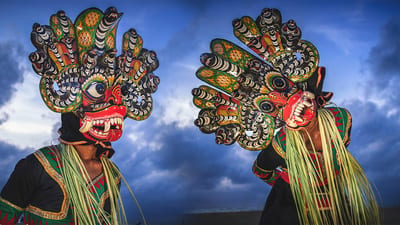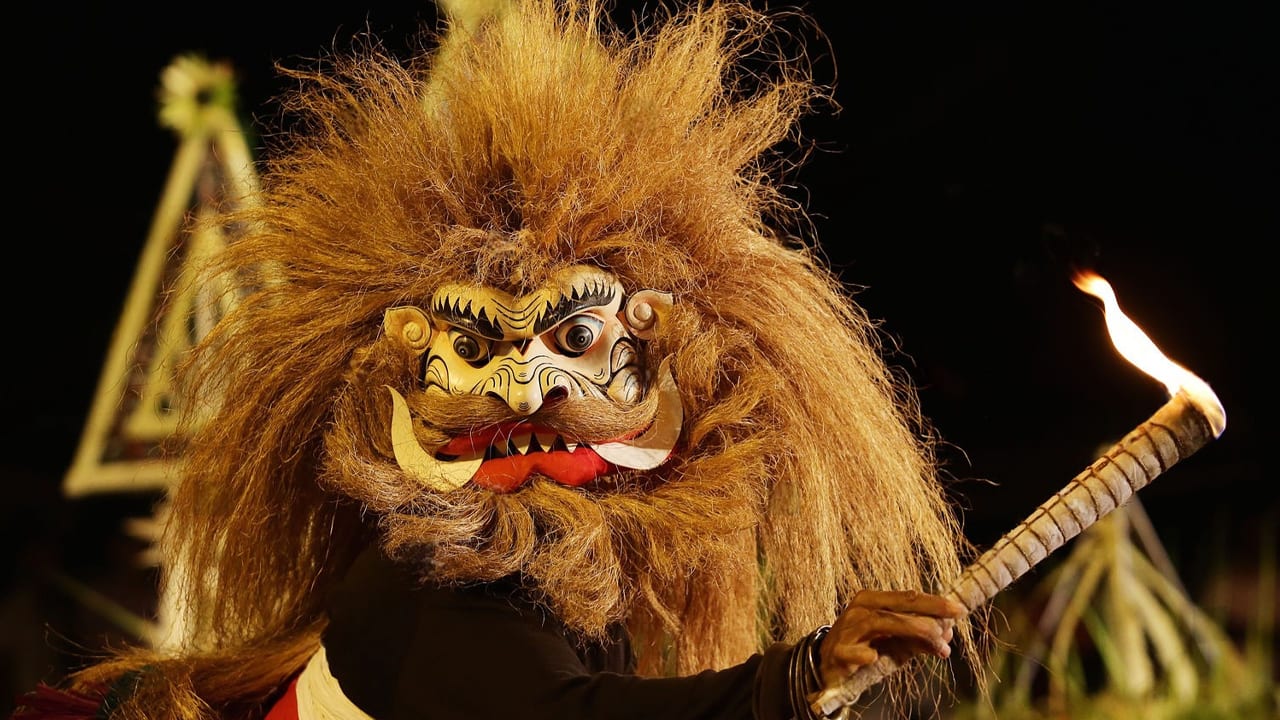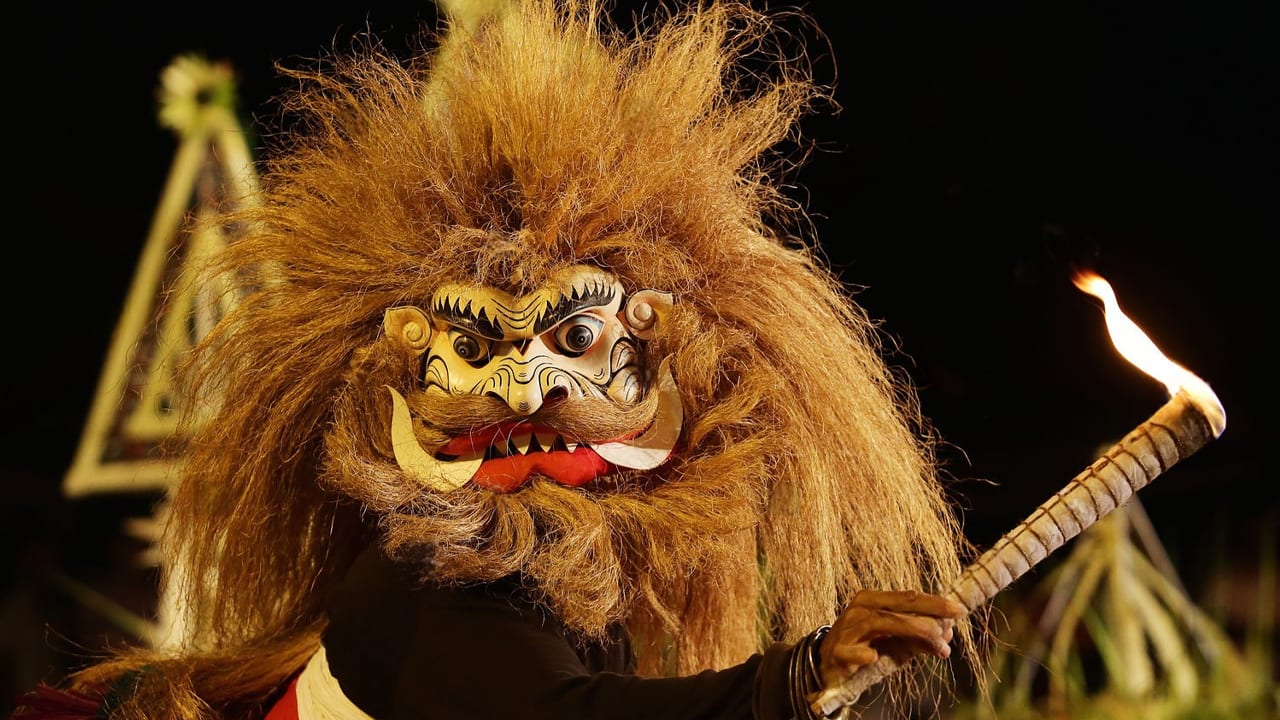


referred to as the ‘Maha Sohon Samayama’ and the ‘Gara Yakuma’. The mention of ‘Maha Sohona’ frightens the people since he is believed to be the demon of the graveyards. The performer disguises himself as a bear and wears a mask and a dress to resemble one. Often the ‘thovil’ involves the ‘sanni’ dances where all the dancers wear masks. The ‘daha ata sanniya’ refers to sixteen ailments with a demon being responsible for each one of them. Dancers wearing masks take part in processions while at certain ceremonies, masks are used to depict different characters. Of later origin are the masks worn by children and teenagers at street performances during Vesak. Popularly known as ‘olu bakko’ for the simple reason that oversize masks are worn, these performances keep the younger-folk, in particular, entertained.
The simple version of the devil dance ritual usually starts in the morning with the building of the stage, decorations and preparation of the costumes. The performers build an intricate stage before which the dancing commences. The stage consists of a wall made of freshly cut natural materials such as coconut palm tree and banana tree trunks. Depending on the region and the available materials the stage may also be coated with clay mud. The dances are accompanied by drummers which also herald the begin of the ritual. The distinctive sound ensures all neighbors turn up to take part. The full ritual usually lasts until the morning, with the dancers consuming betel-nut juice and drinking coke to stay awake. Dances can however also go on for multiple days.
関連記事
関連するテーマのページ3件。