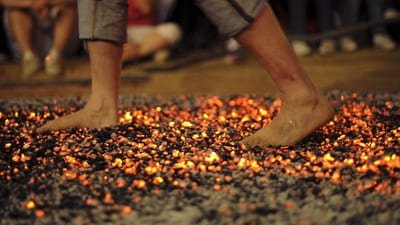


The devil dance is one of Sri Lanka's oldest and most complex ritual traditions, rooted in the island's pre-Buddhist folk religion. Known broadly as thovil, these ceremonies are performed to appease malevolent spirits, cure illness, and restore harmony between a patient and the supernatural world. Far from simple entertainment, each ritual follows a structured choreography passed down through generations of hereditary performers.
What is the devil dance and where does it come from?
The term "devil dance" is a loose English translation for a category of Sinhalese exorcism rituals collectively called thovil. These ceremonies draw on a cosmology in which specific demons (yakku) are held responsible for misfortune and disease. A trained officiant — the adura — mediates between the human and spirit worlds through dance, chant, drumming, and elaborate costuming.
The rituals are most commonly performed in the low-country coastal belt of Sri Lanka, though related traditions exist across the island. They represent a living synthesis of ancient Indic demonology, local folk belief, and performance art that has evolved over many centuries.
What are the main types of devil dance ceremonies?
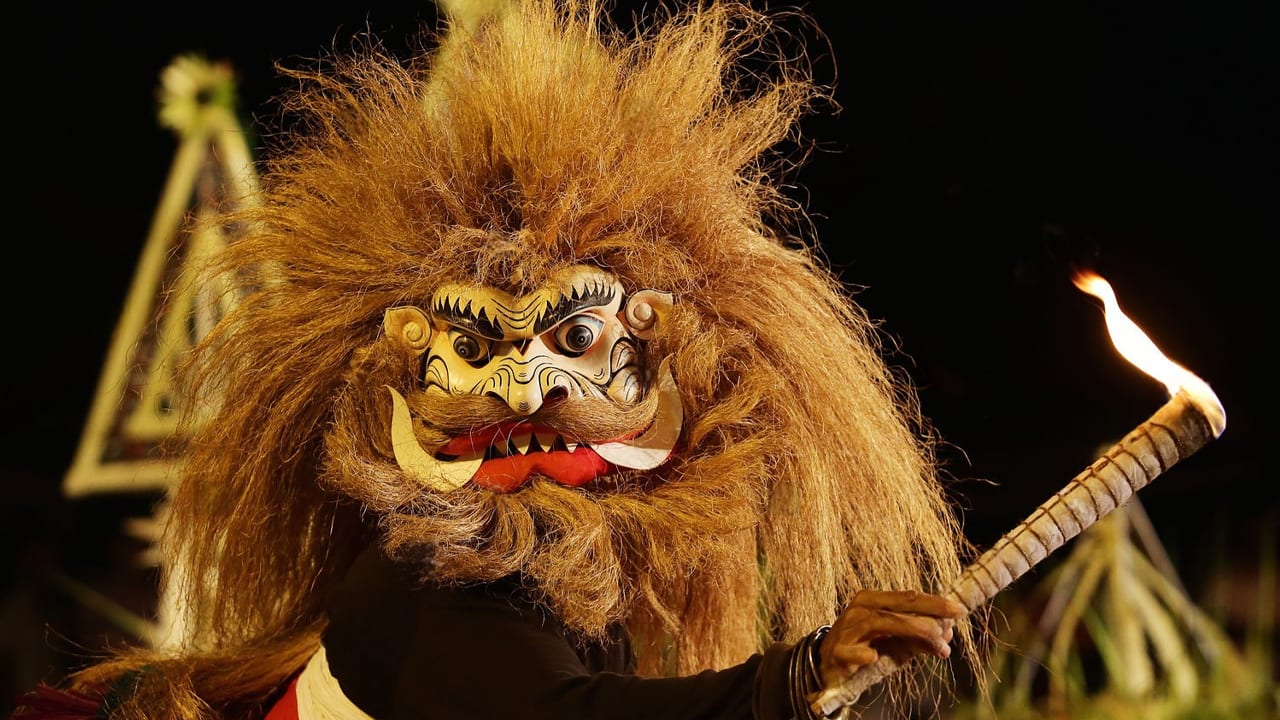
Two of the most significant rituals are the Maha Sohon Samayama and the Gara Yakuma. Maha Sohona — literally the Great Cemetery Demon — is among the most feared figures in Sinhalese folk religion. The performer who embodies this demon wears a bear-like mask and costume, enacting the demon's identity to draw its power and ultimately pacify it.
The Gara Yakuma is typically performed to protect a woman during or after childbirth from the influence of malign spirits. Each major ceremony has its own sequence of rituals, offerings, and dance sequences that can stretch through an entire night.
What is the Daha Ata Sanniya?
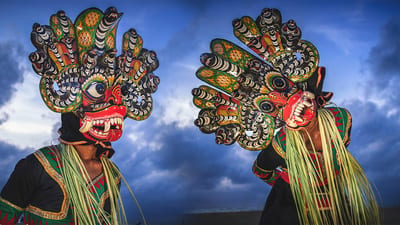
Among the most visually spectacular thovil rituals is the Daha Ata Sanniya — a ceremony addressing eighteen (sometimes catalogued as sixteen) distinct ailments, each attributed to a specific demon. Dancers wear a different carved and painted mask for each demon, performing in sequence to diagnose and ritually expel the cause of illness from the patient.
The masks used in Daha Ata Sanniya are considered significant works of traditional craft in their own right. Carved from the light wood of the kaduru tree, they are painted in vivid natural colours and represent some of the most recognisable icons of Sri Lankan folk art. Museums and private collectors worldwide hold examples of these masks, though the finest still appear in live ceremonial use.
How is a devil dance ritual structured?
A typical ceremony begins well before nightfall. The first task is constructing the ritual stage (pidenna), an elaborate temporary structure built from freshly cut natural materials — coconut palm fronds, banana tree trunks, and areca palm. In some regions the structure is partially coated with clay. The stage serves as a focal point where offerings are placed and to which the invoked spirit is symbolically drawn.
- Preparation: Construction of the stage and preparation of offerings, costumes, and masks, typically beginning in the morning.
- Opening drumming: The ceremony is announced to the neighbourhood by the distinctive rhythms of the yak bera (devil drum), calling community members to gather.
- Invocations: The adura recites lengthy chants in an archaic form of Sinhala, naming and inviting each relevant deity or demon.
- Dance sequences: Masked performers enact the identities of demons and protective deities in a prescribed order.
- Resolution: The officiant negotiates, on behalf of the patient, the withdrawal of the harmful spirit — often sealed with offerings of food, flowers, and areca nut.
Full ceremonies traditionally run through the night and into the following morning. Performers sustain themselves with betel nut and other stimulants to maintain the required intensity across many hours. More elaborate multi-day rituals are conducted for serious illness or significant communal occasions.
What role do masks play in Sri Lankan devil dances?
Masks are central to the ritual logic of thovil. By wearing a mask, the performer does not merely represent a demon — within the ceremony's framework, he temporarily becomes the vehicle through which that spirit acts. Different ceremonies call for different masks, and the carving traditions associated with them have developed into a distinct regional art form.
Beyond ceremonial use, mask traditions have extended into community life. During Vesak celebrations, children and teenagers wear oversized comic masks in street processions — a tradition known as olu bakko (literally "big heads"). These performances draw on the same visual vocabulary as the ritual masks but serve a purely festive purpose, keeping younger audiences entertained through the festival nights.
Where can visitors witness a devil dance in Sri Lanka?
Authentic thovil ceremonies are private events, conducted at the request of a family for a specific purpose. They are not staged for tourists, and attending one requires either a personal connection to the hosting family or an introduction through a knowledgeable local guide.
That said, cultural centres in Ambalangoda — the coastal town most associated with the mask-carving tradition — offer demonstrations and maintain working workshops where visitors can observe mask production. The Ariyapala Mask Museum in Ambalangoda holds an extensive collection of ceremonial and dance masks and is worth a dedicated visit for anyone interested in this tradition. The Southern and Western provinces remain the heartland of the low-country devil dance tradition.
How does the devil dance differ from Kandyan dance?
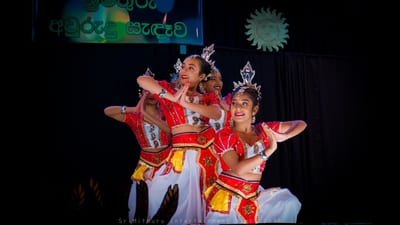
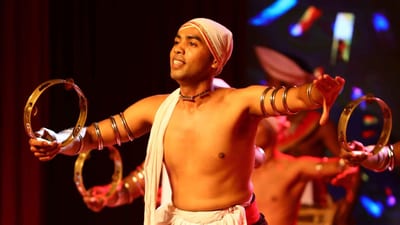
The two traditions are distinct in origin, purpose, and style. Kandyan dance (Udarata Natum) developed in the central hill country as a court and temple art form, with a formal aesthetic tied to the Kandyan kingdom. Low-country thovil, by contrast, is a ritual healing tradition rooted in folk religion rather than courtly patronage.
Where Kandyan dance emphasises precise footwork, geometric body lines, and acrobatic sequences performed on a stage, thovil prioritises the transformation of the performer into a spiritual intermediary. The costuming, drumming rhythms, and choreographic logic of the two traditions reflect these very different functions.
Is the devil dance tradition still active today?
Yes, though the number of full-night thovil ceremonies has declined over recent decades as urbanisation and changing religious practices have reduced demand. Families that once commissioned elaborate multi-night ceremonies now more frequently hold shorter, simplified versions. Nevertheless, hereditary lineages of adura continue to practise in coastal communities, and there are active efforts within Sri Lanka to document and preserve the ritual knowledge associated with these ceremonies.
The tradition holds living significance for many Sri Lankan families, particularly in the Southern, Western, and Sabaragamuwa provinces, where it remains a meaningful response to illness, misfortune, and communal need — not a relic of the past but a continuing practice.
Related reading
3 pages on closely related subjects.