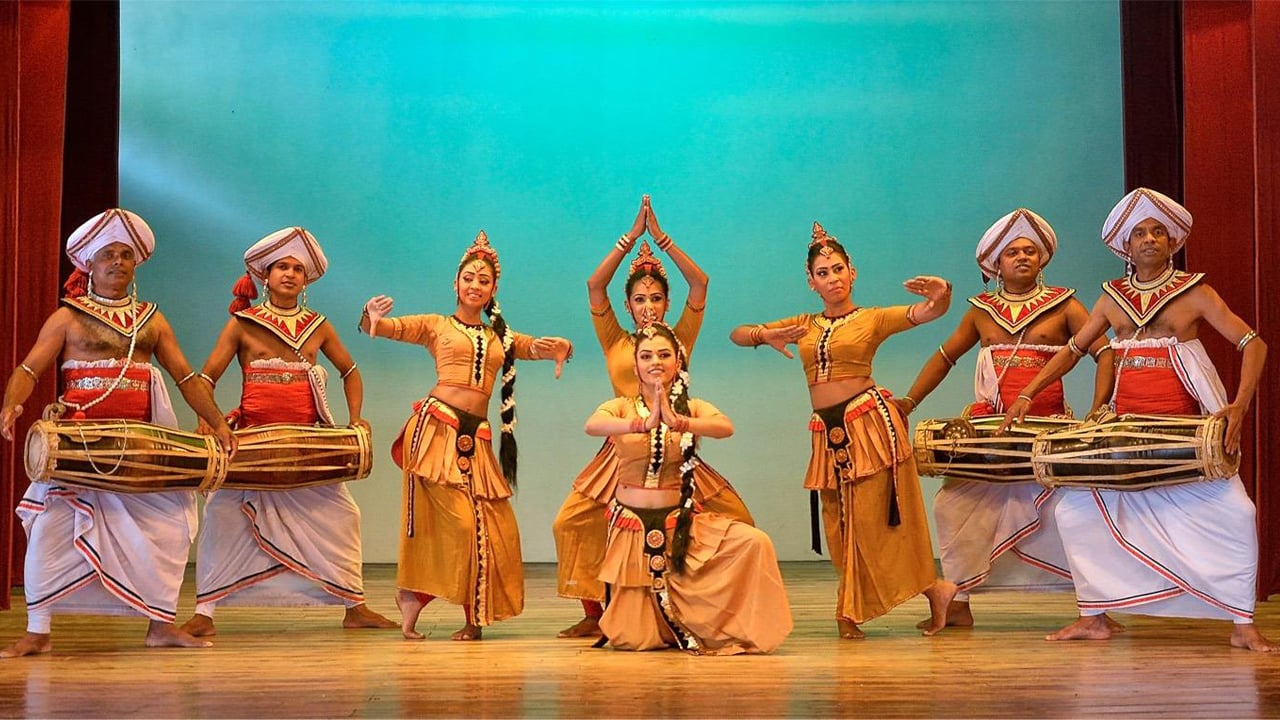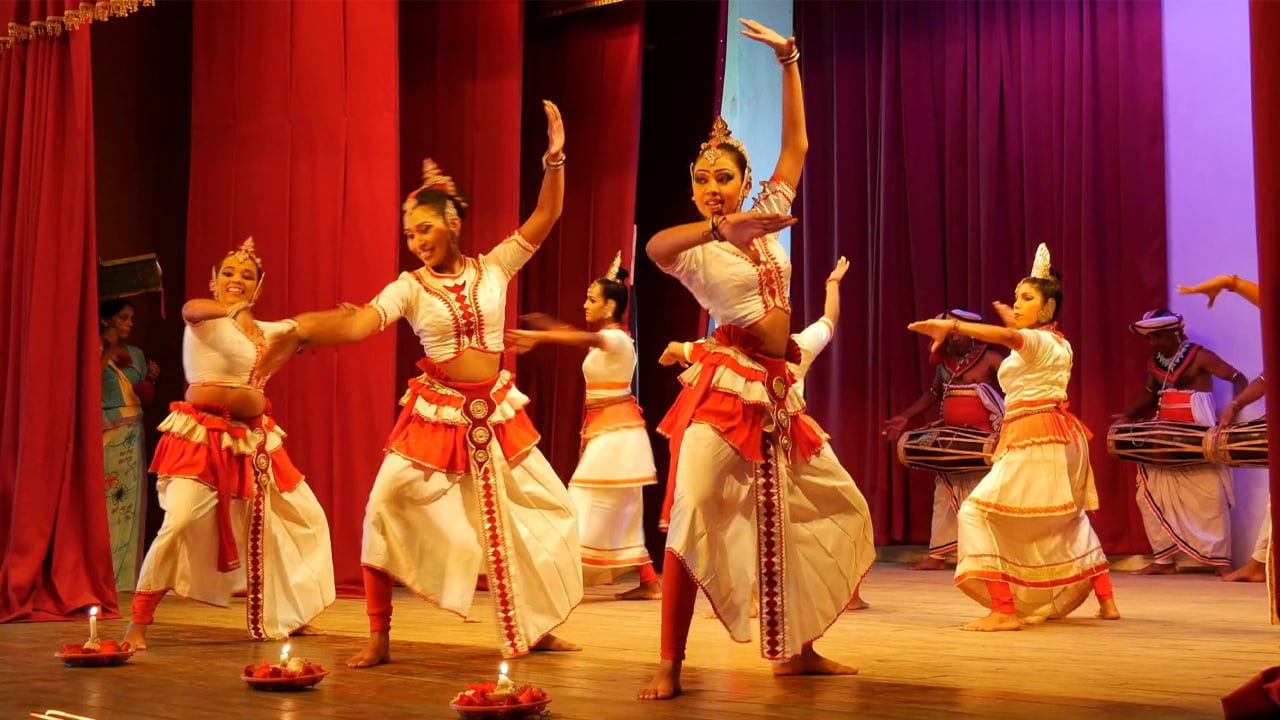
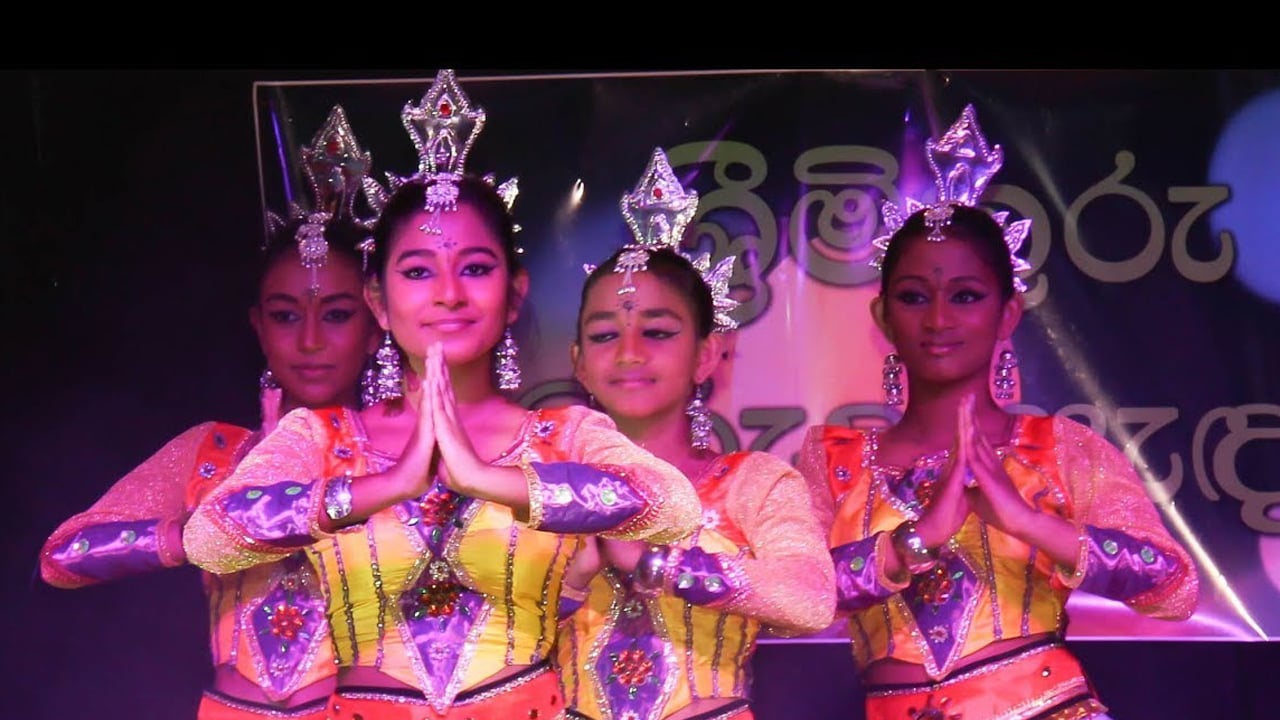
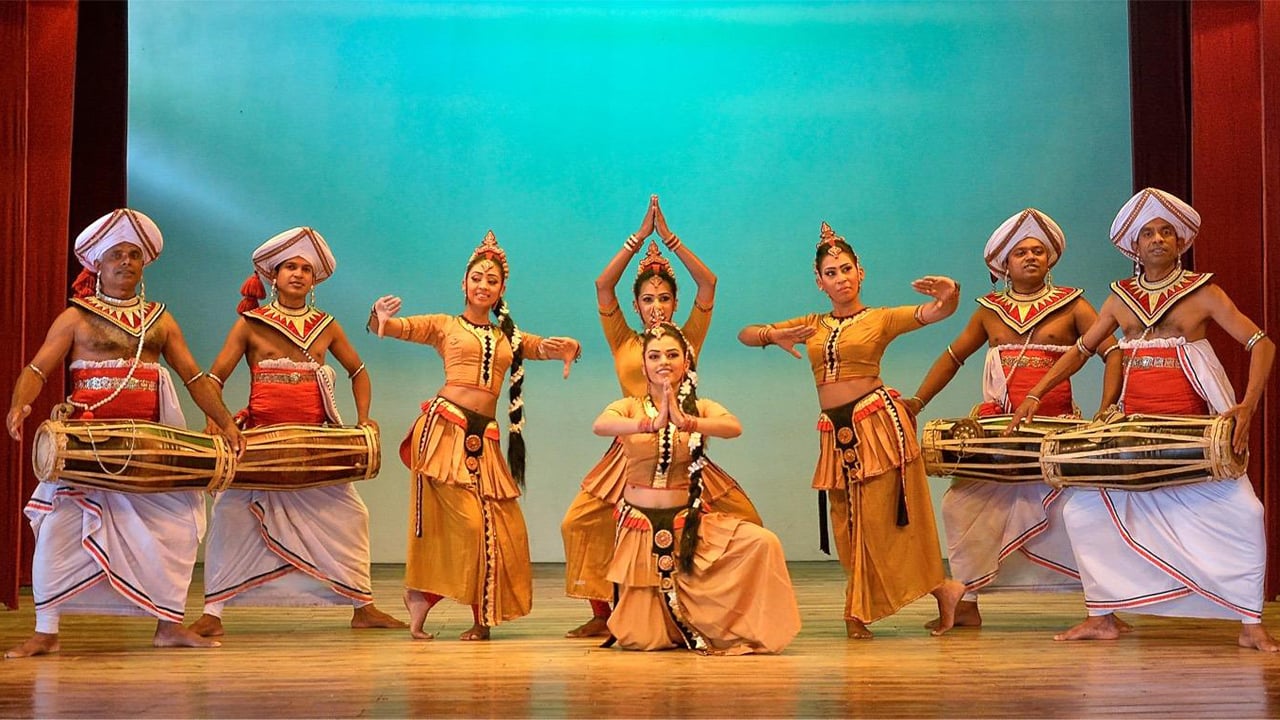

Puja Natuma is one of Sri Lanka's most enduring devotional dance traditions, performed as a formal offering to the deities venerated at Buddhist and Hindu temples. Unlike theatrical dance forms designed primarily for entertainment, every element of Puja Natuma — the hand gestures, the footwork, the costume — carries spiritual intent. Witnessing a performance gives visitors a rare, unmedited view of how art and faith interweave in everyday Sri Lankan life.
What is the origin and meaning of Puja Natuma?
The word puja translates broadly as "offering" or "act of reverence", and natuma means "dance" in Sinhala. Together they describe a ritual in which movement itself becomes the offering. The tradition is rooted in the Kandyan court culture that flourished under the last Sinhala kings, where trained dancers presented choreographed homage at royal temples on behalf of the sovereign and the people.
Over centuries the practice spread from royal patronage to community temple life. Today it is most closely associated with the Kandy region, although regional variants appear across the island, each shaped by local deity traditions and the preferences of individual temples. The Esala Perahera Festival in Kandy remains the grandest public occasion on which related devotional dance forms are displayed, drawing thousands of observers each year.
What are the key features of a Puja Natuma performance?
A Puja Natuma performance is structured and deliberate rather than improvisational. Several characteristics define it across different regional contexts:
- Symbolic gestures (mudras): Hand positions communicate specific meanings — salutation, supplication, the invoking of blessings — drawn from a shared vocabulary understood by both performers and the attending priests.
- Footwork: Steps follow rhythmic patterns tied directly to the accompanying drum sequences. The dancer does not move freely; the drum dictates pace and emphasis.
- Eye movement: Practitioners of classical Kandyan dance train for years on controlled eye movement, considered as expressive as any gesture of the hands or feet.
- Spatial orientation: Performers typically face the shrine or the sacred image being honoured, reinforcing that the audience for the dance is the deity, not the congregation watching.
What costumes and adornments do Puja Natuma dancers wear?
The costume is an inseparable part of the ritual's visual language. Male performers generally wear an ornate headdress (udiyan), a structured chest plate (badagirikava), bangles, anklets, and layered white or gold-trimmed skirts. Female performers wear a comparably elaborate set of garments with greater emphasis on floral and silver ornamentation.
Every piece of jewellery serves a purpose beyond decoration: some items are considered protective, others are understood to be pleasing to particular deities. The overall effect — bright, layered, precisely arranged — is designed to signal that the performer has entered a consecrated state, distinct from ordinary life.
What instruments accompany Puja Natuma?
Classical Sri Lankan percussion is central to the form. The geta beraya, a double-headed drum associated with the Kandyan tradition, provides the primary rhythmic foundation. The tammattama, a pair of small kettledrums, adds a higher-pitched counterpoint. The horanawa, a conical oboe-like instrument, carries the melodic line and signals transitions between dance sequences.
The musicians are not accompanists in a passive sense. In temple contexts they are themselves participants in the ritual, and their playing is subject to the same codes of conduct as the dancers. Specific drum compositions (tala) are reserved for particular deities or phases of the ceremony and cannot be used interchangeably.
When and where can you see Puja Natuma in Sri Lanka?
Opportunities to observe authentic Puja Natuma arise primarily around major Buddhist and Hindu festival calendars rather than on fixed weekly schedules. The following contexts offer the most reliable access:
- Temple peraheras: Procession festivals attached to major temples, particularly in and around Kandy, typically include devotional dance segments. The Esala Perahera season (July–August) is the peak period.
- Aluth Sahal Mangalyaya: The new-harvest ceremony conducted at certain inland temples, where dance offerings form part of the thanksgiving rites.
- Devale festivals: Shrines (devale) dedicated to deities such as Kataragama, Vishnu, and Pattini hold periodic festivals throughout the year at which Puja Natuma may be performed.
- Cultural centres in Kandy: Several institutions in the city offer nightly performances of Kandyan classical dance that include Puja Natuma sequences. These are adapted for visitor audiences but use trained classical performers and authentic costumes.
Visitors planning to see the dance in a genuine temple setting should approach respectfully, dress modestly, and follow the guidance of temple staff regarding photography and positioning.
How does Puja Natuma differ from other Kandyan dance forms?
Kandyan dance encompasses several distinct forms, and it is useful to understand where Puja Natuma sits within that broader family.
| Dance Form | Primary Context | Main Purpose |
|---|---|---|
| Puja Natuma | Temple ceremonies, deity festivals | Devotional offering to deities |
| Ves Natuma | Formal stage or perahera | High-art classical performance; considered the pinnacle of Kandyan dance |
| Naiyandi Natuma | Processional contexts | Opening or ceremonial dance in peraheras |
| Pantheru Natuma | Festive occasions | Energetic group dance using small cymbals |
| Udekki Natuma | Ceremonies and festivals | Dance featuring the small hourglass drum (udekki) |
Puja Natuma is distinguished by its explicitly ritual function. A performance of Ves Natuma might take place on a concert stage with no sacred context; a Puja Natuma is almost always tied to an active act of worship.
What is the cultural significance of Puja Natuma for Sri Lanka today?
Sri Lanka's performing arts landscape has changed considerably over the past century, with many rural ritual forms falling into decline as urbanisation and television reshaped community life. Puja Natuma has survived more robustly than some comparable traditions, partly because it is embedded in temple practice that itself remains strong, and partly because the Kandyan arts have received sustained institutional support through national schools of dance and arts faculties at Sri Lankan universities.
For visitors, Puja Natuma offers something that generalised "cultural show" performances cannot always replicate: the sense that what you are watching genuinely matters to the people performing it. The Dhamma School system, which operates alongside many Buddhist temples, sometimes introduces young students to the basics of devotional ritual including movement and offering-making, ensuring that knowledge of these forms passes to younger generations.
Understanding Puja Natuma enriches any temple visit in Sri Lanka. Even when a full performance is not underway, the iconography, the spatial logic of shrines, and the conduct of worshippers become more legible once you know the devotional vocabulary that dance has helped preserve.