

Devol Natuma is one of Sri Lanka's most distinctive ritual dance forms — a performance rooted not in entertainment alone, but in a community's living relationship with the sea. Practised primarily along the southern coastal belt, where fishing has shaped daily life for centuries, the dance is dedicated to Devol Deviyo, a deity believed to govern water, weather, and the fortunes of those who depend on both.
Who is Devol Deviyo, and why is this dance performed?
Devol Deviyo holds a prominent place in the folk-religious tradition of Sri Lanka's southern coast. According to legend, he arrived on the island by sea and was accorded divine status after demonstrating power over storms and ocean currents. Fishing communities, whose livelihoods depend on safe passage and generous catches, have long sought his protection through offerings and ritual performance.
Devol Natuma is the choreographic expression of that devotion. It is performed to invoke the deity's presence, to seek blessings before the fishing season begins, and to give thanks after a prosperous year. It also appears at the launching of a new fishing vessel — an occasion considered inauspicious without the proper rituals to accompany it.
What does the dance look like?
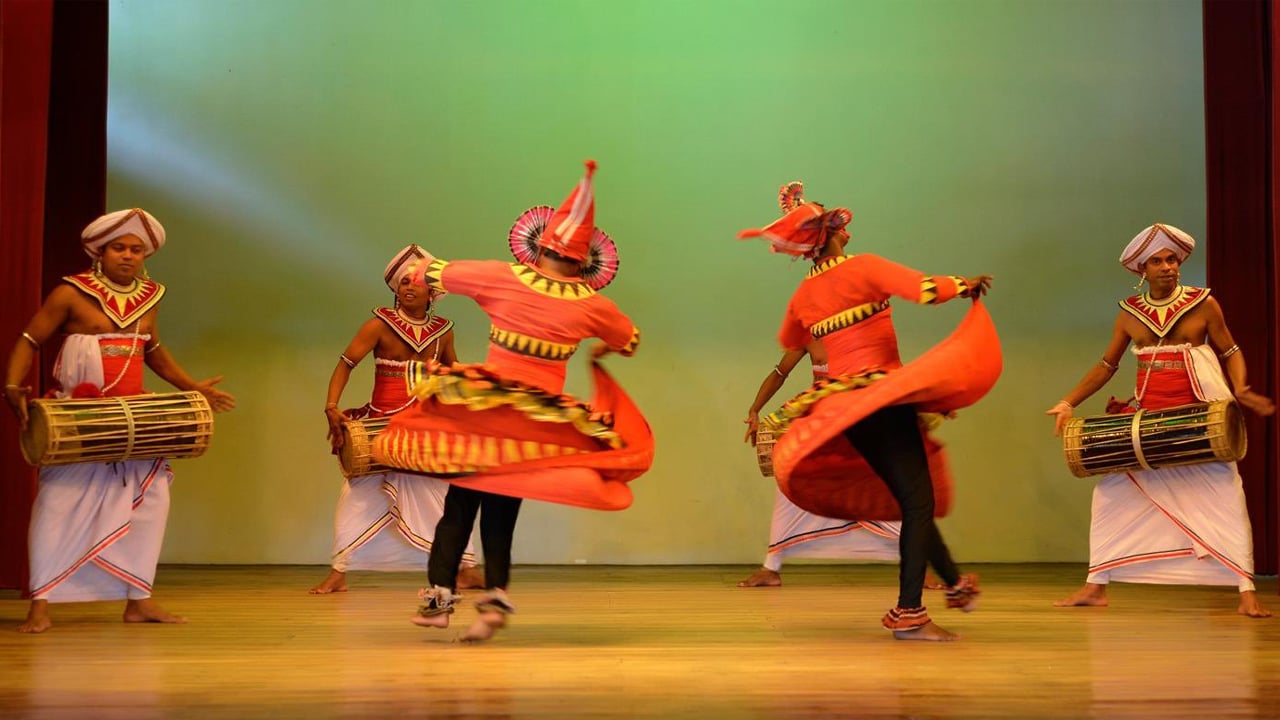
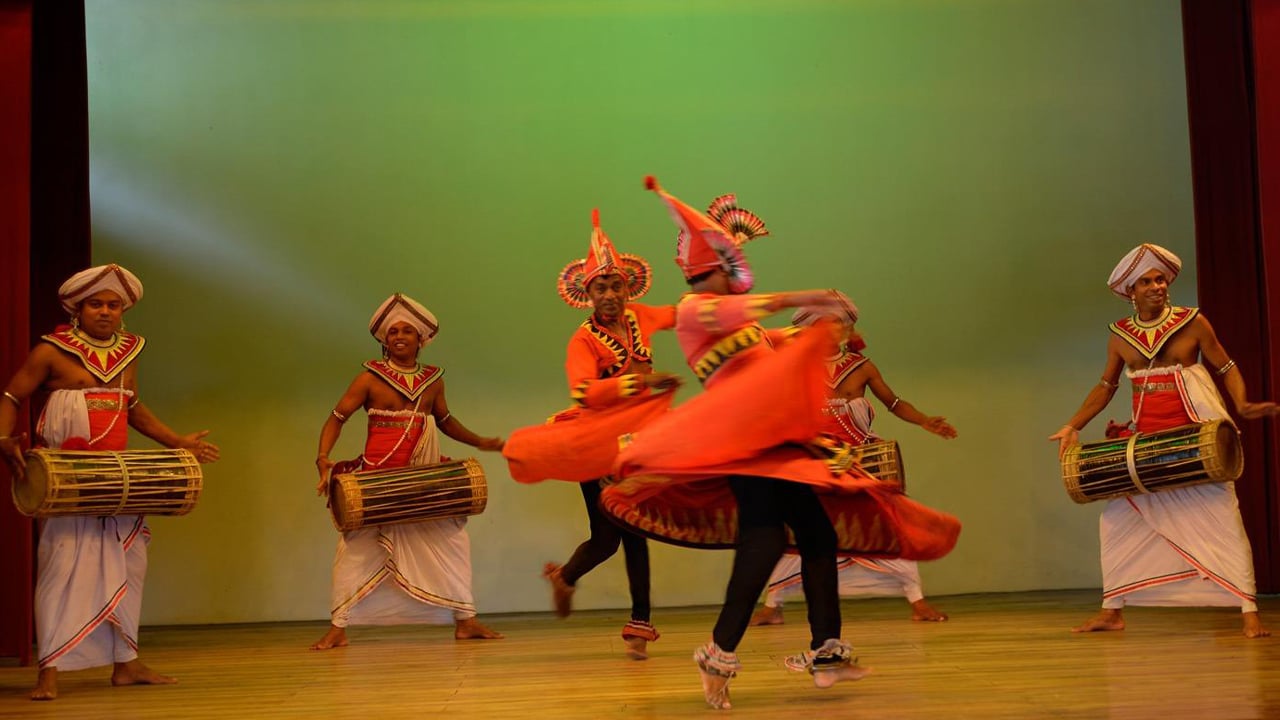
The performance is energetic and physically demanding. Dancers — traditionally male — move through vigorous footwork, wide leaping stances, and sequences that evoke the rolling and surging of ocean waves. There is nothing restrained about Devol Natuma: the choreography mirrors the sea's own temperament, shifting between controlled precision and sudden force.
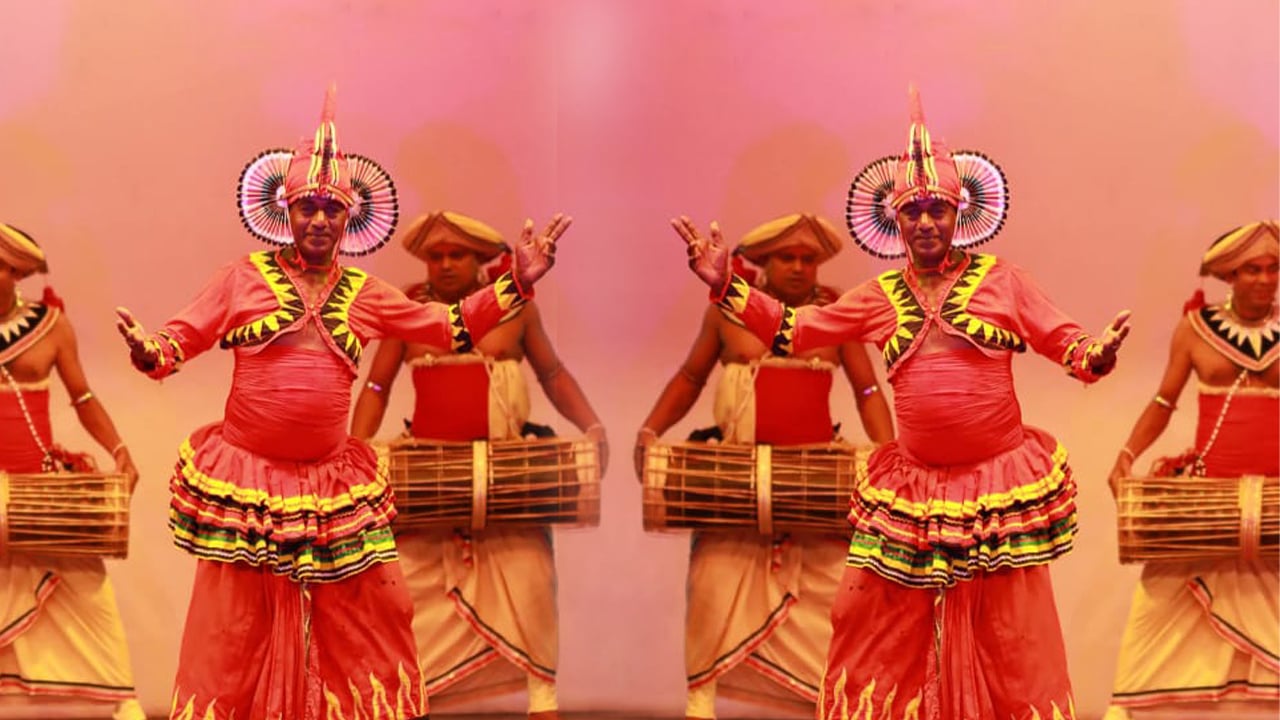
Costumes are carefully assembled and deliberately bold. Dancers wear vividly coloured cloths tied at the waist, with elaborate headdresses that add height and visual weight to each movement. The overall effect is striking — designed to command attention both from the audience and, symbolically, from the deity being addressed.
- Headdresses are often tiered and decorated with gilded or lacquered elements.
- Upper-body ornamentation may include beaded or metal-threaded garments.
- Footwork patterns are precise and follow the rhythmic structure set by the accompanying drums.
- Acrobatic elements appear in some regional variations, particularly during climactic passages.
What instruments accompany Devol Natuma?
Percussion is the backbone of the performance. The Davula — a large, double-headed barrel drum — is the central instrument, its deep resonance setting the tempo and signalling shifts in the dance's intensity. Drummers do not simply keep time; they guide the entire ritual, with specific rhythmic patterns understood to invoke different aspects of the deity's attention.
Additional percussive instruments and, in some performances, wind instruments supplement the Davula. The combined sound creates a dense, layered auditory environment that intensifies the ritual atmosphere and helps draw participants and witnesses into a shared state of heightened focus.
Where and when is Devol Natuma performed?
The dance belongs to the southern coastal communities of Sri Lanka, with the districts around Hikkaduwa, Ambalangoda, and the broader Galle region serving as its cultural heartland. Ambalangoda in particular has long been associated with the preservation of mask-based and ritual dance traditions, and Devol Natuma fits squarely within that heritage.
Performances take place at several points in the community calendar:
- Onset of the fishing season — to secure the deity's protection for the months ahead.
- Launch of a new boat — a boat entering the water without ritual blessing is considered vulnerable.
- Temple festivals — shrines dedicated to Devol Deviyo host annual celebrations that include dance, drumming, and processions.
- After a significant catch — gratitude, not only petition, drives some performances.
Beyond these community contexts, Devol Natuma is occasionally presented at national cultural festivals and arts showcases, where it reaches audiences unfamiliar with its ritual origins. The Esala Perahera Festival in Kandy offers one broader window into the richness of Sri Lanka's living performance traditions, though Devol Natuma remains most authentically encountered in its southern coastal setting.
How does Devol Natuma relate to Sri Lanka's wider dance tradition?
Sri Lankan classical and folk dance encompasses several distinct streams. Kandyan dance (Udarata Natum), low-country dance (Pahatharata Natum), and Sabaragamuwa dance each carry their own stylistic grammar and regional identity. Devol Natuma falls within the low-country tradition, which is characterised by mask use, demon-propitiation rituals known as Tovil, and a close relationship between performance and functional religious purpose.
Within the low-country tradition, Devol Natuma occupies a specific niche: it is not a generalised expressive art but a dance tied to a named deity and a defined ecological context — the sea. This specificity is part of what makes it culturally significant. It has not been abstracted into a performance-for-performance's-sake form; it retains its ritual function even when performed for mixed audiences.
The tradition is transmitted within families and communities, with knowledge passing from senior practitioners to younger dancers through close observation and practice rather than formal written instruction. Several cultural organisations along the southern coast work to document and sustain these lineages, recognising that the dance's meaning depends on its continued practice rather than mere archival record.
Is Devol Natuma connected to mask carving?
The Ambalangoda region is Sri Lanka's most recognised centre for traditional mask carving, and there is a meaningful overlap between mask-making culture and ritual dance. While Devol Natuma does not always feature masks in the way that Kolam (a comic-narrative dance-drama) or certain Tovil rituals do, the broader craft and ceremonial ecosystem is shared. Workshops in Ambalangoda offer visitors a chance to see masks being carved and painted, and local cultural centres sometimes arrange demonstrations of related dance forms.
For travellers with an interest in Sri Lanka's coastal heritage, a visit to the southern coast can combine a range of experiences: observing traditional crafts, learning about marine conservation at projects like the Kosgoda Sea Turtle Conservation Project, and, if timing allows, witnessing ritual performance in an authentic community setting.
What is the cultural significance of Devol Natuma today?
Ritual dances of this kind are under the pressures familiar to intangible cultural heritage worldwide: urbanisation, changing religious practice, and a younger generation with access to radically different forms of entertainment. Yet Devol Natuma persists, partly because its function is not purely aesthetic. As long as fishing communities depend on the sea and seek spiritual assurance in that dependency, the rituals that Devol Natuma embodies retain a purpose beyond tradition for its own sake.
Sri Lanka's Department of Cultural Affairs and various provincial bodies have recognised the importance of documenting and supporting low-country ritual dance. Interested travellers who spend time in the Galle or Ambalangoda areas, particularly during coastal festival seasons, stand a reasonable chance of encountering elements of this tradition — though it is worth noting that the most meaningful performances are community events rather than staged shows.