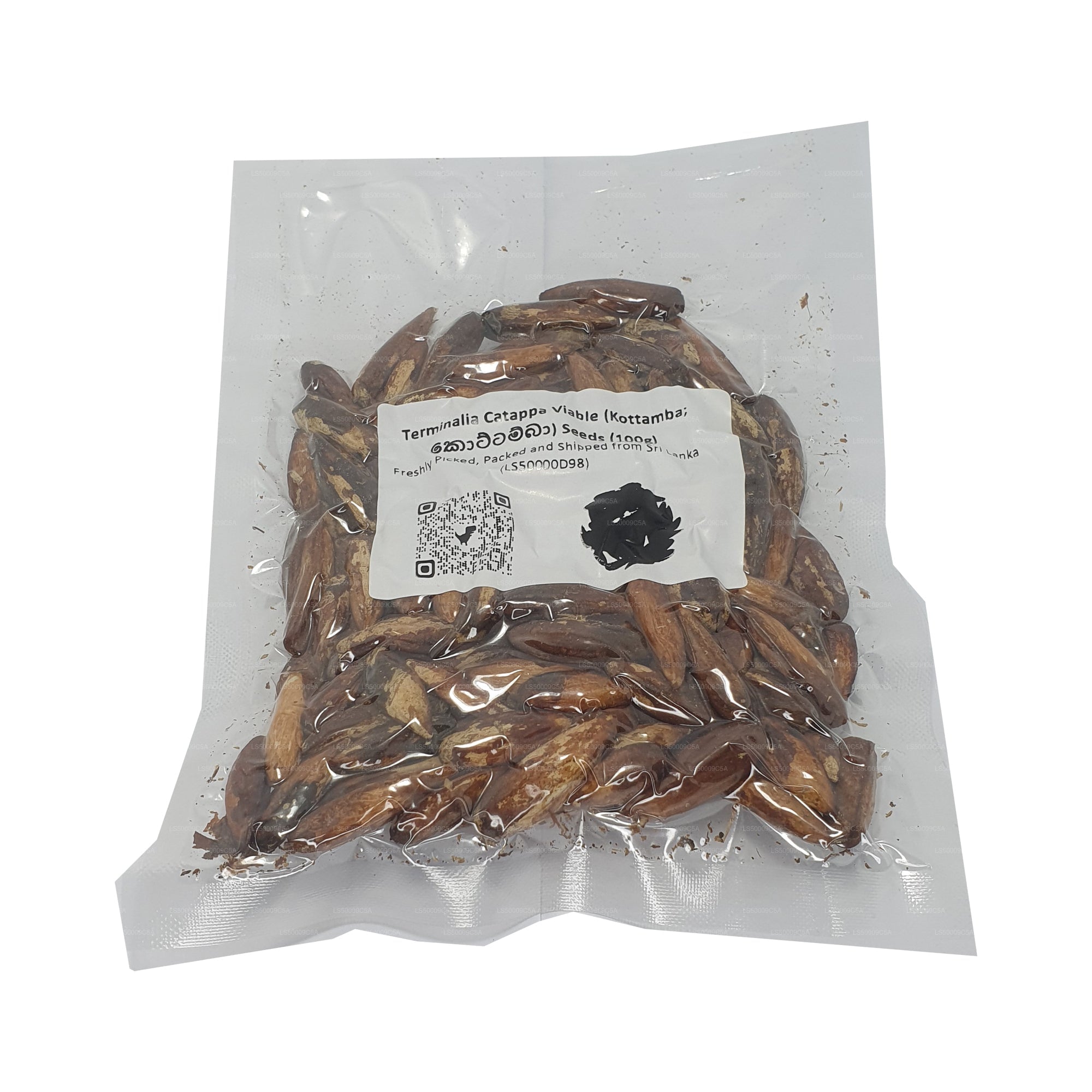
Kottamba — known in English as tropical almond or Indian almond — is a large, spreading tree native to tropical Asia, and one of the more familiar sights along Sri Lankan roadsides and in home gardens, where it is valued for the deep shade cast by its wide, tiered horizontal branches. The seeds sold here are viable Kottamba seeds: freshly picked, vacuum-sealed, and shipped directly from Sri Lanka, available in weights from 100g up to 1kg.
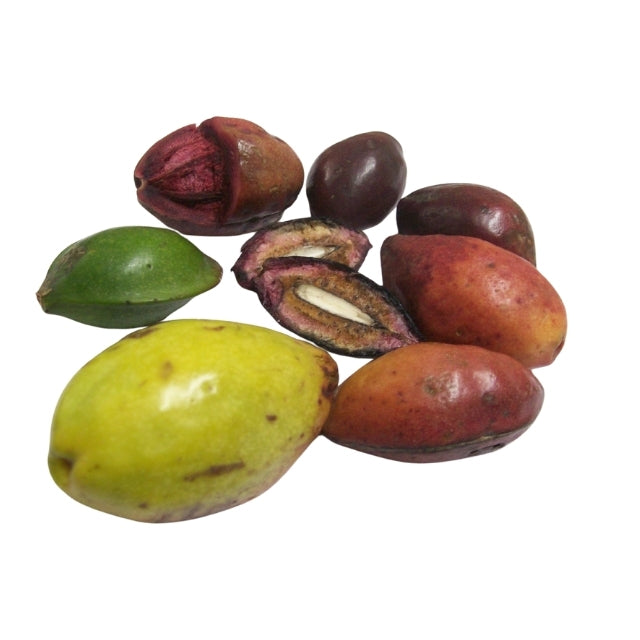
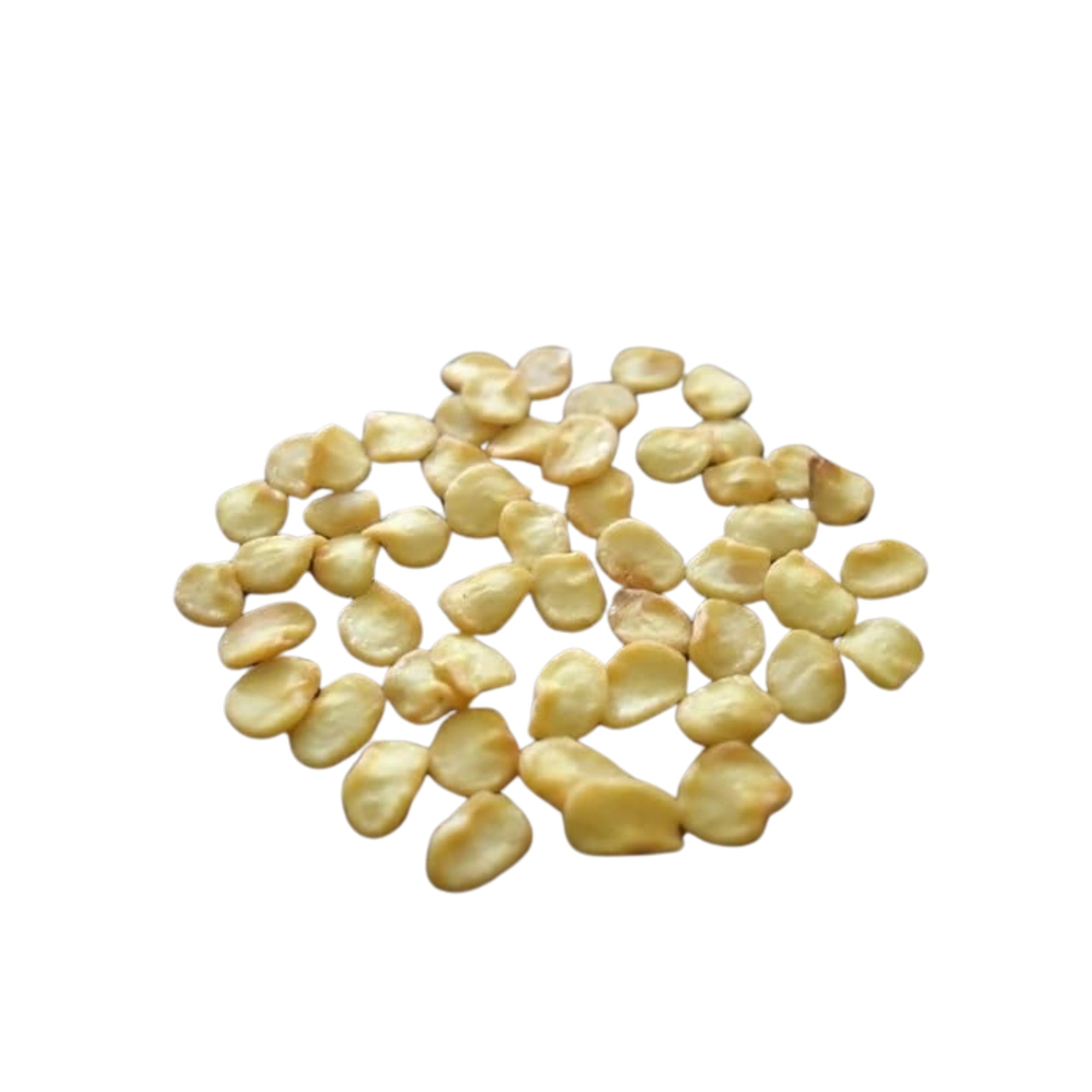
The tree itself is a striking deciduous species with a pagoda-like crown of branches arranged in distinct layers. Twice a year its broad leaves pass through shades of yellow and red before dropping — a dramatic seasonal display rare among tropical trees. Inside the fruit, beneath a fibrous outer husk, sits a small, hard-shelled nut containing an edible kernel with a flavour reminiscent of almond. The seed is the source of the tree's most widely used common names and has long been eaten raw or roasted as a snack across Sri Lanka, enjoyed by children and adults alike.
Commercial cultivation of Kottamba for nut production is limited, largely because extracting the kernel from the hard shell requires patience and skill. Lakpura sources these seeds from home gardens and locally affiliated farm groups in Sri Lanka, which is reflected in the label's description: freshly picked, packed and shipped from Sri Lanka. The seeds are not grown on industrial plantations, and the supply represents genuine small-scale, locally rooted produce.
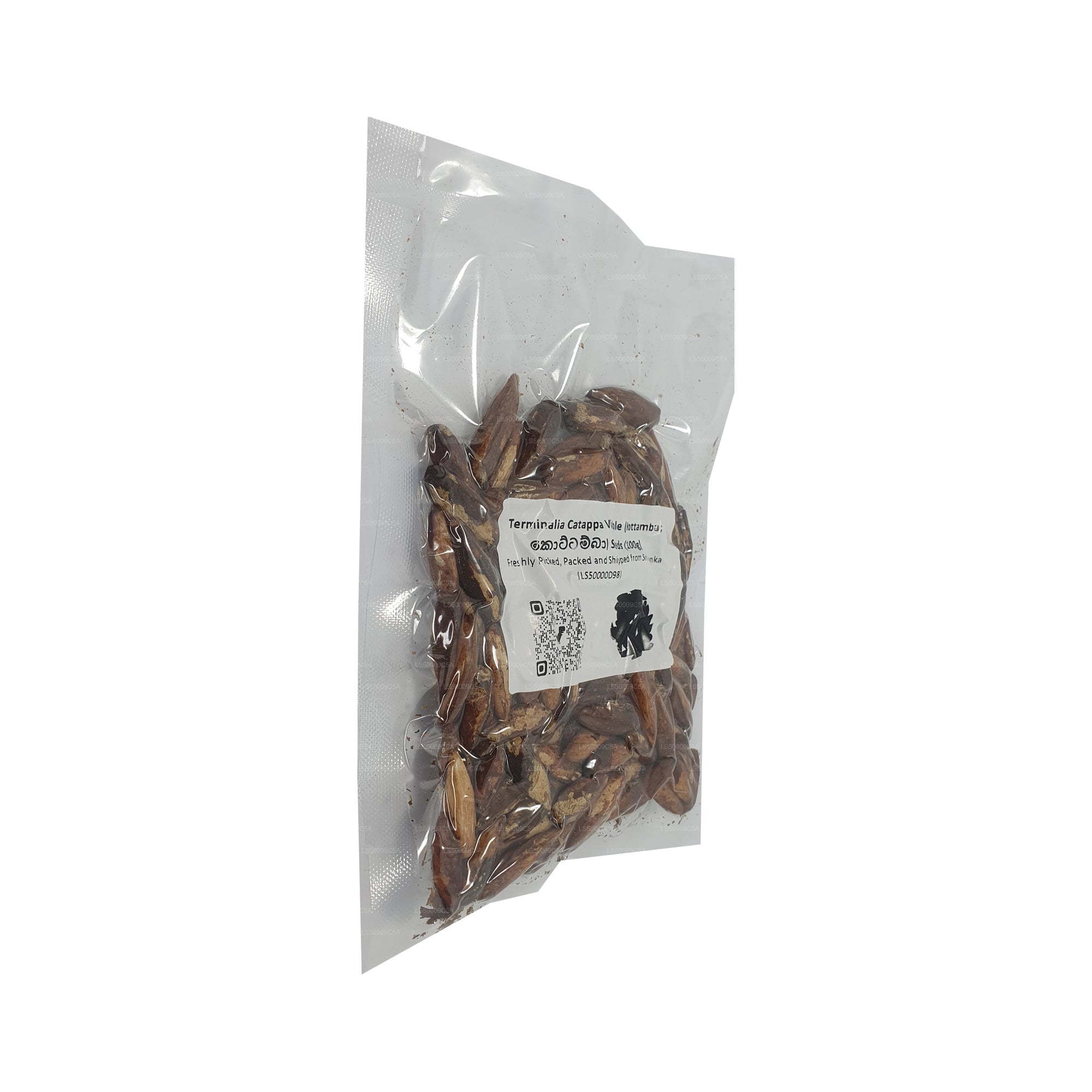
Each pack is sealed in a clear vacuum-sealed plastic pouch carrying a QR code on the label. The word 'viable' in the product name is deliberate: these are seeds that retain their capacity to germinate and grow into trees, which makes them of interest both to those who wish to cultivate the species and to those familiar with the seed as an edible. Buyers intending to grow the tree should note that Terminalia catappa propagates readily from seed — the seeds are naturally buoyant and adapted for dispersal over long distances.
If you grew up in Sri Lanka, the process of working open a Kottamba fruit to reach the kernel inside is likely a familiar one, tied to afternoons under a roadside tree. For international buyers, these seeds offer a way to taste or cultivate a species that is central to the tropical Asian landscape — sourced, sealed and dispatched from the island where the tree is simply part of the scenery.